

Reports suggest that Israel and the United States were hoping for a quick end to the Iranian regime when they launched Operation Epic Fury on the eve of February 28, 2026.
The idea was to launch decapitating strikes at the heart of Tehran, eliminating the leadership of the regime, including the Supreme Leader – Ayatollah Ali Khamenei.
Even though Israel and the USA succeeded in uprooting almost everyone at the top of Iran, they still failed to secure the goal of a swift regime change.
The war, which was supposed to be over within a couple of days, has now entered Day 14, and apparently it is far from over.
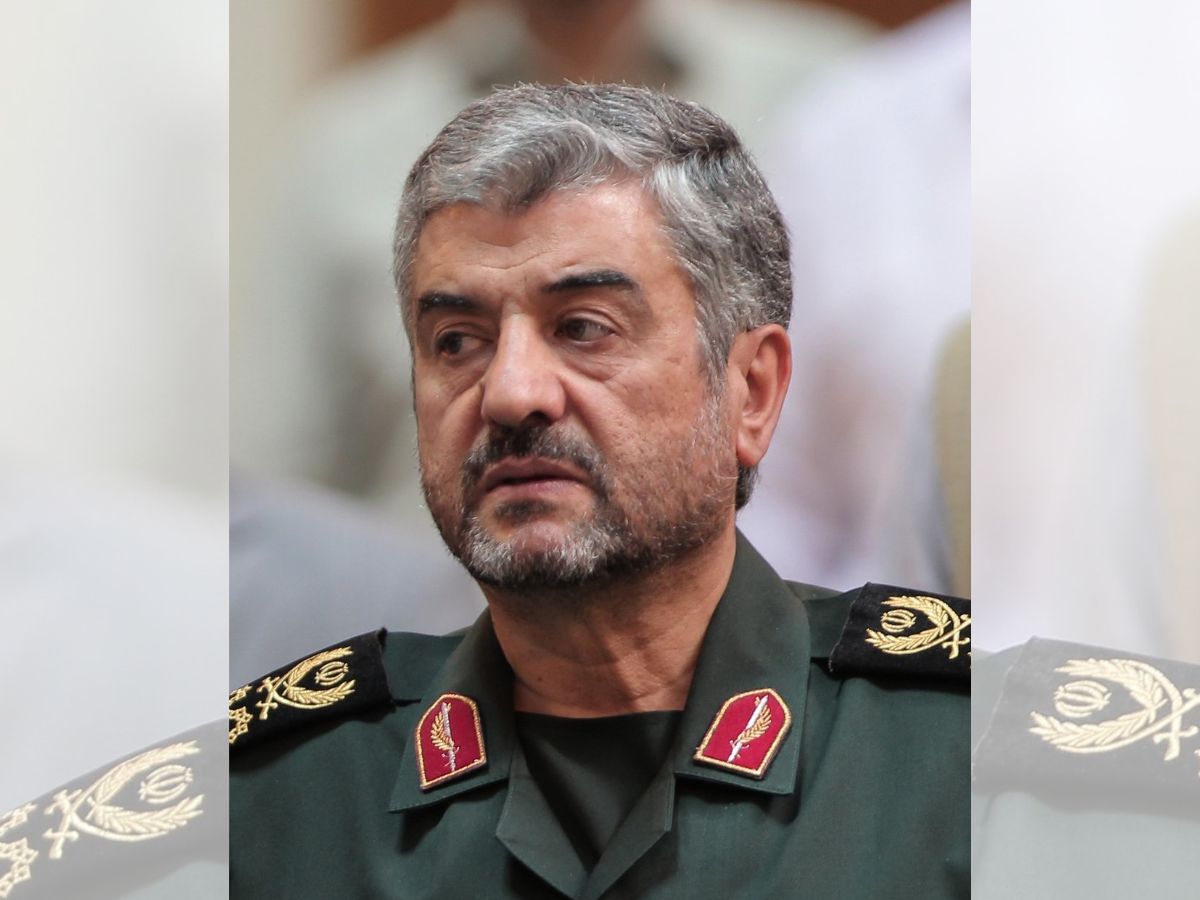
And a former commander-in-chief of the Islamic Revolutionary Guard Corps (IRGC), Major General Mohammad Ali Jafari, made Iran’s sustained struggle possible.
How Jafari Made Iran’s Defeat Almost Impossible
Jafari was in his early days of his military career when the United States invaded Iraq in 2003 and toppled Saddam Hussein’s government in just 23 days.
The reason for such quick success in Iraq was the centralized nature of military command in the country.
Jafari, who closely studied the “fall of Iraq,” knew that the same situation might come knocking on his doorstep one day.
Therefore, he created what the whole world now calls “the Decentralized Mosaic Defence” – a defence strategy which allows semi-independent units to function with freedom according to pre-established plans even if the top leadership is totally wiped out.
The mosaic defence plan allowed Iran to distribute power among 31 commanders – 1 in Tehran and 30 for each of Iran’s provinces. Each commander can operate independently if communication is cut with Tehran.
Each commander controls local missile units, militia (Basij), logistics and guerrilla force.
The idea is to turn Iran into many semi-independent “defensive cells,” making it hard for the enemy to defeat the country through a single decapitation strike.
Who Is Major General Mohammad Ali Jafari
According to a 2013 report by the RAND Corporation, Major General Mohammad Ali Jafari joined as an intelligence operative in a provincial unit of the IRGC in Iran’s Kurdistan.
His entry into the IRGC came shortly after the Pahlavis were chased out by the Islamic Revolution in 1979.
Jafari served in the Iran-Iraq War, which ran from 1980 to 1988, gradually working his way up the military ranks.
Following the war, he took charge of the IRGC ground forces in 1992 and also led the Sarallah — an elite IRGC unit responsible for protecting Tehran.
By 2005, he had been appointed to head the Guards’ Center for Strategic Studies.
While in that role, he developed Iran’s Mosaic Doctrine, drawing on lessons from the Iran-Iraq War and the US-led invasion of Iraq under Operation Iraqi Freedom in 2003, according to the US Institute of Peace.




