
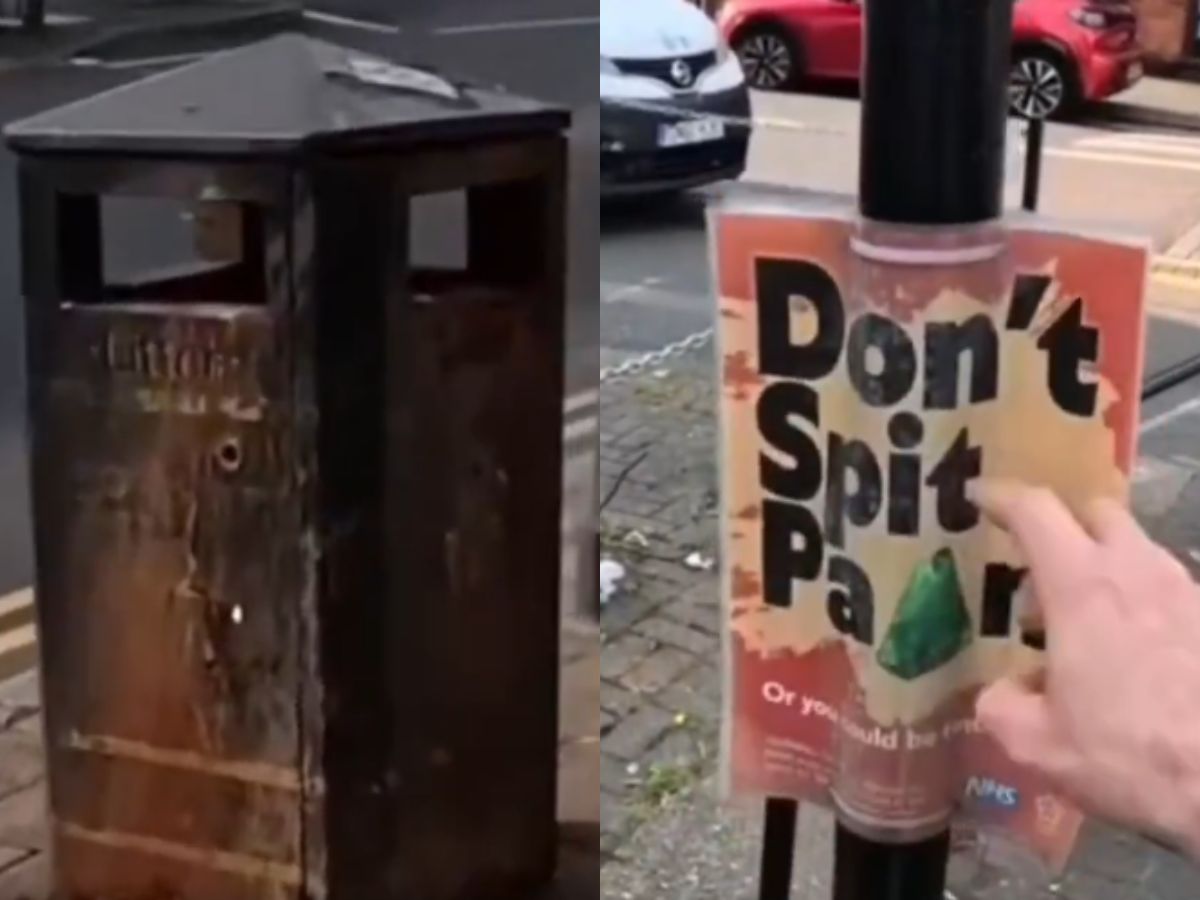

Two individuals of Indian descent were fined significantly by the London authorities for committing the crime of spitting the Indian delicacy known as paan, onto the streets. The incident has served to reignite discussion and debate on issues such as people’s conduct within public places, cleanliness and also cultural responsibilities of people living in a foreign country.
As per reports, the men have been identified as Akshitkumar Bhadre Patel, 31, and Hitesh Patel, 32. These two men were fined approximately £ 1,391, or Rs 1.72 lakhs each by the London Borough of Brent. The significant financial penalty imposed upon these two men appears to be part of a broader effort by local councils to crack down on the practice of spitting paan onto city streets, as this action is becoming more prevalent in various areas of the UK.
Zero-Tolerance Policy in Action
As a result of this incident, the local council has adopted a firm approach towards dealing with this issue by creating a zero tolerance policy. In addition to creating policies prohibiting paan spitting, the authorities have issued an unequivocal message about the need to respect the city: “If you mess up our streets, you’ll pay for it.” This position demonstrates how serious the local council is about keeping the area free from pollution and maintaining public order in London.
The residues left on city streets from spitting paan consist of a combination of betel leaves, areca nuts and sometimes tobacco, which have a dark red colour. Creating dark red stains on public surfaces is not only unappealing from an aesthetic point of view, but also makes it very difficult for the city to maintain its cleanliness, due to the difficulty involved in eliminating these stains from the local surfaces. As evidenced by many of the local government officials, high-powered cleaning devices are still unable to completely remove the stains created by those spitting paan in public areas.
Cleanliness and Cost Concerns
The problem has been developing over a long period of time. Brent Council has disclosed that it spends over £30,000 annually removing the residue from chewing the betel nut, often from pavements, buildings and the general environment particularly in areas where the issue is more obvious, such as Wembley.
Authorities are also trying to improve enforcement through increased patrolling, erecting signage warning of the consequences of such actions, and providing education regarding the negative consequences of these behaviours. The Councils are trying to not only reduce the acts of those who do so, but to change the behaviour of those who do so in a way that will help to safeguard Brent’s cleanliness.
Public Reaction and Debate
The event has produced a great deal of reaction on various social media platforms. Many individuals, including a number of individuals from the Indian community, have stated that they have been embarrassed by the actions of others and have called for more rigid enforcement. Some of the users of social media stated that these actions degrade the reputation of all people of Indian descent throughout the world and should not be accepted. Others have suggested that while the action is unacceptable, it should not be used as a rationale to target a particular community.
Health professionals have also issued concerns regarding the health risks related to chewing the betel nut, specifically with regard to chewing the betel nut that has been contaminated with tobacco, which has been identified as a leading cause of cancers of the mouth and oesophagus.
Khalid Qasid is a media enthusiast with a strong interest in documentary filmmaking. He holds a Master’s degree in Convergent Journalism from AJK MCRC. He has also written extensively on esports at Sportsdunia. Currently, he covers world and general news at NewsX Digital.




