
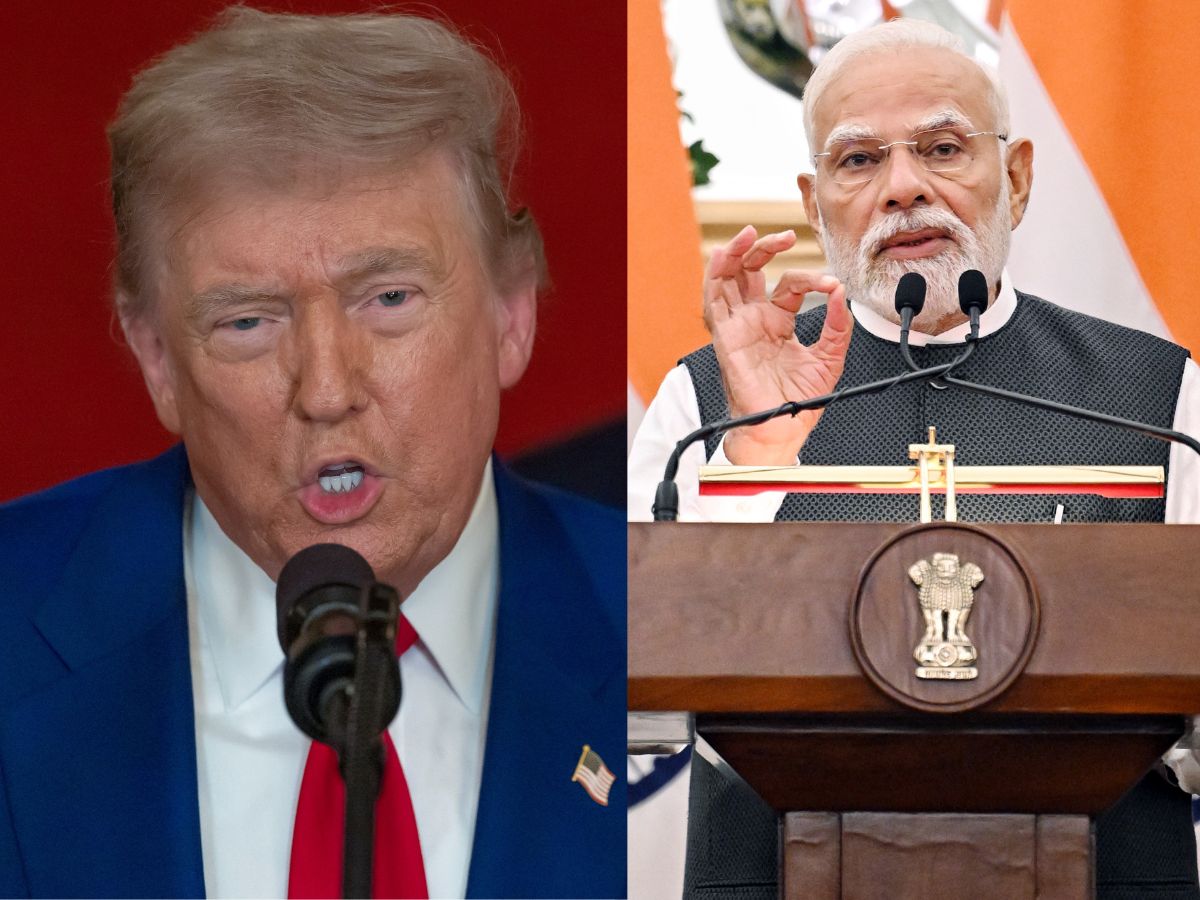

US on Monday published a draft notice confirming plans to impose a 50 percent tariff on Indian goods, formalizing an earlier announcement made by President Donald Trump. The notice, released by the Department of Homeland Security, underlined that the new duties will apply to products “entered for consumption, or withdrawn from warehouse for consumption, on or after 12:01 AM Eastern Daylight Time on August 27, 2025.”
The move is seen as the latest sign that the White House intends to press ahead with its tariff strategy even as attempts to negotiate peace between Russia and Ukraine falter.
Trump had first announced at the start of August that tariffs on Indian exports would be doubled from 25 percent to 50 percent. His decision was linked to India’s ongoing purchase of Russian oil, a trade relationship Washington has repeatedly objected to. The increase represents one of the highest levies the US has placed on any trading partner and could deal a multibillion-dollar blow to India’s economy.
Imapct of 50% Tariffs on Exports
Although the US accounts for only around 20 percent of India’s exports – equal to about 2 percent of the country’s GDP – some industries are far more exposed. Analysts at UBS estimate that $8 billion worth of shipments, including gems and jewellery, textiles, apparel, and chemicals, are most vulnerable.
Also Read: US Issues Draft Notice To Implement 50% Tariffs On India: All You Need To Know
In terms of sectors impacted, gems and jewellery, apparel, textiles, and other chemicals are more exposed to the US tariffs and could see some targeted support measures from the government, analysts say.
Economists had earlier projected only a marginal hit to overall growth because India trades with a wide range of partners globally. Yet for these labour-intensive industries, the effect could be severe.
Imapct 0f 50% Trump Tariffs on Indian Stock Market
The stock market, at least for now, may not take the full brunt. Trade analysts explain that Nifty 50 index has about 9 percent direct exposure to the US, much of it concentrated in IT services. These services are not targeted under the new duties.
Pharmaceuticals, another major Indian export to the US, are also expected to remain untouched by the tariffs. Similarly, steel and aluminium are taxed separately under a different executive order, while semiconductors and electronic products are exempt. Apple, which has expanded large-scale manufacturing in India, is likewise unlikely to be affected.
GTRI Estimates on Impact of 50% Trump Tariffs
The tariff hike comes at a time when economists are warning of increased odds of a US recession, which could weigh on everything from foreign direct investment to portfolio flows and exporter order books. Even sectors not directly targeted, such as IT services, may face uncertainty if demand from their largest market weakens.
A study by the Global Trade Research Initiative (GTRI) estimated that the tariffs will hit $60.2 billion worth of Indian exports, ranging from textiles and gems to shrimp, carpets, and furniture.
The report warned that alternative suppliers like China, Vietnam, and Mexico are poised to capture market share, with other countries including Turkey, Pakistan, Nepal, Guatemala, and Kenya also standing to benefit.
According to GTRI, the new duties will cover around 66 percent of India’s exports to the US – valued at about $86.5 billion in total. Of this, 30 percent ($27.6 billion) will remain duty-free, 4 percent ($3.4 billion) will face 25 percent tariffs, and 66 percent ($60.2 billion) will be hit with the full 50 percent levy.
GTRI projects that export volumes in the most affected sectors could fall by as much as 70 percent, reducing shipments from $60.2 billion to $18.6 billion. That would amount to a 43 percent drop in US-bound exports overall, threatening jobs across India’s export hubs and weakening the country’s role in global supply chains.
Impact on GDP
Despite these risks, the US remains India’s biggest export market. India’s nominal GDP stood at $4,270 billion in FY2025 and was expected to grow at 6.5 percent in FY2026 under normal conditions. But factoring in a $36.9 billion decline in exports, GTRI calculates that GDP would fall to $4,233.1 billion in FY2025, and the following year’s growth would slow to 5.6 percent instead of the projected 6.5 percent.
That 0.9 percentage-point drop, while not catastrophic, marks a significant setback.
Also Read: Trump’s 50% Tariffs: The Indian Exports Facing The Biggest Impact
Zubair Amin is a Senior Journalist at NewsX with over seven years of experience in reporting and editorial work. He has written for leading national and international publications, including Foreign Policy Magazine, Al Jazeera, The Economic Times, The Indian Express, The Wire, Article 14, Mongabay, News9, among others. His primary focus is on international affairs, with a strong interest in US politics and policy. He also writes on West Asia, Indian polity, and constitutional issues. Zubair tweets at zubaiyr.amin




