

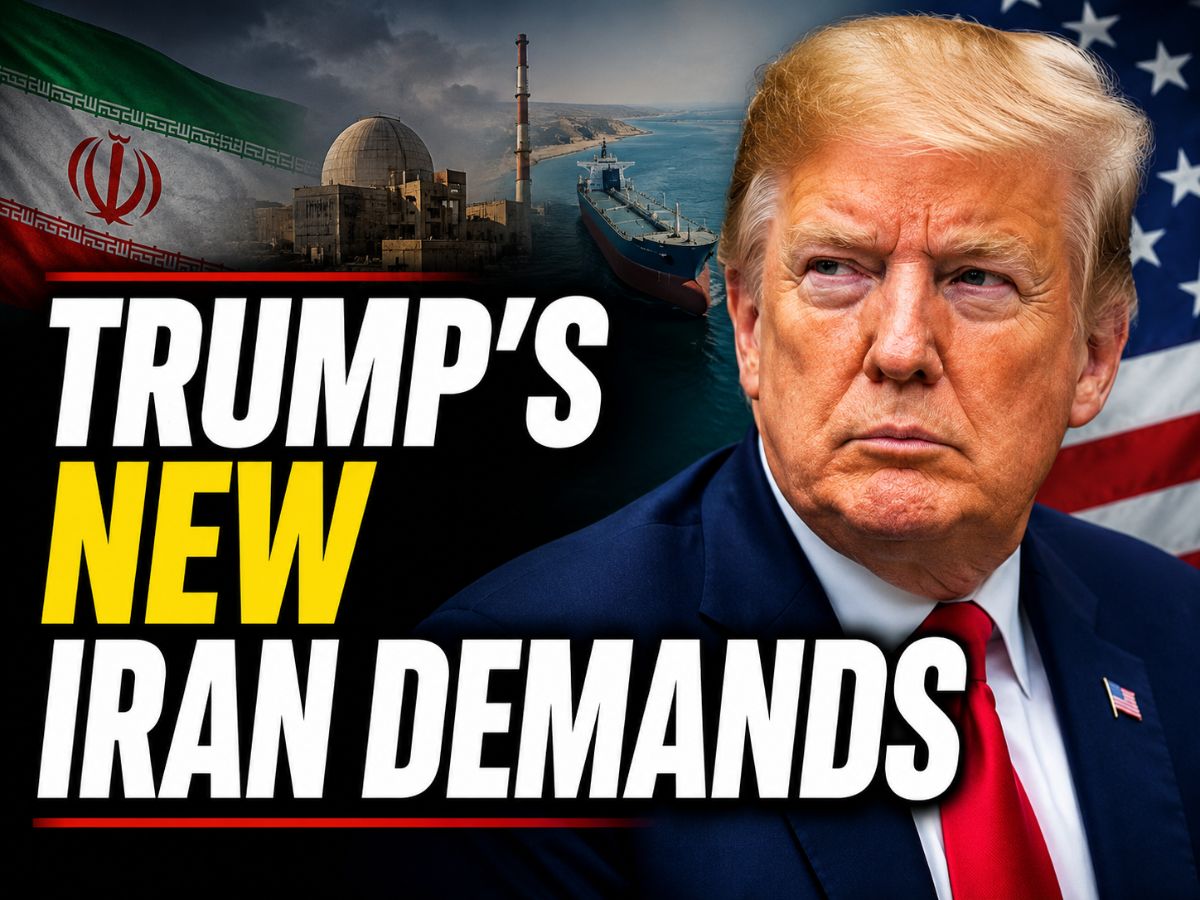
Days after stating that a proposed agreement with Tehran was ‘largely finalised’, US President Donald Trump has reportedly sent the draft back for substantial revisions, prolonging the diplomatic process and creating new uncertainty around efforts to ease tensions between the two sides. According to CNN, Trump pushed for stricter provisions related to Iran’s nuclear commitments and the reopening of the Strait of Hormuz during discussions with his advisers.
Trump Pushes for Tougher Conditions
The US President has also reportedly raised concerns about the scale of financial relief that could be granted to Tehran under any future agreement. Trump is said to be cautious about drawing comparisons with the Obama-era nuclear deal, which he has frequently criticised as being overly lenient toward Iran.
The latest revisions come just a week after Trump indicated that the deal was ‘largely finalised’ and suggested that a resolution to the ongoing standoff could be near.
Negotiations Continue Without Final Decision
In recent days, US officials have continued to signal progress toward an arrangement that could halt hostilities, reopen the strategically important strait, and pave the way for broader negotiations over Iran’s nuclear programme.
Trump sends back Iran deal text with changes; seeks stricter nuclear commitments, Hormuz reopening
Read @ANI Story |https://t.co/hAPaNpArqJ#UnitedStates #Trump #Iran #DealText #WestAsiaConflict pic.twitter.com/J8w2qeTikg
— ANI Digital (@ani_digital) May 31, 2026
However, despite Trump’s earlier statement that he would make a ‘final determination’ during Friday’s meeting and his public comments outlining several conditions, the two-hour discussion reportedly ended without a definitive decision.
Trump stated in a social media post that the US would seize and destroy Iran’s stockpile of highly enriched uranium. Iran, however, has consistently maintained that detailed discussions regarding its nuclear programme are not part of the current negotiations.
Disagreements Remain Over Nuclear and Financial Issues
Trump also said there had been no discussions regarding any financial exchange as part of the agreement. Tehran, on the other hand, has insisted that financial provisions must be included in any deal.
How negotiators plan to bridge these differences remains uncertain as talks continue over the final wording and structure of the proposed agreement. Earlier, Axios reported that Trump had also requested changes to the draft, including stronger language concerning the reopening of the Strait of Hormuz.
Tehran Signals Firm Stance on Any Future Agreement
Iran’s political leadership has responded with firm messaging. Iranian Parliament Speaker Mohammad Bagher Ghalibaf said on Sunday that no agreement with the US would receive approval unless Tehran’s ‘rights’ are fully protected, according to the semi-official Tasnim news agency.
‘The soldiers of the diplomatic battlefield have no trust in the words and promises of the enemy. What matters to us are tangible achievements that we must obtain, in exchange for which we will fulfil our commitments,’ Iran’s Tasnim news agency quoted him as saying.
Meanwhile, Democratic Senator Chris Coons, a member of the Senate Foreign Affairs Committee, said the framework outlined by Trump appears workable in principle but could prove difficult to implement, particularly regarding arrangements tied to the Strait of Hormuz.
As negotiations continue, significant gaps remain between Washington and Tehran on both nuclear and financial issues, leaving the fate of the proposed agreement uncertain.
(Inputs From ANI)
ALSO READ: Why US Suddenly Blocked Nvidia AI Chips From Reaching Chinese Firms Worldwide
Harshita is a journalist and digital content writer specializing in breaking news, current affairs, travel, education, and trending stories. She is focused on delivering accurate, timely, and engaging content with a strong emphasis on clarity and audience relevance.





