
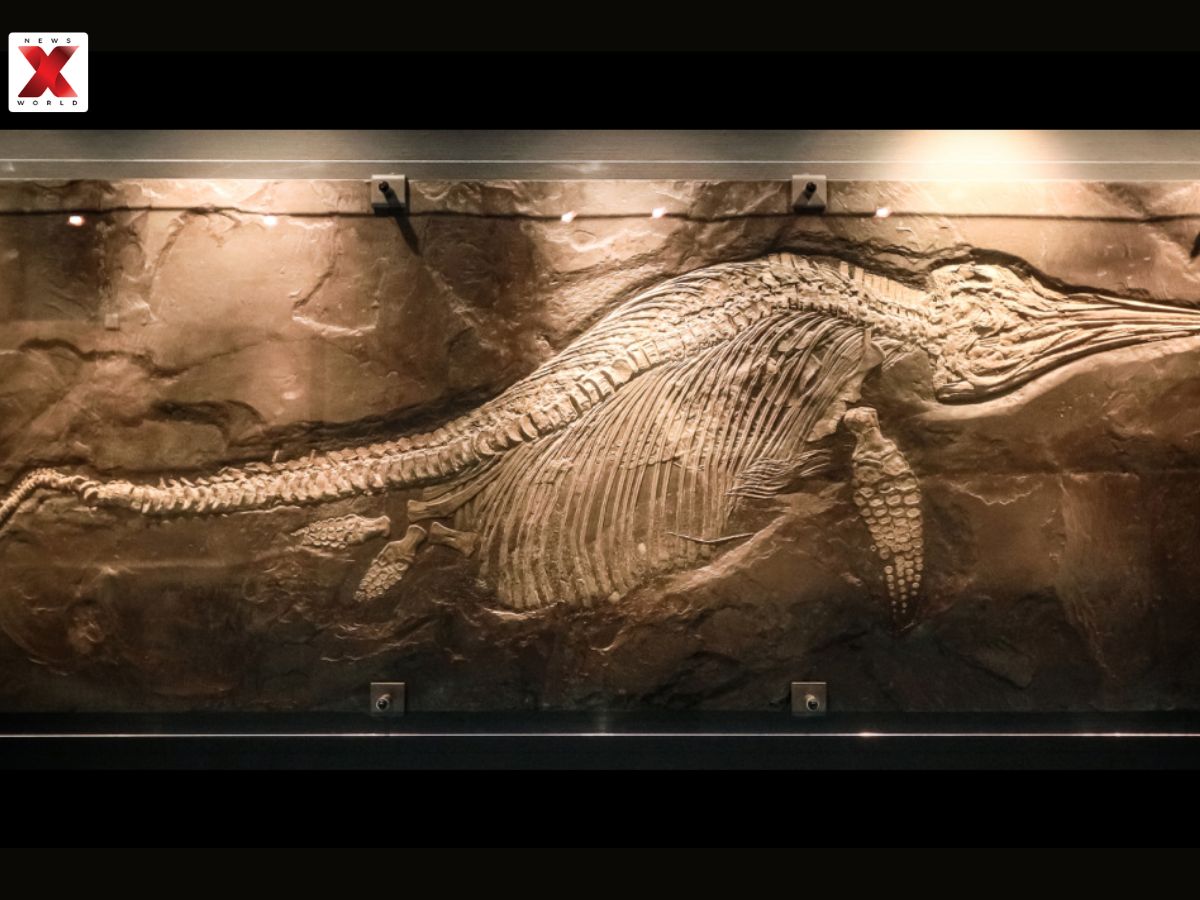

Ichthyotitan Severnensis Discovery: The discovery of Ichthyotitan severnensis began when 11-year-old Ruby Reynolds and her father were searching for fossils on the beaches near Blue Anchor in Somerset. During the hunt, they found bone fragments that were later identified as parts of a jawbone, indicating the presence of a massive marine reptile estimated to be around 82 feet long.
How Was the Giant Ichthyotitan Severnensis Discovered?
Ruby Reynolds and her father, Justin, were exploring the Somerset coastline when Justin noticed a small four-inch piece of bone. Shortly after, Ruby discovered another fragment that was partly visible on the muddy shore. Photos of the fossils were later studied by paleontologist Dean Lomax, who identified them as remains of an ichthyosaur.
The fragments matched part of a jawbone previously found in 2016 by local collector Paul da la Salle. When the pieces were compared and reconstructed, they revealed a jaw measuring more than 6.5 feet long, indicating that the fossils belonged to a single, exceptionally large species.
How Big Was Ichthyotitan Severnensis?
Researchers published their findings in the journal PLOS ONE, officially naming the species Ichthyotitan Severnensis. By analyzing the length of the jawbone and comparing it with other ichthyosaur fossils, scientists estimated that the creature may have grown to about 82 feet long, a size comparable to a modern Blue Whale.
Paleontologists described the fossils as “unusual and extremely large,” noting that the reptile was “genuinely enormous, roughly the length of a blue whale,”
Researchers also examined the internal bone structure and found evidence that the animal was still growing when it died, suggesting some individuals of the species could have reached even larger sizes.
Why Is the Ichthyotitan Severnensis Discovery Significant?
The discovery has reshaped scientific understanding of the size of marine predators during the Triassic period. The jaw structure and preserved features indicate that the animal had a streamlined body built for long-distance movement in open oceans.
Studies of its teeth and bone structures suggest it fed on fish, squid-like cephalopods, and smaller marine reptiles, while some marks also point to scavengers feeding on the carcass after its death.
The findings place Ichthyotitan Severnensis among the largest known Ichthyosaurs and highlight the rich fossil potential of the Somerset coastline.
Scientists say the specimen provides the first clear evidence of a truly gigantic Triassic ichthyosaur and raises hopes that more fossils, possibly a complete skull or skeleton, may still be discovered.
Manisha Chauhan is a passionate journalist with 3 years of experience in the media industry, covering everything from trending entertainment buzz and celebrity spotlights to thought-provoking book reviews and practical health tips. Known for blending fresh perspectives with reader-friendly writing, she creates content that informs, entertains, and inspires. When she’s not chasing the next viral story, you’ll find her diving into a good book or exploring new wellness trends.




