
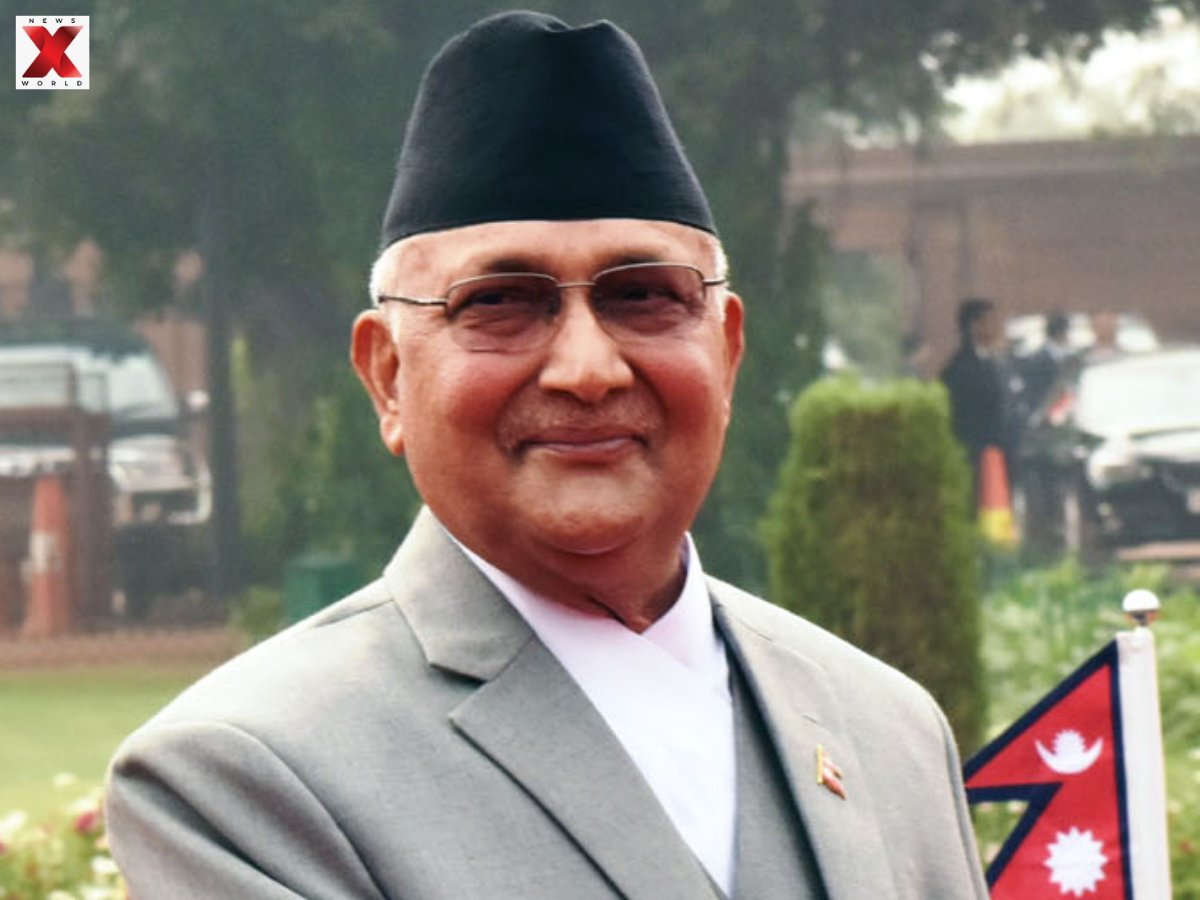

Nepal’s former prime minister KP Sharma Oli and ex-home minister Ramesh Lekhak have been arrested for their roles in last year’s deadly crackdown on Gen Z protesters.
KP Sharma Oli arrested
Police picked them up on Saturday, just one day after rapper-turned-politician Balendra Shah took office as Nepal’s new prime minister.
The arrests follow a recommendation from a government panel that looked into the violence during the anti-corruption protests in September. Investigators blamed Oli for negligence, saying he failed to stop the violence that killed more than 70 people.
The protests, led mostly by young people, ended up toppling Oli’s government and led to the rise of an interim government under Sushila Karki, Nepal’s first female chief justice.
#WATCH | Former Nepal Prime Minister KP Sharma Oli taken into custody from his residence in Gundu, Bhaktapur, by Nepal Police.
According to the Kathmandu Post, “he has been arrested in connection with a culpable homicide-related case linked to the alleged suppression of the… pic.twitter.com/S0zrAmPUFV
— ANI (@ANI) March 28, 2026
Who is KP Sharma Oli?
At 74, Oli is one of Nepal’s most well-known communist politicians. Over the years he’s shifted his stance on neighboring India, sometimes friendly, sometimes not. Oli’s childhood wasn’t easy—his mother died of smallpox when he was just four, and his grandmother raised him in eastern Nepal’s Jhapa.
He first made it into parliament back in 1991, representing Jhapa. Since then, he’s become a major player in Nepal’s political scene.
Oli did a stint as deputy prime minister in the interim government led by Girija Prasad Koirala in 2006. Two years later, Nepal officially ended its monarchy and became a republic.
Oli landed his first term as prime minister in 2015, after winning 338 out of 597 votes. He returned in 2018 after his party—the Communist Party of Nepal-Unified Marxist Leninist (CPN-UML)—teamed up with the Maoists led by Pushpa Kamal Dahal, who’s better known as ‘Prachanda.’ Together, they won a two-thirds majority.
The parties merged to form the Nepal Communist Party, and Oli and Dahal took turns leading both the party and the government. Oli had another brief run as prime minister in 2021, and then again for a fourth time in July 2024, coming back after Prachanda lost a confidence vote.
But Oli’s latest term didn’t last long. Just over a year later, the Gen Z-led anti-corruption protests erupted in September 2025, bringing down his government once again.
How Nepal’s Former PM Is Linked to 2025 Gen Z Protest Crackdown
Last year, the protests by the youth in Nepal were a result of the Oli government’s short-term restriction on social media. Nevertheless, the protests were informed by a general outcry against corruption, nepotism and absence of economic opportunities.
Oli resigned as the prime minister when mobs burned down his house, parliament and buildings of the government. The unrest resulted in the killing of at least 77 people, many of them being protesters that were shot by police.
In his resignation letter, the long-time leader remarked that he wished his way out would aid in the movement towards a political solution and the solution of the problems.
The parliamentary elections that were conducted earlier this month gave a decisive blow against Oli CPN-UML. Rastriya swatantra party led by Balen Shah(RSP) was a landslide which has never been done in decades and single party got majority in Nepal.
Last month, the Nepal panel investigating the violence at the Gen Z protests in the previous year suggested that Oli should be prosecuted on negligence.
The panel concluded that Oli was at fault because he had not done anything to stop hours of firing that resulted in the killing of at least 19 Gen Z protesters during the first day of the protests that overthrew his government.
According to a report by the commission, as many as 76 individuals were killed and 2522 injured in the two days of unrest in September last year.




