
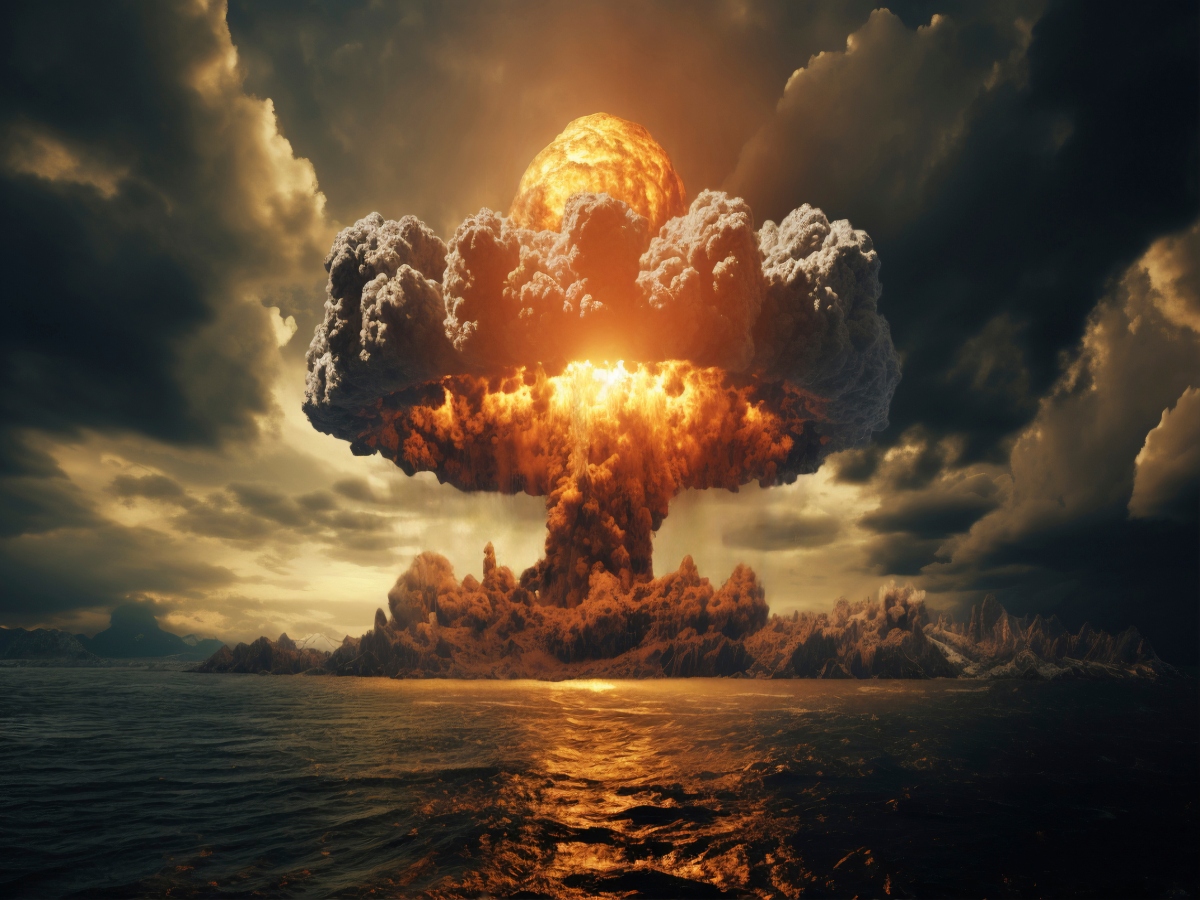

China is building a massive artificial island that can survive some of the world’s worst disasters, including a nuclear blast. The 78,000-tonne floating structure is designed as a mobile, semi-submersible, twin-hull platform that can stay at sea for months without outside help. It can house 238 people for up to four months without requiring new supplies, according to reports.
The structure is roughly the size of China’s Fujian aircraft carrier and is expected to become fully operational by 2028. Engineers say it can operate in extremely rough seas, withstanding waves as high as 6 to 9 metres and even category-17 typhoons, the highest rating for tropical cyclones.
Lin Zhongqin, an academician who is leading the project, told Economic Information Daily that the team is “racing to complete the design and construction” in time for the 2028 target.
A report in the South China Morning Post states the platform uses advanced “metamaterial” sandwich panels. These panels are designed to transform “catastrophic shocks into gentle squeezes”, reducing the impact of powerful blasts or underwater pressure on the structure.
The research team led by Professor Yang Deqing of Shanghai Jiao Tong University describes the island as a facility meant for “all-weather, long-term residency”. They say the superstructure includes essential areas for emergency power, communication systems and navigation control. Because these are critical for survival at sea, the team says nuclear-blast protection for these compartments is “absolutely vital”.
Officially named the Deep-Sea All-Weather Resident Floating Research Facility, the project has been in development for more than a decade. China refers to it as a “far-sea floating mobile island.”
Once completed, the platform will measure 138 metres in length and 85 metres in width, with a main deck that rises 45 metres above the water. Despite being presented as a civilian scientific research facility, its design is based on GJB 1060.1-1991, a Chinese military standard for structures built to resist nuclear blasts. This suggests the island is built to withstand the worst-case scenario of a nuclear attack.
ALSO READ: China’s Industrial Revolution: How State Support And EV Innovation Are Reshaping Global Technology
Shivam Verma is a journalist with over three years of experience in digital newsrooms. He currently works at NewsX, having previously worked for Firstpost and DNA India. A postgraduate diploma holder in Integrated Journalism from the Asian College of Journalism, Chennai, Shivam focuses on international affairs, diplomacy, defence, and politics. Beyond the newsroom, he is passionate about football—both playing and watching—and enjoys travelling to explore new places and cuisines.




