
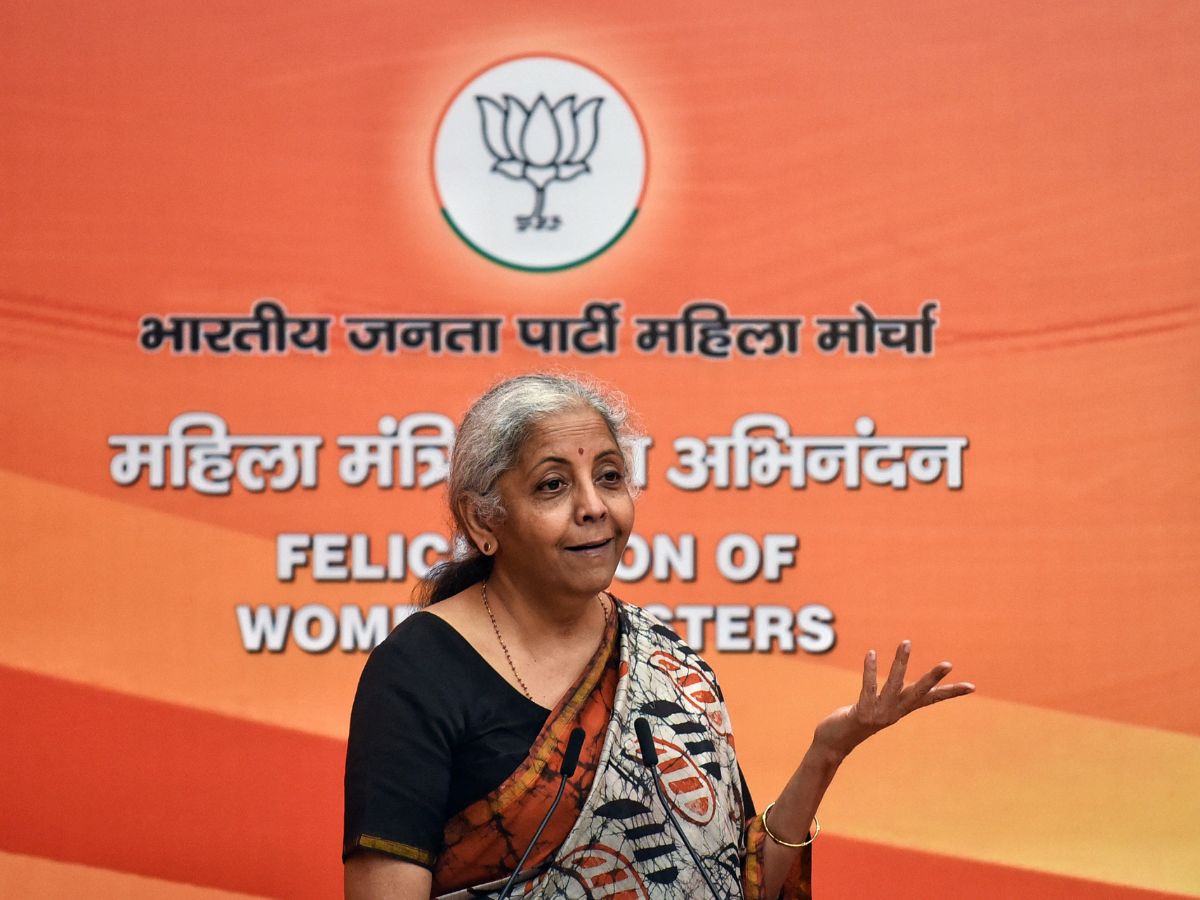

Union Finance Minister Nirmala Sitharaman presented the ‘GST 2.0 report card’ on the eve of the blessed Diwali Festival, which she called the Prime Minister’s “Diwali gift to the people of India.” At a joint press conference with Commerce & Industry Minister Piyush Goyal and Information & Broadcasting Minister Ashwini Vaishnaw, the Finance Minister stated that the benefits of recent GST rate reductions had been completely passed on to consumers and that these reductions led to festive sales throughout sectors were at record levels.
“The government monitored 54 daily-use items and found that in every one of them, the tax benefit has reached the end consumer. The Prime Minister’s Diwali gift has been delivered,” Sitharaman said.
The press conference came weeks after the rollout of GST 2.0 reforms, which took effect on September 22, the first day of Navratri. The revamp included significant rate reductions on food, daily essentials, and consumer durables like televisions, refrigerators, and air conditioners.
What FM Nirmala Sitharaman Said
-
Tax cuts passed on to consumers: Sitharaman said businesses across sectors have transferred GST benefits to buyers, with some even exceeding expected rate reductions.
-
Consumption drives growth: “The environment after the launch of GST 2.0 is clearly visible in consumption trends. Consumption is one of the key engines for growth,” she said.
-
GST cuts not linked to tariff war: The FM clarified that GST 2.0 reforms were planned over one and a half years and not a response to the ongoing global tariff war.
-
Classification issues resolved: “All classification-related issues that earlier caused confusion and court disputes have been ironed out,” Sitharaman added.
Key Highlights from the GST 2.0 Report Card
-
TV and AC sales soar: Television sales surged 30–35%, while AC sales doubled on the first day of GST cuts.
-
Strong auto sales: Passenger vehicle dispatches reached 3.72 lakh in September, with two-wheeler sales touching 21.6 lakh units.
-
Hero MotoCorp recorded its highest-ever monthly sales; Maruti Suzuki, Tata Motors, and Mahindra reported major festive gains.
-
Electronics boom: Stocks of 85-inch TVs sold out, and the sector saw 20–25% higher sales compared to last Navratri.
-
Deflation in food prices: The FM said GST rate rationalisation has helped bring down food inflation.
-
E-commerce compliance: Piyush Goyal noted that “almost all e-commerce companies have passed on GST cuts and offered additional Navratri discounts.”
-
Manufacturing momentum: IT Minister Ashwini Vaishnaw said India’s electronics manufacturing is growing at a double-digit CAGR, with a second semiconductor plant beginning production last week.
-
Exports rise: Smartphone exports from India to the US have now surpassed neighbouring countries, with 20% of one major company’s production happening in India.
India’s Festive Growth Boost
Goyal called GST 2.0 “the biggest reform in post-Independence India,” adding that India’s resilient growth amid global uncertainty even prompted the IMF to revise its growth forecast to 6.6%.
The ministers emphasised that the GST 2.0 rollout has boosted consumer confidence, accelerated festive demand, and strengthened India’s manufacturing and export ecosystem.
“It was launched on the first day of Navratri, and I feel the people of India have received it well,” Sitharaman concluded.
ALSO READ: Diwali 2025 Shopping Alert: Check Out SBI, HDFC, ICICI, PNB, BoB And Axis Card Offers You Can’t Miss
Sofia Babu Chacko is a journalist with over five years of experience reporting on Indian politics, crime, human rights, gender issues, and stories about marginalized communities. She believes journalism plays a crucial role in amplifying unheard voices and bringing attention to issues that truly matter. Sofia has contributed articles to The New Indian Express, Youth Ki Awaaz, and Maktoob Media. She is also a recipient of the 2025 Laadli Media Awards for gender sensitivity. Beyond the newsroom, she is a music enthusiast who enjoys singing. Connect with Sofia on X: https://x.com/SBCism




