
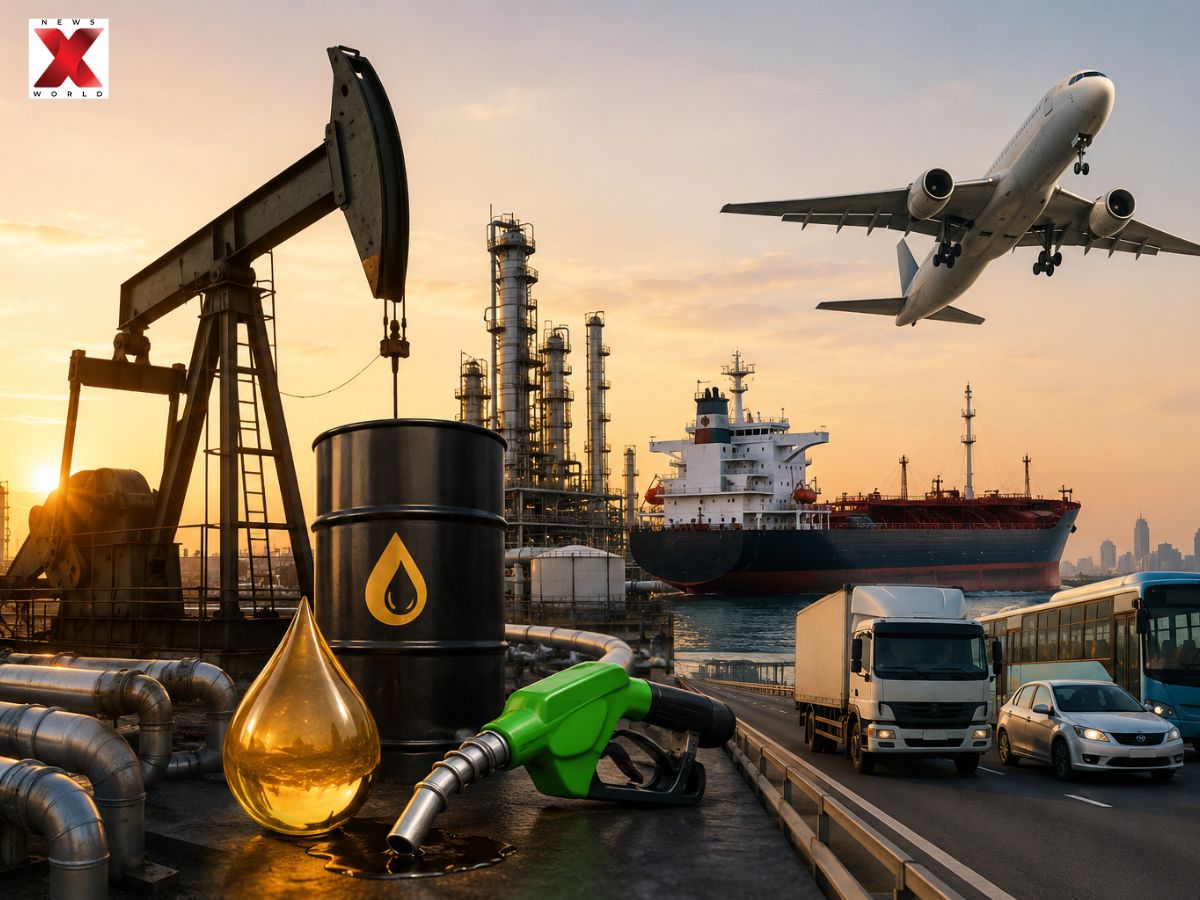
Big Oil Policy Shake-Up! Government Rewrites India’s Energy Rulebook To Fuel Growth: Oil and Gas Policy in India Takes a Leap Forward as India’s oil and gas policy has received a substantial makeover, with the government calling it a landmark change for the country’s energy future. The government has rationalised royalties under the Oilfields (Regulation and Development) Act (ORD Act), removing regulatory confusion and inconsistencies that have plagued the upstream sector for years. The policy overhaul is expected to create a stable and predictable investment climate for India’s oil and gas industry. After years of regulatory uncertainty, will this finally spur domestic energy production and reduce costly imports? Industry analysts say the reform could usher in a new era of investment, faster exploration, increased production and stronger long-term energy security.
The Government of India has rationalised royalty rates & methodologies for Crude Oil, Natural Gas, and Casing Head Condensate.
Union Minister for Petroleum and Natural Gas Hardeep Singh Puri tweeted, “This landmark decision will be a major step toward regulatory clarity.… pic.twitter.com/Uh0eqNyHhl
— ANI (@ANI) May 12, 2026
What Has Changed Under The New Rules?
- Revised framework follows the 2025 amendments to the ORD Act and Petroleum and Natural Gas Rules.
- Government has introduced updated royalty calculation methods for crude oil, natural gas and casing head condensate.
- New rules aim to simplify older royalty systems and regulatory procedures.
- Changes remove long-standing policy inconsistencies across different oil and gas regimes.
- Framework is designed to create a more stable and predictable environment for the upstream sector.
Will This Oil Policy Finally Bring Relief At The Petrol Pump?
India’s new oil and gas reform might not make petrol and diesel cheaper overnight, but it could shift the fuel-price narrative for millions of daily commuters. India imports a large portion of its crude oil, so global oil price fluctuations and geopolitical tensions often hit Indian consumers hard. The new measure aims to speed up domestic exploration and production by making the upstream sector more investment-friendly, though the impact will unfold gradually. So, if India starts producing more crude oil and natural gas, will future fuel shocks become less painful? Experts say a stronger domestic supply chain and improved energy security may eventually shield commuters from sudden petrol and diesel price hikes.
From Airlines To Cab Services: How India’s Oil Reform Could Reshape Transport And Energy Security
- Stable energy policies could benefit transport-linked sectors such as airlines, cab operators, delivery services and public transportation systems.
- Reduced volatility in fuel supply and pricing may improve operational planning and help manage transportation costs more efficiently.
- According to Hardeep Singh Puri, the latest reform is the result of nearly a decade of efforts to modernize India’s energy regulations.
- The government aims to replace complex regulatory systems with a more predictable and investor-friendly framework.
- The broader focus of the reform is to strengthen India’s long-term energy security and support future growth in the oil and gas sector.
(This article has all the inputs from ANI)
Aishwarya is a journalism graduate with over three years of experience thriving in the buzzing corporate media world. She’s got a knack for decoding business news, tracking the twists and turns of the stock market, covering the masala of the entertainment world, and sometimes her stories come with just the right sprinkle of political commentary. She has worked with several organizations, interned at ZEE and gained professional skills at TV9 and News24, And now is learning and writing at NewsX, she’s no stranger to the newsroom hustle. Her storytelling style is fast-paced, creative, and perfectly tailored to connect with both the platform and its audience. Moto: Approaching every story from the reader’s point of view, backing up her insights with solid facts.
Always bold with her opinions, she also never misses the chance to weave in expert voices, keeping things balanced and insightful. In short, Aishwarya brings a fresh, sharp, and fact-driven voice to every story she touches.





