

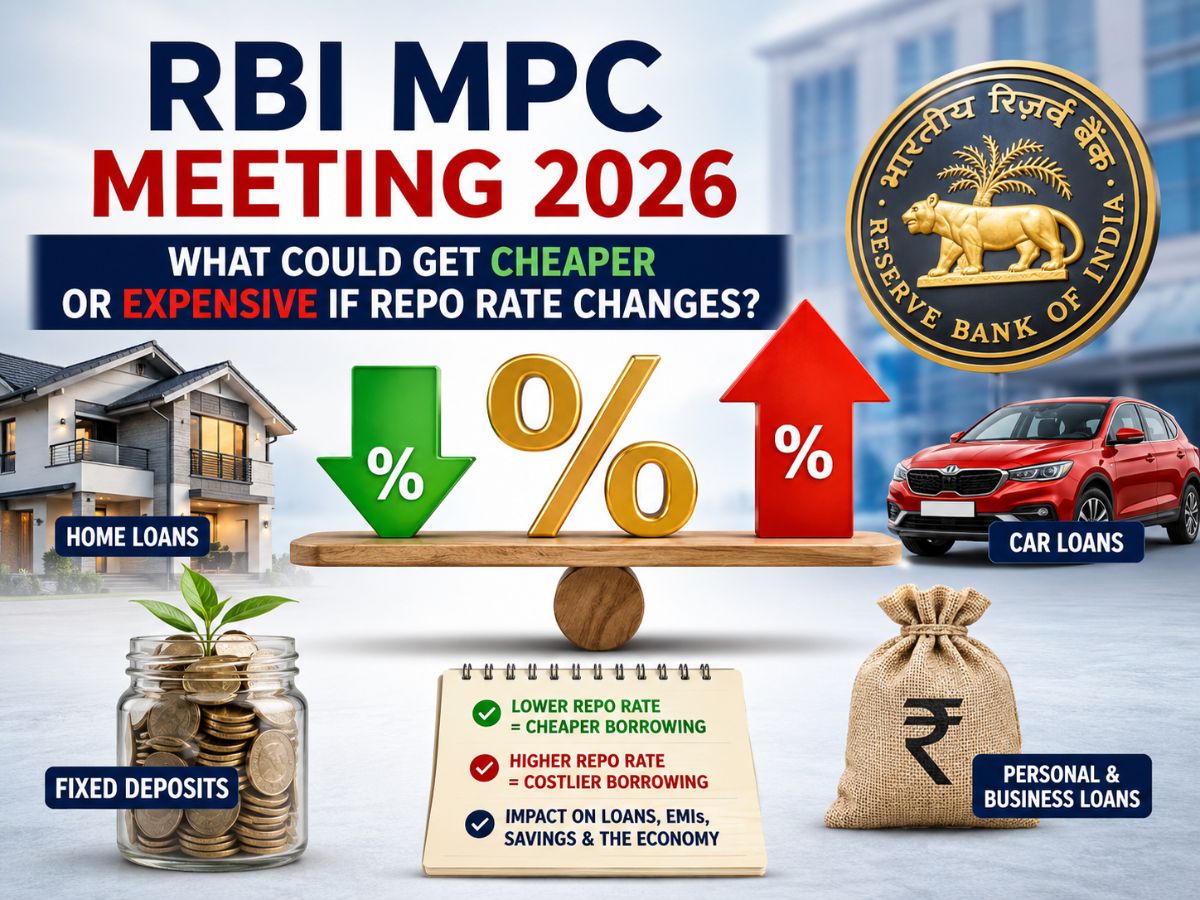
RBI MPC Meeting 2026: If you have taken out a home loan, are planning to purchase a car or would likely take out a loan in the coming few months, then be watchful of the RBI monetary policy meeting’s outcome on 5 June. The RBI’s monetary policy committee is expected to determine whether the repo rates should remain the same, rise, or ease further after its three-day meeting that started today, June 3. The result of this meet will have a direct impact on all interest rates, including those of home loans, car loans, and personal and business loans. It will also affect earnings on fixed deposits and savings schemes, whether you have borrowed or are an investor in them.
Though economists have predicted that interest rates would not move, holding the rate at 5.25% for now, borrowers nationwide have one question: whether there would be a hike, drop or same level of EMI for the existing and new borrowers. With the rise in crude prices and international instabilities and inflation risk, borrowers want to know, would they be able to ease their borrowing costs, or would the RBI lift some of the burden?
It depends a lot on the repo rate.
What Is the Repo Rate?
The repo rate is the rate at which commercial banks borrow money from RBI in case of need. As a consequence, home loan, car loan, and all other loan rates are expected to rise. The banks may pass the reduction of the repo rate (cheaper borrowing) to the borrowers in the shape of a cheaper loan.
Basically, it signifies how cheap or expensive borrowing is for the whole economy.
What Becomes Cheaper Or Costlier If The Repo Rate Changes?
The repo rate move impacts more than just home loans. It directly impacts the cost of borrowing for households and businesses.
As the rates move downwards, the loan products such as housing loans, car loans, personal loans, education loans, business loans, etc. can also become cheaper to borrow provided the benefits are passed on by the banks. Lower costs will mean lower EMIs and can push people to buy bigger things.
Raising interest rates would make it more expensive to borrow. Interest rates on new loans can soar, and those on floating rates can feel the pinch with each instalment.
What Happens To Your Savings?
Changes in repo rates also have a bearing on your savings.
As the interest rates fall, banks may reduce the returns on fixed deposits and savings accounts. This can make traditional savings products less attractive. But in a scenario of rising interest rates, banks could increase their deposit rates to get hold of more money, thereby yielding better returns to savers with regard to FDs and a few other deposit instruments.
In summary: borrowers are generally the gainers of lower rates, while savers profit from the higher rates.
How Repo Rate Changes Affect The Wider Economy
The repo rate decision has far-reaching implications and is not limited to individual borrowers and depositors.
Low interest rates can encourage people to spend more, buy homes, buy vehicles and invest in businesses. Lower costs for funds typically result in positive impact for real estate, autos and other markets. The market may benefit with a higher valuation driven by lower costs that support growth and earnings.
On the other hand, increased costs of funds can bring the market down. An increase in borrowing costs may curb consumer spending, lower demand for credit and eventually slow down the economy. This approach is how the RBI attempts to curb inflation when prices increase at a faster than desired pace.
Why Is The RBI On A Sticky Wicket This Week?
The Reserve Bank of India has had to sweat more than in the past fortnight.
Middle East tensions have inflated crude oil prices and may prove inflationary for India. Moreover, depreciation of the rupee against the US dollar has made imports to India costlier. Although retail inflation is relatively contained, policymakers are keenly observing developments abroad which may soon start hurting prices.
It is widely believed by the economist fraternity that, with these contrasting indications, the RBI is likely to continue its prudent stance and maintain its current interest rates.
What Can Happen To Your Home Loan EMI?
For a long-term home loan, even a small shift in the interest rate can translate to a large amount over its lifespan.
For example, say you had borrowed Rs 60 lakh in the form of a home loan, which has 20 years to go for repayment. Should the home loan rate drop from 8.5% to 8.25%, the EMI could decrease by about Rs 1,000 a month. That could mean saving a few lakh rupees over the life of the loan.
In case of a hike in rates, borrowers may see an increase in their EMIs or a longer loan tenure depending on how the lender reworks the loan.
Therefore, home loan borrowers are very attentive to every RBI policy announcement.
How Much Will Repo Rate Changes Affect EMI On Car Loans?
The impact of change in repo rate on car loan EMIs is not very much, as the value of these loans and tenure is less, usually. Suppose you have taken a car loan of Rs 10 lakh for a tenure of 7 years at an interest rate of 9%; you would have to pay an EMI of around Rs 16,100. In case the repo rate falls by 0.25%, then you can expect to save Rs. 120-150 per month on your EMIs. While this reduction may not appear significant on a monthly basis, it does lead to a decrease in your overall interest outflow throughout the loan tenure.
Higher rates would also increase the total cost of borrowing.
Are You Waiting To Take A Loan Until There’s A Rate Cut?
Many people are sitting on the sidelines, waiting for interest rates to fall before buying a house or a car. But financial planners generally advise against making major decisions based on expected RBI action in the future.
A little reduction in rates can provide some EMI relief, but factors like property prices, vehicle prices, your income stability and your ability to repay the loan comfortably are usually far more important.
It may not always be wise to wait indefinitely for a possible rate cut if a loan fits comfortably in your budget today.
Are Borrowers Worried About EMI Changes Post-RBI MPC Meet?
Home buyers, car buyers and existing borrowers will be keenly watching the RBI’s June 5 policy decision. A sharp rise in borrowing costs looks unlikely for now, but interest rates will continue to be affected by inflation trends, crude oil prices, currency movements and global economic developments.
For the vast majority of borrowers, it is wiser to concentrate on affordability than to try to second-guess every RBI move. A loan that fits your finances now is likely to be affordable even if interest rates move up or down a little in the future.
Also Read: RBI MPC Meeting Starts Today: Will Rates Be Paused, Cut Or Hiked? Here’s What Economists Expect
Priyanka Roshan is a business writer and assistant editor at the NewsX website who tracks everything from stock market swings and corporate earnings to personal finance trends and policy shifts. Known for turning fast-moving business developments into sharp, reader-friendly stories, she combines speed, accuracy, and a data-driven approach to break down complex financial news for everyday audiences.
With over 9.5 years of newsroom experience, Priyanka has worked with leading media organisations, including Moneycontrol, Times Now, and Ping Digital, covering diverse beats such as business, politics, technology, auto, travel, sports, and the world. From live breaking news desks to SEO-led digital storytelling, she specialises in creating engaging content that keeps readers informed without overwhelming them.





