
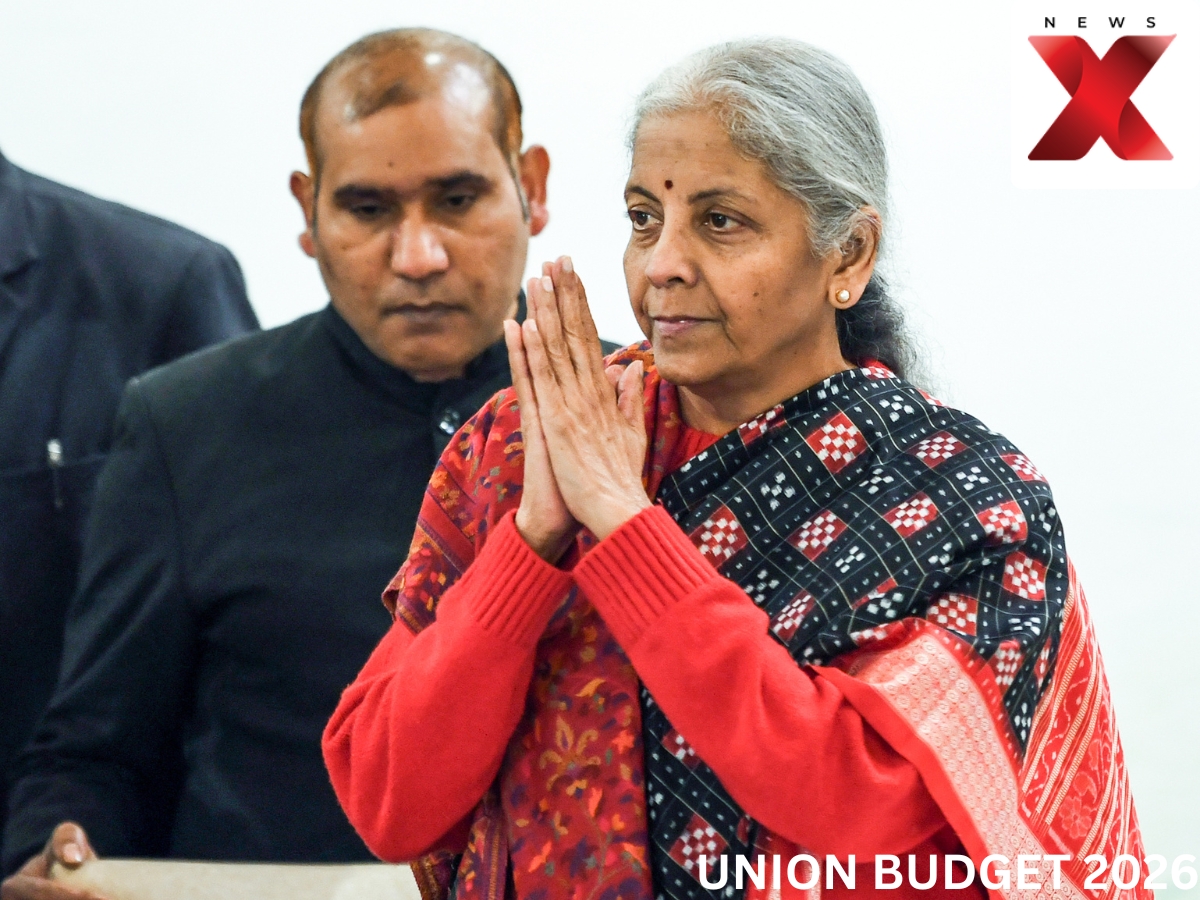

Union Finance Minister Nirmala Sitharaman is set to present the Union Budget for 2026–27 in the Lok Sabha at 11:00 am today. This is her ninth consecutive Budget speech.
The much-anticipated Budget comes at a critical juncture for the Indian economy, as global trade uncertainty intensifies and external pressures mount, particularly due to steep US tariffs impacting Indian exports. Against this backdrop, attention is firmly on the policy direction the government will take to safeguard growth, trade competitiveness, and fiscal stability.
What Are The Budget Expectations This Year?
With growth momentum under pressure from external headwinds, expectations from Budget 2026 centre around a continued capital expenditure push. Key areas likely to remain in focus include infrastructure development, railways, defence, manufacturing, and artificial intelligence-led skilling initiatives aimed at boosting employment and productivity.
Support measures for MSMEs, export incentives to counter the impact of US tariffs, agriculture, healthcare, renewable energy, and a continued emphasis on fiscal discipline also feature prominently among stakeholder expectations.
At the same time, individual taxpayers are hoping for relief measures such as an increase in the standard deduction and rationalisation of TDS norms to improve cash flow.
Will There Be A Tax Cut In Budget 2026?
Tax experts broadly agree that the government is unlikely to make sweeping changes to the old personal income tax regime. Instead, the policy direction is expected to continue nudging taxpayers towards the new tax regime, which has already undergone extensive reforms over successive Budgets.
Over the past few years, the government introduced lower slab rates, higher rebates, and simplified compliance structures under the new regime, positioning it as a long-term structural reform rather than a temporary relief measure.
What Experts Say On Tax Cut In Budget 2026
Dinkar Sharma, Company Secretary and Partner at Jotwani Associates, told The Financial Express that the bulk of reforms in personal taxation have already been implemented.
“Recent Budgets have substantially reshaped the personal income tax framework. The new regime was conceived as a durable reform, not a temporary concession,” Sharma said.
He added that the government’s capacity to announce major income tax cuts is limited due to continued high expenditure on infrastructure, defence, and social welfare schemes, which restrict fiscal flexibility.
According to experts, the nature of taxpayer expectations is also changing. Instead of sharp tax rate cuts, there is growing demand for practical adjustments such as inflation-indexed tax slabs, rationalised exemptions, and smoother compliance mechanisms.
Major Tax Slab Changes Unlikely in Budget 2026
Tax experts remain sceptical about any major overhaul of income tax slabs this year.
A major revision of existing income tax slabs appears unlikely in the Union Budget 2026 as the government has already undertaken significant changes in recent years, particularly under the new tax regime.
Instead, any potential relief is expected to come through modest adjustments designed to ease inflation-driven pressure on household incomes.
Will There Be Relief In Standard Deduction?
One area where some relief may be announced is the standard deduction under the new tax regime. According to experts government may consider increasing the standard deduction under the new tax regime to offer a broad-based relief to salaried taxpayers without complicating the tax structure.
Zubair Amin is a Senior Journalist at NewsX with over seven years of experience in reporting and editorial work. He has written for leading national and international publications, including Foreign Policy Magazine, Al Jazeera, The Economic Times, The Indian Express, The Wire, Article 14, Mongabay, News9, among others. His primary focus is on international affairs, with a strong interest in US politics and policy. He also writes on West Asia, Indian polity, and constitutional issues. Zubair tweets at zubaiyr.amin




