
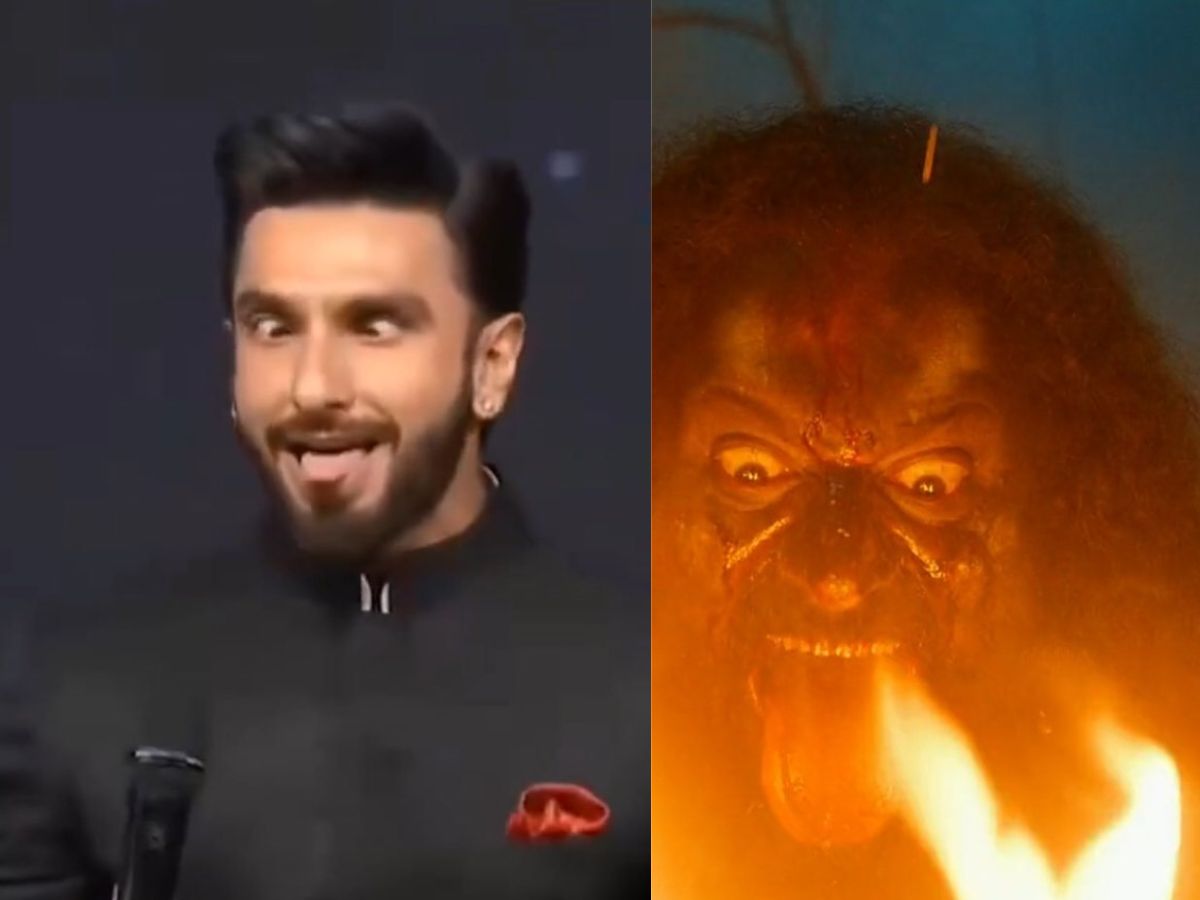

The Bollywood actor Ranveer Singh, famous for his lively public persona, has gotten involved in a huge controversy after his performance at the closing ceremony of the 56th International Film Festival of India (IFFI) in Goa as the main power spot. A lawsuit was filed against the actor for his impersonation of everyone’s ‘Daiva’ possession scene in the film, when the big Karnataka hit Kantara: Chapter 1 was all set to release.
The two main points which were the basis for the complaint are the exaggerated mimic of the climax ritual and, most importantly, the statement made by the actor that the sacred being, the Chamundi Daiva, is a “female ghost.” This kind of misrepresentation and subsequent comic portrayal have received widespread disdain from the Tulu community who consider Daivaradhane a deep and sacred spiritual tradition, not a theater performance.
Religious Sentiment Outrage
The Hindu Janajagruti Samiti (HJS), the Hindu organization, went beyond merely causing online outrage and gave the matter more importance by submitting an official memorandum to the Panaji police. The performer is specifically accused of Goddess Chamundadevi’s offense as the god is depicted in an improper manner and thus the case is intended under the Bharatiya Nyaya Sanhita.
The HJS pointed out that the Chamundi Daiva is a household god for the Tulu people and that such acts may incite anger among the locals. This action demonstrates how serious it is to make fun of local religious beliefs on a larger scale.
Ranveer’s Public Apology
Ranveer Singh was aware of the trolling he received and after that, he filed a complaint which led to his public apology through social media. The actor felt very guilty for hurting people’s feelings inadvertently, and he also kind of hinted that he was only trying to admire the “amazing performance” of Kantara star Rishab Shetty. The actor stated that he has the greatest respect for all cultures and traditions.
Notwithstanding, the discussion around the issue remains and it is part of a larger discourse on the importance of cultural sensitivity and the public figures’ responsibility when they are involved with the sacred art forms of a particular region, as in this case, the context of the tradition was apparently misunderstood.
A recent media graduate, Bhumi Vashisht is currently making a significant contribution as a committed content writer. She brings new ideas to the media sector and is an expert at creating strategic content and captivating tales, having working in the field from past four months.




