
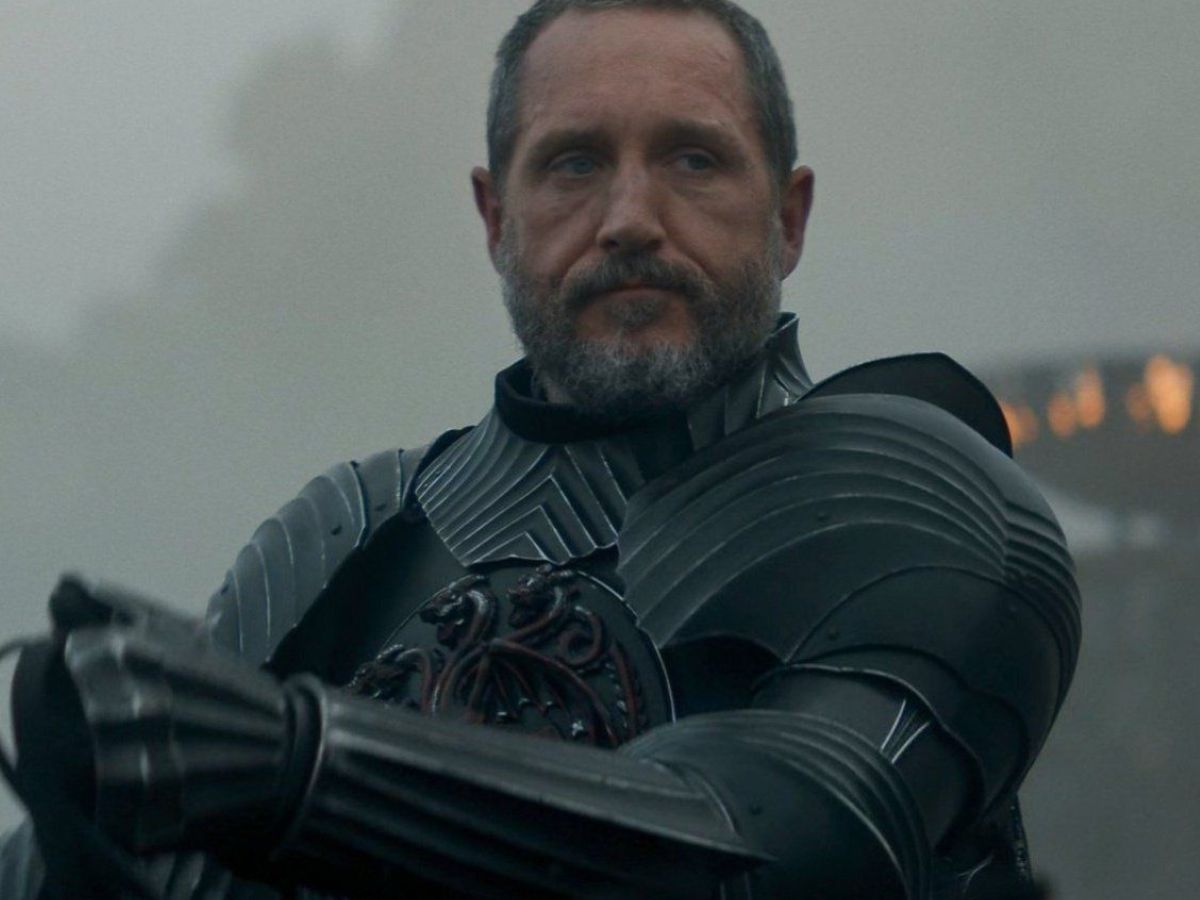

Baelor Targaryen in the episode of A Knight of the Seven Kingdoms Season 1, episode 5, makes an incredible and most honorable decision when he defends Ser Duncan the Tall in the Trial of Seven. His ruling is outrageous since it puts him in the direct opposition to his own brother and nephews, but Baelor sees justice and honor to precede blood. Dunk is a winner who forces Aerion to surrender but the victory does not last long. Baelor does not seem to be hurt at first, but as his helmet is taken off, he turns out to have his skull crushed at the back. In a disturbing, Game of Thrones style twist, the Prince, though mortally wounded, passes away with the injuries to leave what should have been a triumphant end, a sorrowful one.
Episode 5 Of A Knight Of The Seven Kingdoms: Is Baelor Targaryen Dead?
The show and the Hedge Knight evidence both testify to the fact that Maekar Targaryen dealt the final fatal blow. The mace of Maekar hits Baelor in the back during the fuss in the brawl but this is easy to overlook by watching the screen. Maea later confesses but claims that it was not deliberate and he is tormented by the thought and gossip of murdering his own kin. This reading suits the tragic mood of the narrative It is neither betrayal that leads to the death of Baelor but stupid violence out of confusion and fighting. Like most of the most powerful scenes in A Game of Thrones, the virtue does not pay off.
Episode 5 Of A Knight Of The Seven Kingdoms
The death of Baelor changes the fate of Dunk and the line of succession of the Targaryen. Dunk comes to know that the right thing may require the final sacrifice but that does not mean that the future actions would lack meaning. In the immediate aftermath, the son of Baelor Valarr succeeds but a disease shortly destroys that family. And after another series of other tragedies and sudden deaths, years later, Maekar himself finally sits on the Iron Throne. That which started off as an honorable trial in the case of seven transforms the history of Westeros as a whole by showing that a common act of bravery can resonate throughout history with disastrous effects.




