
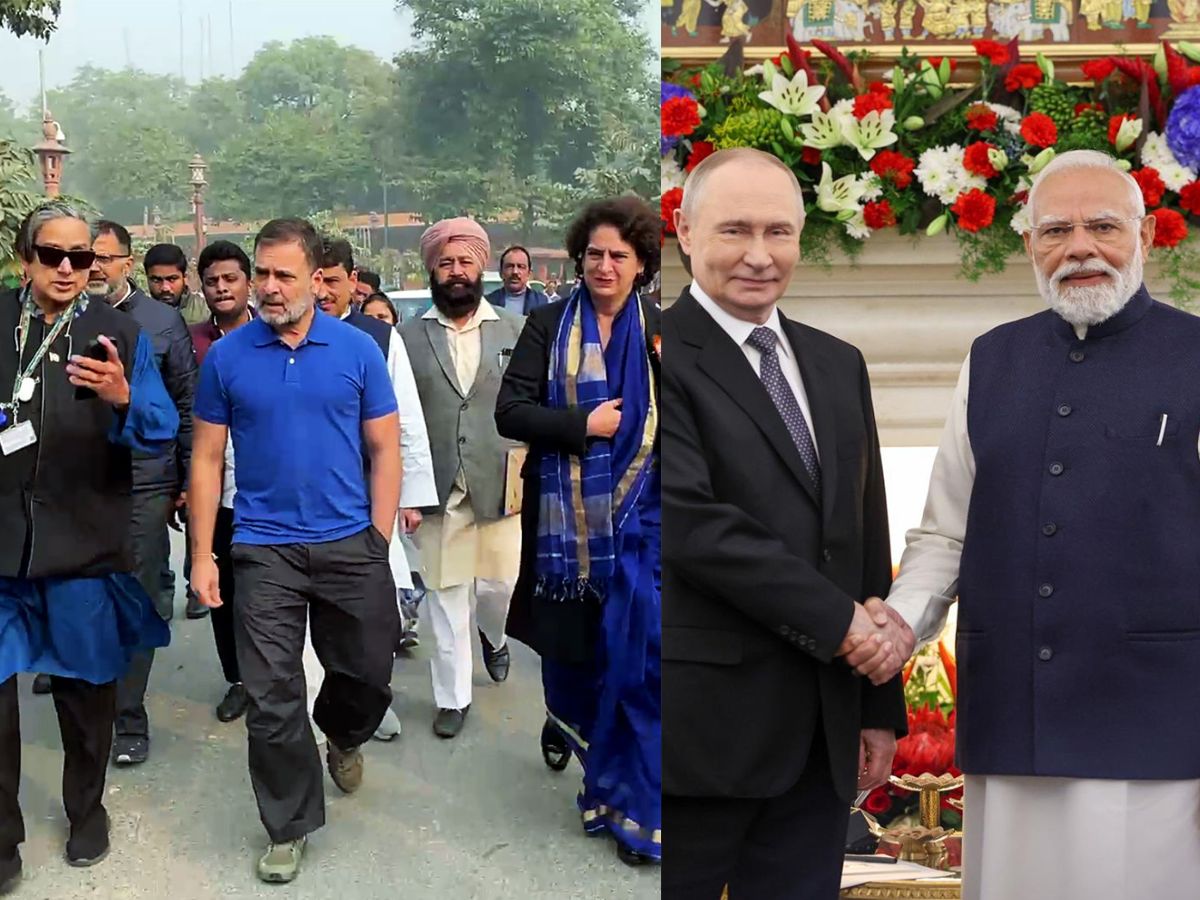

The President Of India, Droupadi Murmu, is holding a lavish dinner for Russian President Putin at Rashtrapati Bhavan, New Delhi, On 5th of December 2025. The invitation list shocked the public with Shashi Tharoor and on the other hand missing top opposition leaders like Rahul Gandhi and Mallikarjun Kharge who are the Leaders of the Opposition in the Lok Sabha and Rajya Sabha respectively. This led to an instant political dispute. The opposition interpreted the exclusion as a breach of protocol and a sign of the president’s partiality. Shashi Tharoor on the other hand confirmed the invite and expressed his desire to participate even when there were questions within his party about the appropriateness and public perception of accepting such a selective invitation.
Diplomacy Within Congress?
The invite to Shashi Tharoor but not to other opposition heavyweights, for instance, was met with firm dissent by party members. One Congress spokesman raised the issue of the government’s criteria for inviting and the judgment of those who accepted it. He said that in a democratic society, not inviting the official opposition’s representatives during a great diplomatic event sends out a wrong message about the government being fair and balanced. The row was indicative of a growing anxiety caused by the decline of political customs and it also made people ask if it was protocol or political calculations that guided the invitation list this time around.
The ‘Timing’ Of The Invitation Of Shashi Tharoor
Simultaneously, Tharoor’s criticism of the ruling party was so vehement that it actually propounded the party itself, therefore, he didn’t mind the publicity. While the Winter Session was ongoing, he referred to constant disturbances and ‘ruckus’ being the methods to gain attention. He argued that it is the job of the MPs to the public which should not be through shouting or dramatics but through reasoning, and debate. Tharoor to the assembly said that he was there to ‘speak for them using intelligence,’ not just to make noise. These comments brought out the divisions in the opposition mainly regarding the protest methods and the parliamentary conduct.
The pairing together of these two happenings the invitation for the state dinner and the open censure of the chaos in Parliament has caused discussions about Tharoor’s political inclination and potential departure from the party line. Commentators point out that Tharoor’s acceptance of the dinner invitation when the LoPs were not present may create the idea of him being more inclined to cross party or non partisan participation. Concurrently, his warning about the usage of protest as a means of opposition leading to such a thought that politics needs to be more civil and constructive. Some in the Congress party view this as a matter of his being in opposition to the traditional areas of the party’s identity, others see it as a movement toward reforming the way opposition politics is played out in India.
India About To Witness A Shift In Political Equations?
Collectively, these innovations point to a larger occurrence of stress and changing over in India’s political culture, its opposition, and Tharoor’s political identity in personal terms. While Congress struggles with internal dissent and external criticism, the twofold narrative of diplomatic inclusion through the Putin dinner and institutional critique through Parliament stance renders Tharoor a central figure in the discussions concerning political ethics, representation, and the future direction of opposition politics in India.




