
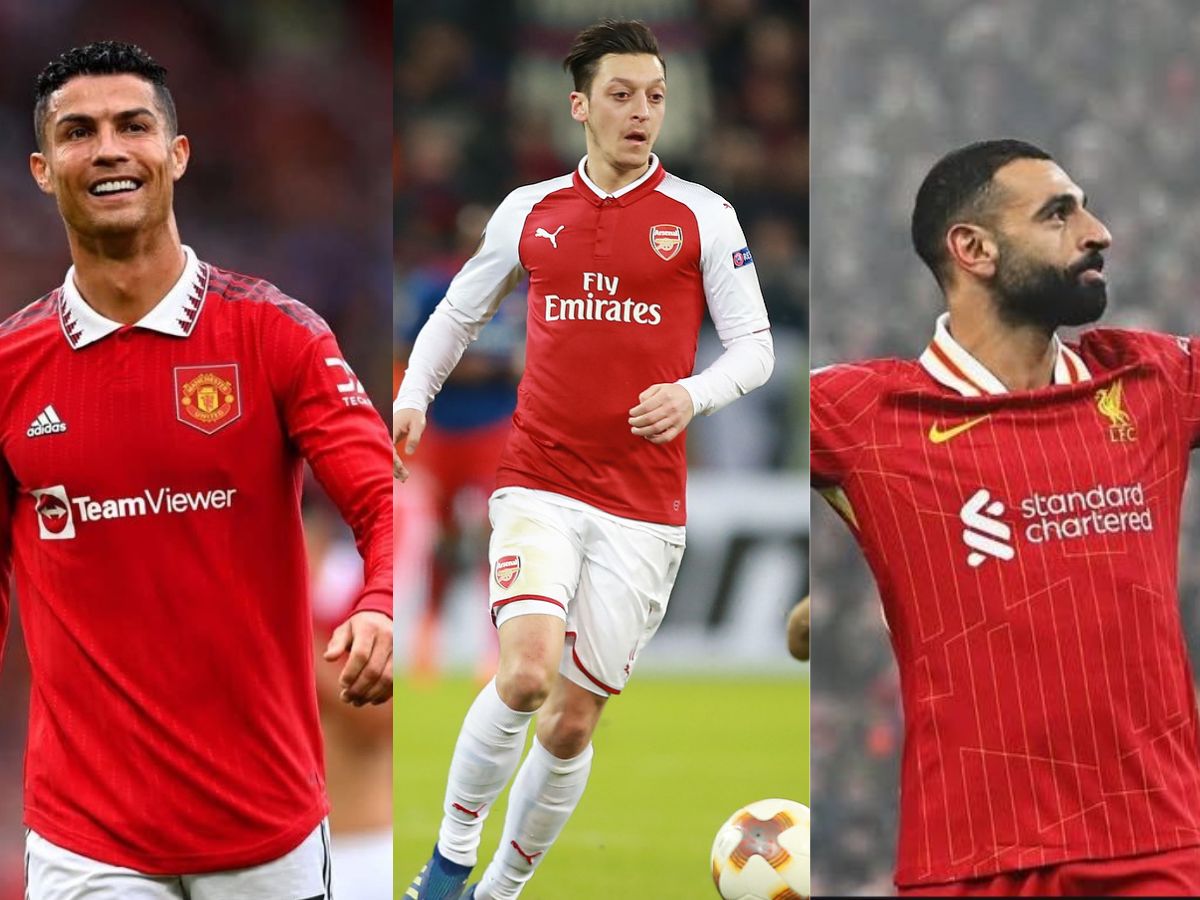

Football has been portrayed as a universal language capable of bridging the gap between politics and the current messy situation. At the moment, football clubs have turned into nothing more than global corporations with a stronghold in all aspects of the world. Political disputes have definitely taken over football, starting from teams owned by state and ending with sponsorship deals that are closely connected with politics. It is now impossible to think that the best players, especially those who are the most famous, would be neutral in such cases. Whenever a team implies or openly states its political view, the non participation of its most popular player often tells the audience a stronger message than the words would do.
Why Legends Like Mohamed Salah, Cristiano Ronaldo And Mesut Ozil Speak out?
In the contemporary world, the likes of Cristiano Ronaldo, Mohamed Salah, and Mesut Ozil are considered the modern era’s legends, having a gigantic platform when compared to the past footballers. Their power or rather their influence goes beyond the stadiums, reaching social media, sponsorships, and even the massive fan base that they possess. Ozil’s public comments on human rights and geopolitics quickly pointed out how football could be involved in the international political arena, sometimes even at a great personal and professional risk. The situation with Ronaldo and his club management’s negative comments eventually led to the revelation of the power struggles among the top institutions, thus also confirming that players have transformed from being mere employees to very powerful stakeholders. These personalities know that whatever they say will not only affect the sports field.
Current Tussle Between Liverpool And Mohamed Salah
Over time, the clubs have undergone transformation from being representations of local communities to becoming brands with ideological presence. Often, footballers are put in politically charged atmospheres due to the campaigns around social justice, equality, and inclusion, which, though sometimes necessary and progressive, are also part of the football world. Mohamed Salah, for example, is not only a goal scorer for Liverpool, he is a hero of the culture in the whole Middle East and even farther. Situations where one does not take sides become hard when based on identity, religion, or nationality fans project their expectations onto players. In such a setting, one can be speaking up or the other way around, being the case of personal belief or being a forced global issue.
To Speak Or Not To?
Thus, the issue is not whether the football greats should speak, rather, it will be how their voices will transform the game. Official pronouncements can liberate the oppressed and enliven the long overdue dialogue, yet they can also aggravate the cleavage among the supporters and draw the ire of the institution. The sport has less and less of a barrier separating it from the world’s political currents, and its most significant stars are standing at the crossroads where sport, culture, and power meet. For contemporary legends, being quiet is becoming less common and at times impossible. As the clubs become more political by both accident and design, the period of the wholly ‘football only’ legend may well be over.
Also Read: Mohamed Salah’s Comments Hint At Deepening Rift With Liverpool, Says ‘Someone Doesn’t Want Me Here’




