
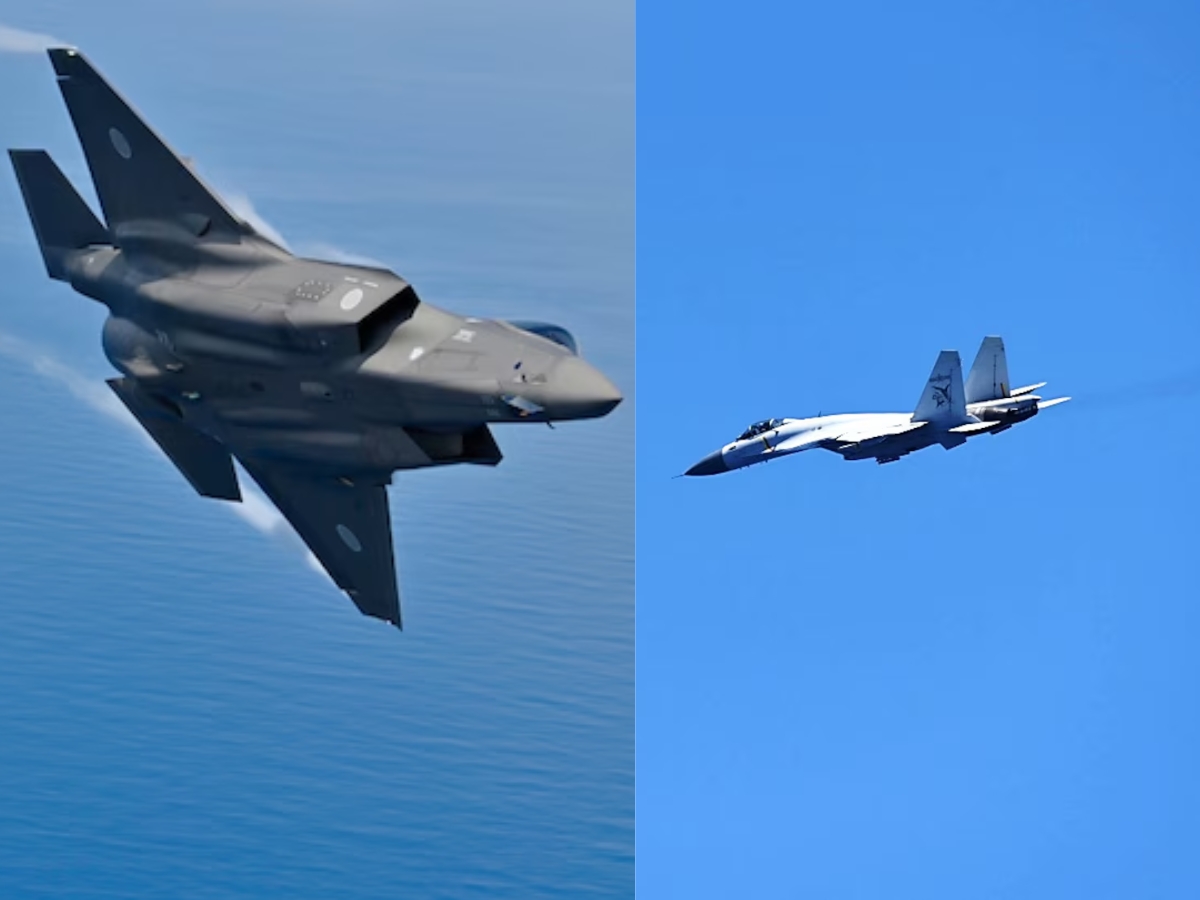

Japan and China remain locked in a diplomatic standoff, and war clouds are looming following Japanese Prime Minister Sanae Takaichi’s recent comments on Taiwan. The tensions have escalated further after Chinese state media alleged that Japan is accelerating construction on a new Self-Defense Forces base on Mageshima Island.
According to Chinese reports, the facility will also host the relocation of the US military’s carrier-based aircraft Field Carrier Landing Practice (FCLP). Although the base is scheduled for completion by 2030, Beijing argues that the project signals Tokyo’s intent to pursue long-term military expansion. Japan has not responded to these specific accusations.
Japan Accuses Chinese J-15 Jets of Approaching Its Aircraft
The dispute intensified after Tokyo accused Chinese J-15 fighter jets of aiming their radar at Japanese military aircraft in at least two incidents near the Okinawa islands. Japan labelled the radar illuminations a “dangerous act.”
China, however, rejected the accusation. Navy spokesperson Colonel Wang Xuemeng claimed that Japanese aircraft had “repeatedly approached and disrupted” Chinese naval operations during previously announced carrier-based flight training east of the Miyako Strait.
Amid these rising tensions, Beijing has also paused plans to resume imports of Japanese seafood.
China Condemns Japan’s ‘Threats’, Calls Them ‘Completely Unacceptable’
China’s Foreign Minister Wang Yi sharply criticised Japan during a meeting in Beijing with German Foreign Minister Johann Wadephul. Referring to Japan’s complaint over the radar incidents, Wang accused Tokyo of militarily provoking China.
Wang argued that Japan, “as a defeated nation,” should have exercised greater restraint, especially in the 80th anniversary year of the end of World War II.
“Yet now, its current leader is trying to exploit the Taiwan question, the very territory Japan colonised for half a century, committing countless crimes against the Chinese people, to provoke trouble and threaten China militarily. This is completely unacceptable,” he said, as quoted by China’s Xinhua news agency.
Japan governed Taiwan from 1895 to 1945 before handing it over to the Republic of China, which later relocated to Taiwan after losing the civil war to Mao Zedong’s forces in 1949.
Competing Historical Claims Over Taiwan
Wang also criticised Prime Minister Takaichi’s “reckless remarks on hypothetical situations on Taiwan,” insisting that the island’s status as Chinese territory had been “unequivocally and irreversibly affirmed by a series of ironclad historical and legal facts.”
Taiwan’s government rejected this position, reiterating that the People’s Republic of China “did not exist in 1945 and has never ruled Taiwan.” The island continues to be formally known as the Republic of China.
Wang countered by saying that the People’s Republic of China, as the successor state to the Republic of China, “naturally” holds sovereignty over Taiwan.
Japan Repeats Warning Over Radar Use
Asked about China’s justification for using radar on Japanese aircraft, Chief Cabinet Secretary Minoru Kihara repeated Tokyo’s stance that the incident posed a significant safety risk.
“The intermittent illumination of radar beams is a dangerous act that goes beyond what is safe and necessary,” he told reporters. Kihara declined to confirm Japanese media reports suggesting Beijing did not respond on the bilateral hotline established in 2018 during the incident.
What Triggered the China-Japan Conflict?
The current tensions stem from a November 14 parliamentary exchange in Tokyo. Prime Minister Takaichi was asked by an opposition lawmaker about potential “survival-threatening situations.” She responded that a scenario in which Beijing attempts to bring Taiwan fully under its control using battleships and military force could meet that threshold.
The phrase “survival-threatening situation” has a specific legal meaning under Japan’s 2015 security legislation. It describes a situation in which an armed attack on a foreign country with close ties to Japan threatens Japan’s survival and endangers the fundamental rights of its citizens.
Beijing reacted sharply to Takaichi’s remarks, condemning them as a direct challenge to China’s sovereignty over Taiwan.
Also Read: ‘India Shouldn’t Be In Delusion’: Asim Munir Warns In Powerful First Address As Tri-Services Chief
Zubair Amin is a Senior Journalist at NewsX with over seven years of experience in reporting and editorial work. He has written for leading national and international publications, including Foreign Policy Magazine, Al Jazeera, The Economic Times, The Indian Express, The Wire, Article 14, Mongabay, News9, among others. His primary focus is on international affairs, with a strong interest in US politics and policy. He also writes on West Asia, Indian polity, and constitutional issues. Zubair tweets at zubaiyr.amin




