
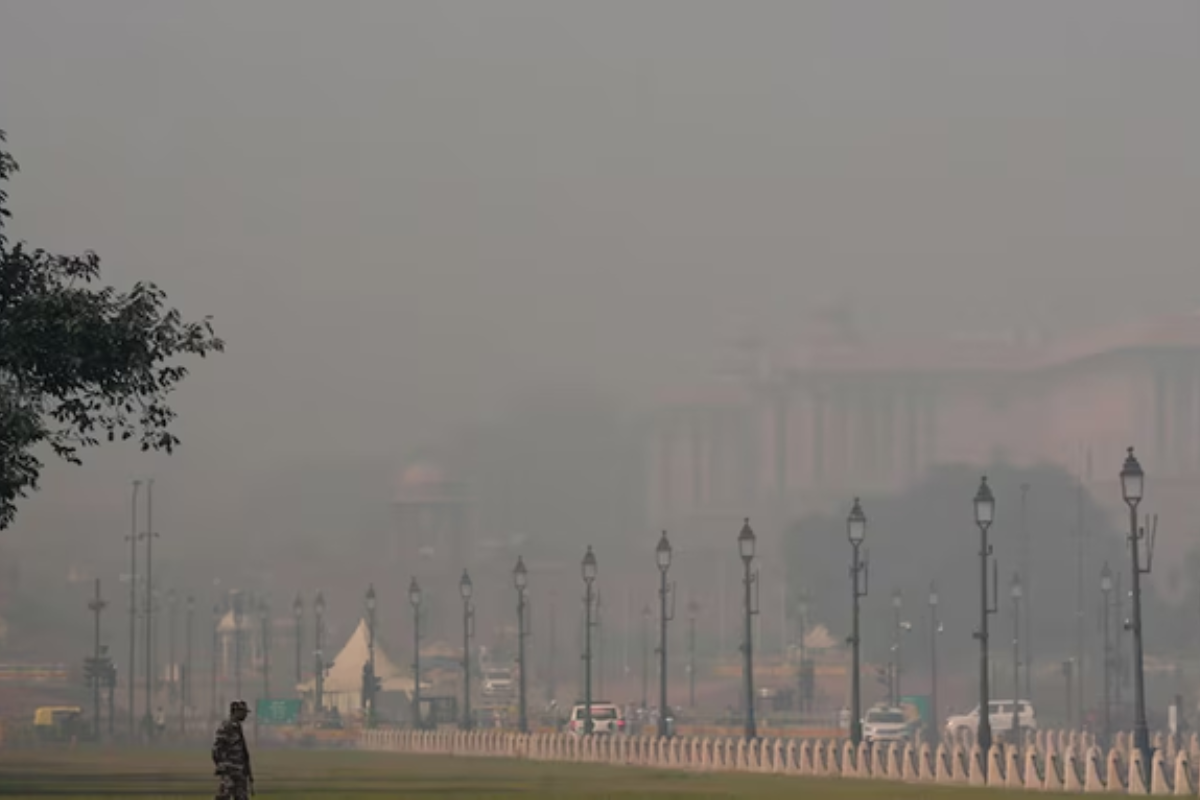

Delhi Pollution: The residents of Delhi-NCR continue to face dangerous pollution levels as winter strengthens across North India. Thick smog covers the region, and people find it difficult to breathe when they step outdoors. The latest reports show that the air has turned toxic in several major cities, affecting schools, offices, and daily activities.
Authorities have issued health warnings as pollution numbers move into the severe category. Many residents now rely on masks and purifiers while moving around the city. Emergency measures have also returned, as pollution controls aim to reduce smoke, dust, and emissions during this high-risk period.
#WATCH | Delhi: Visuals around the Wazirpur flyover area this morning as a layer of toxic smog blankets the city. The AQI in the area is 427 in the ‘Severe’ category, as claimed by the CPCB. pic.twitter.com/UZyLma8Yza
— ANI (@ANI) November 22, 2025
Ghaziabad Records the Highest AQI, Pollution Level in the Country
New Air Quality Index readings places Ghaziabad at the top of the pollution chart with an AQI of 548, which falls in the severe category. Noida, with an AQI of 468, also reports very poor conditions, while Delhi records a severe AQI of 445. Other major cities like Lucknow, Kolkata, and Jaipur show very poor air quality.
#WATCH | Delhi: Visuals from Akshardham and surrounding areas as a layer of toxic smog blankets the city.
AQI (Air Quality Index) in the area is 422, categorised as ‘Severe’, as claimed by CPCB (Central Pollution Control Board). pic.twitter.com/ZLIlMGsNtW
— ANI (@ANI) November 22, 2025
These numbers indicate that the toxic haze is not limited to Delhi-NCR but has spread across several regions. People staying in these cities face major health risks, especially sensitive groups like children, senior citizens, and those with breathing problems.
A mix of seasonal conditions and human activities continues to push pollution levels higher in Delhi-NCR. Stubble burning in nearby states releases smoke that travels into the region and settles during winter. Vehicle emissions remain high as millions of cars move through the city each day.
Construction work and road repairs release dust that hangs in the air. Cold winter temperatures trap pollutants near the surface, making dispersion difficult. Industrial areas also add to the pollution load, especially at night when monitoring stays low. These combined sources create a thick layer of smog over the Capital.
#WATCH | Delhi: Visuals from the ITO area earlier this morning as a layer of toxic smog blankets the city.
AQI (Air Quality Index) around the area is 370, categorised as ‘Very Poor’, as claimed by CPCB (Central Pollution Control Board). pic.twitter.com/NdGhgiy58T
— ANI (@ANI) November 22, 2025
Understanding AQI Levels and Their Impact on Health
Residents depend on AQI numbers to understand daily pollution levels. Readings between 0 and 50 indicate good air, while 51 to 100 falls under satisfactory. Moderate levels between 101 and 200 can affect people with health issues. Poor air quality between 201 and 300 causes discomfort for most individuals.
Very poor readings between 301 and 400 may trigger respiratory conditions. Severe pollution between 401 and 500 becomes dangerous for everyone. Long exposure to this range affects breathing and heart health. People living in Delhi-NCR now monitor these numbers closely to plan their outdoor activities.
Medical experts continue to warn that pollution at current levels can cause serious health problems. Asthma and bronchitis cases increase sharply during this period. Many people report burning eyes, irritation in the throat, and a constant cough. Long-term exposure reduces lung capacity and increases the risk of heart-related complications.
Doctors advise young children, elderly citizens, and pregnant women to stay indoors as much as possible. Even healthy adults have been asked to avoid outdoor exercise. Hospitals are seeing a rise in respiratory cases as more people seek treatment for pollution-related symptoms.
Pollution Disrupts Schools, Workplaces, and Sporting Events
The smog has begun to affect normal life across Delhi-NCR. Several schools are holding online classes to protect students from the toxic air. Many offices have again allowed employees to work from home to reduce travel-related exposure. The pollution crisis has also disrupted sporting events.
The BCCI moved the knockout matches of the Under-23 One-Day Tournament from Delhi to Mumbai due to unsafe conditions. The Supreme Court recently expressed concern over hosting outdoor sports in such hazardous air. These decisions show how deeply pollution is impacting public activities in the region.
Must Read: Delhi Crime Alert: Brave 8-Year-Old Fights Off 31-year-old Rapist, Accused Arrested Under POCSO
Swastika Sruti is a Senior Sub Editor at NewsX Digital with 5 years of experience shaping stories that matter. She loves tracking politics- national and global trends, and never misses a chance to dig deeper into policies and developments. Passionate about what’s happening around us, she brings sharp insight and clarity to every piece she works on. When not curating news, she’s busy exploring what’s next in the world of public interest. You can reach her at [swastika.newsx@gmail.com]




