
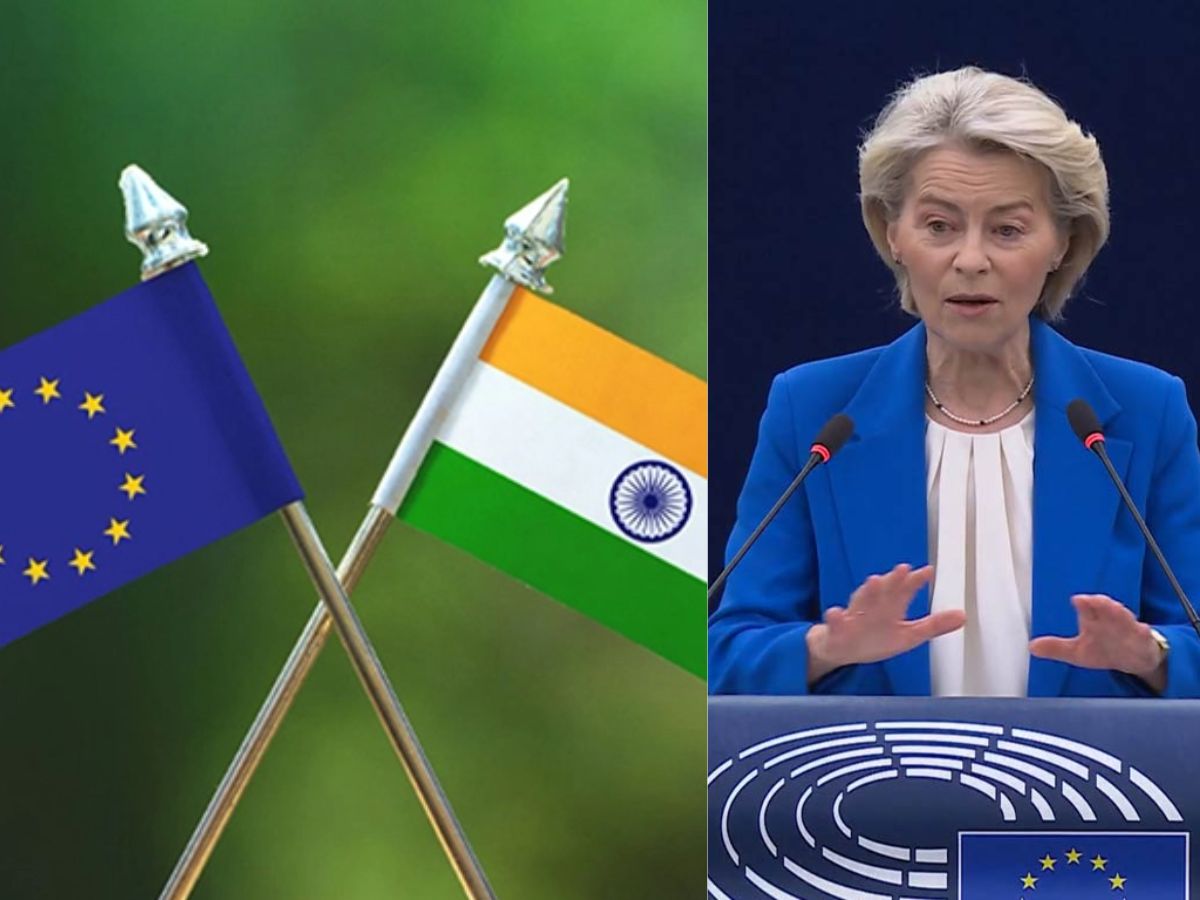

India and the European Union have come to an incredibly significant agreement to make a new Security and Defence Partnership official, a step that was declared by Kaja Kallas, the EU foreign policy chief, on January 21, 2026.
The signing of this agreement is set for the time when the visit of President of the European Commission Ursula von der Leyen and President of the European Council Antonio Costa to New Delhi next week will be very prominent.
Their being the main guests at the Republic Day festivities along with a symbolic EU military force indicates a great change in the two countries’ relationship that now will revolve around strong strategic partnership rather than the previous mainly economic partnership.
The next 16th India-EU Summit is expected to be a venue for an Indian-European monumental Free Trade Agreement (FTA) to be finalized and a cooperation roadmap to be revealed until 2030.
Defence Interoperability
The Security and Defence Partnership (SDP) that is proposed is a political patronage that brings together various security initiatives that are different into one powerful strategic framework. The SDP goes beyond the limits of traditional maritime security and counterterrorism and plans to create top-notch interoperability between Indian and European forces.
The joining of these two armies is going to be a door opener for Indian companies to get access to the EU’s SAFE (Security Action for Europe) program, which is a huge initiative of €150 billion aimed at strengthening defence readiness.
Additionally, the starting of talks for an SOIA (Security of Information Agreement) will mean that classified information will be easily exchanged and also that there will be joint production and development of cutting-edge military hardware like drones and air defence systems.
Economic Synergies
The summit’s main event is the India-EU FTA’s climax, which might be the largest trade deal for India ever. The pact aims at providing a reliable and rules-based alternative to the changing global trade policies by addressing market access for cars, wines, spirits, etc.
A key element is the “compromise solution” for the Carbon Border Adjustment Mechanism (CBAM) discussions, which would make sure that climate ambitions do not turn into trade barriers for Indian steel and cement exports.
Moreover, a new mobility framework will be launched to facilitate the movement of skilled professionals, students, and researchers, thereby connecting Europe’s labor shortage with India’s immense talent pool, which will in turn help the sectors of semiconductors and green energy to innovate.
A recent media graduate, Bhumi Vashisht is currently making a significant contribution as a committed content writer. She brings new ideas to the media sector and is an expert at creating strategic content and captivating tales, having working in the field from past four months.




