
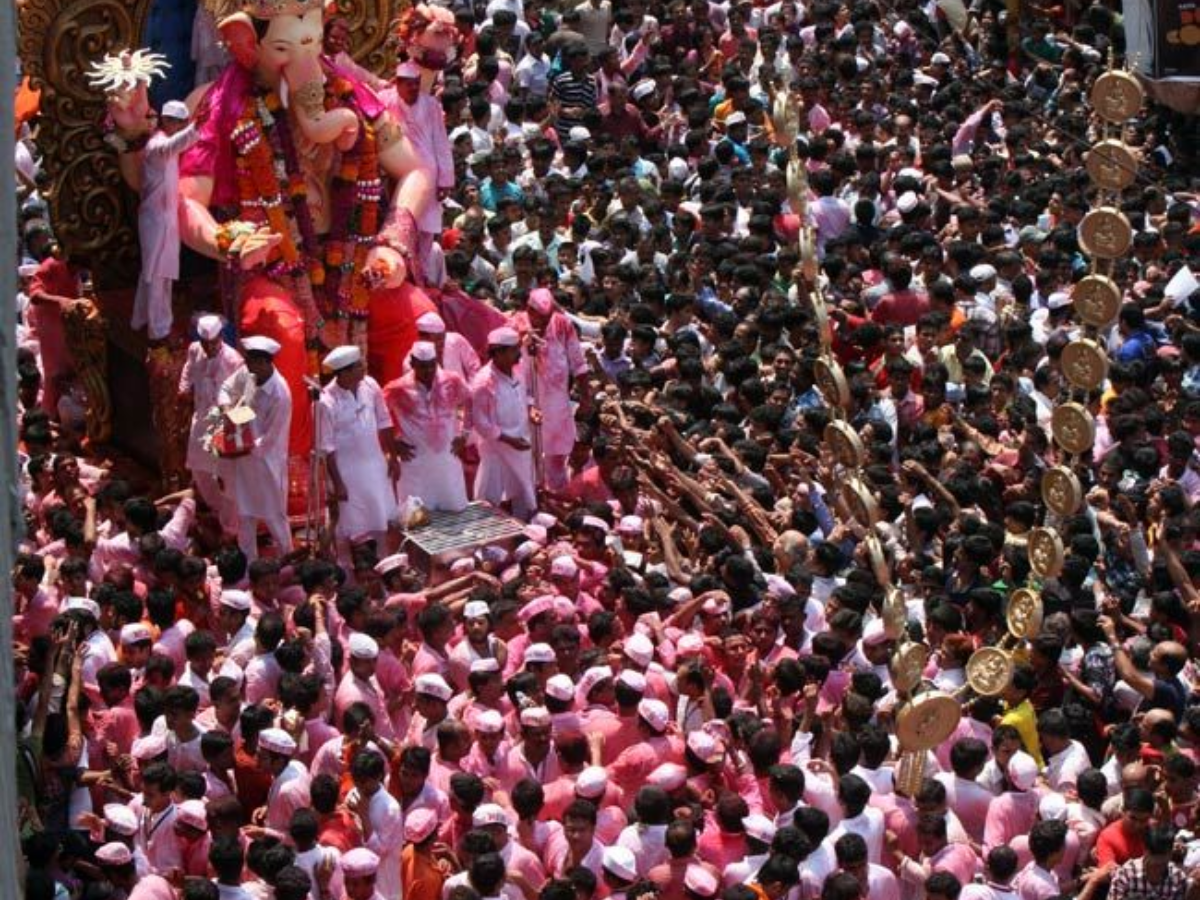

The ’Sarvajanik Ganehotsav’, a festival dating back over 100 years, has been officially declared as the ‘Maharashtra State Festival’, with the government emphasising that the decision was made to preserve and promote the cultural significance of this festival.
While making an announcement, the state’s Cultural Affairs Minister Ashish Shelar said in the Legislative Assembly, “Ganeshotsav is not just a celebration. It is a symbol of Maharashtra’s cultural pride and identity.”
He added, “Certain individuals, for various reasons, have attempted to challenge the traditional public celebration of Ganeshotsav in different courts.
However, the Maharashtra Government under the leadership of Chief Minister Devendra Fadnavis, Deputy Chief Minister Eknath Shinde, and Deputy Chief Minister Ajit Dada Pawar has acted swiftly to overcome all such restrictions and legal hurdles.”
Ganeshotsav, also known as Ganesh Chaturthi, is a 10-day festival that continues until Anantha Chaturdashi. This festival is also known as Vinayak Chaturthi or Vinayak Chavithi.
During the festival, Lord Ganesha is worshipped as the god of new beginnings and the remover of obstacles. Homes and pandals are adorned with elaborate decorations, and the air is filled with prayers, music, and festive chants.
Tilak Was The Man Behind Making One-Day Festival To Mass Celebration
Before 1893, the festival was a one-day affair, largely observed in private. However, that year marked a significant change, leading to the large gathering, vast decorations and several processions for mass celebrations.
The great nationalist and patriot Bal Gangadhar Tilak, referred to as ‘Lokmanya’, or the Leader of the People, was the man who made the one-day festival to public celebration to mobilise people against the British rule in India.
It was the time when the 19th century witnessed the emergence of nationalists who spoke about civil and political rights and raised voices against British rule. Tilak was one of those who had the most radical goal: Swaraj (self-rule), and for this, Tilak had to mobilise the people.
To achieve his goal, Tilak founded the newspapers ‘Kesari’ (Marathi) and Mahratta (English) to spread resistance against the British rule. Before the emergence of Gandhi, he was one of the tallest mass leaders during the anti-colonial movement. And he started the new tradition of worshipping Ganpati in 1893, as a community festival where patriotic songs would be sung and nationalist ideas would be propagated.
He famously said, “Swaraj is my birthright, and I shall have it.”
ALSO READ: Supreme Court Refuses To Stay Bihar Voter Survey, Tells EC To Consider These 3 Documents




