
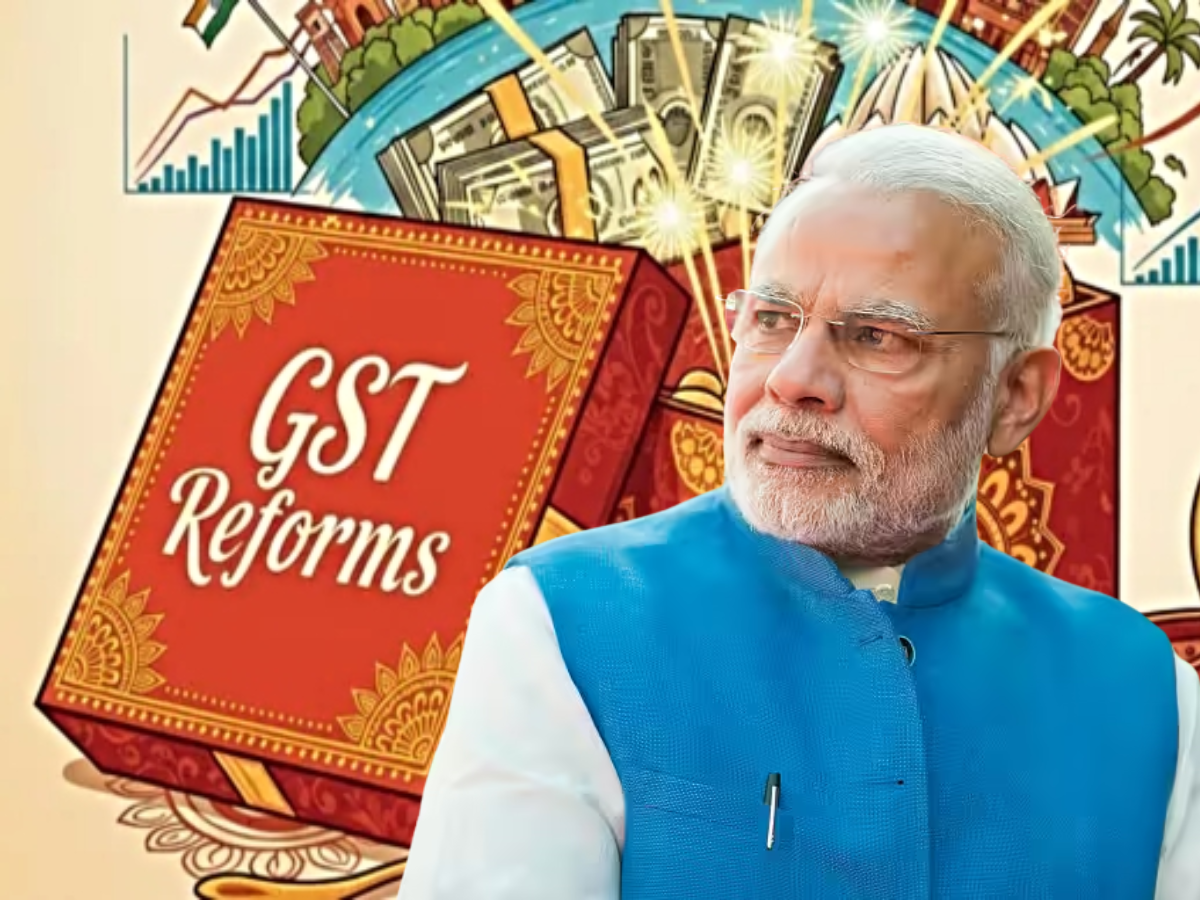

As today Prime Minister Narendra Modi addressed the nation a day ahead of the implementation of GST 2.0, welcoming the Next Generation GST reforms, on the first day of Navratrai and calling it a ‘Bachat Utsav’, oppositions have bombarded on the same.
TMC MP Mahua Moitra leaves no stone unturned to stay on the headlines. Posting her mocking reply on X, she said, “GST Dhamaka or Doland’s Tamacha?”
GST Dhamaka or Doland’s Tamacha?
— Mahua Moitra (@MahuaMoitra) September 21, 2025
Well, one must know that this comes a day after the US H1B visa rule change. India has expressed concern over the US administration’s decision to introduce a $100,000 annual fee on H-1B work visas, warning that the move could cause humanitarian challenges and “potential disruptions for families” impacted by the policy.
In a statement released on Saturday, the Ministry of External Affairs said New Delhi hopes that the US authorities will take appropriate steps to manage these disruptions. The ministry also noted that the government is carefully assessing the broader implications of the policy for Indian nationals and the workforce affected by the proposed fee.
Well, she isn’t alone mocking the PM Modi’s address, the Congress party criticized Prime Minister Modi for taking “sole credit” for the GST reforms. Party general secretary Jairam Ramesh called the reforms “inadequate” and highlighted long-standing issues with GST, including multiple tax brackets, high rates on essential items, complex compliance, and tax evasion.
The Prime Minister addressed the nation today to claim sole ownership of the amendments made to the GST regime by the GST Council, a constitutional body.
The Indian National Congress has long argued that the GST has been a Growth Suppressing Tax. It is plagued with a high…
— Jairam Ramesh (@Jairam_Ramesh) September 21, 2025
Ramesh added that Congress had been calling for GST 2.0 since 2017, as promised in their Nyay Patra for the 2024 elections. He argued that the current reforms do not fully address these problems, despite Modi acknowledging that state governments contributed to the GST changes.
Other Opposition Leaders:
Uttar Pradesh Congress chief Ajay Rai criticized the PM for ignoring the issue of alleged “vote theft” in his speech, calling it “unfortunate.”
Trinamool Congress (TMC) leaders credited West Bengal Chief Minister Mamata Banerjee for pushing the GST reforms. TMC’s Kunal Ghosh said the central government initially imposed high rates, but Banerjee’s protest forced changes. Mamata Banerjee also stated the Centre was taking undue credit for lowering GST rates, which she claimed were suggested by West Bengal in the GST Council meeting.
Aam Aadmi Party (AAP) leader Saurabh Bharadwaj mocked the timing and content of the speech, calling the GST announcement “old news” and noting that Modi did not address urgent international issues like the US H-1B visa fee hike and tariffs.
What Did PM Modi Sya In His Address To Nation:
In his address to the nation, Prime Minister Narendra Modi announced that Navratri will begin tomorrow, marking a significant step towards Atmanirbhar Bharat.
My address to the nation. https://t.co/OmgbHSmhsi
— Narendra Modi (@narendramodi) September 21, 2025
He said that the next-generation GST reforms will come into effect on the first day of Navratri, launching a nationwide ‘GST Bachat Utsav’ to boost savings, investment, and overall happiness. The Prime Minister highlighted that the combined impact of income tax exemption increases and GST reforms will save people around Rs 2.5 lakh crore.
Reflecting on the 2017 GST rollout, he explained that India’s traders and citizens had long struggled under a complex web of taxes including octroi, entry tax, sales tax, excise, VAT, and service tax, which created major hurdles for moving goods across cities.
He recalled a foreign report noting that transporting goods from Bengaluru to Hyderabad was so complicated that some companies considered sending them to Europe first. Modi said these reforms simplify taxation, reduce costs for consumers, and make essentials either tax-free or subject to only 5% GST, creating a “double bonanza” for the poor, neo-middle class, and middle class. He emphasized the principle of ‘Nagrik Devo Bhava’ and expressed high expectations from MSMEs, noting their historic role in India’s prosperity. Modi urged citizens to support swadeshi by buying and selling made-in-India products, stating that every home and shop should reflect this spirit to accelerate India’s growth and global recognition.
Also Read: PM Modi Announces ‘GST Bachat Utsav’, What Is It?
Swastika Sruti is a Senior Sub Editor at NewsX Digital with 5 years of experience shaping stories that matter. She loves tracking politics- national and global trends, and never misses a chance to dig deeper into policies and developments. Passionate about what’s happening around us, she brings sharp insight and clarity to every piece she works on. When not curating news, she’s busy exploring what’s next in the world of public interest. You can reach her at [swastika.newsx@gmail.com]




