
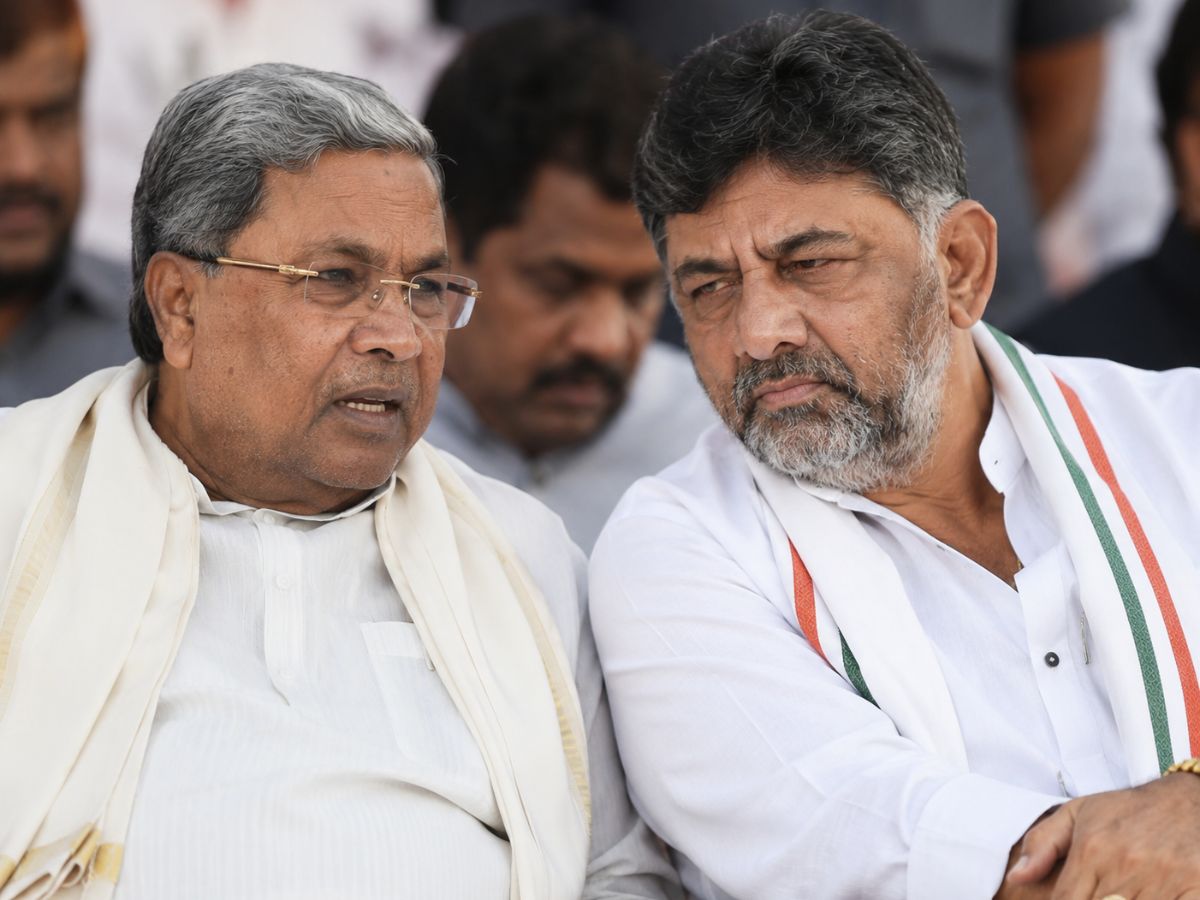
The Karnataka government withdrew its February 2022 order on school uniforms and introduced new rules allowing students to wear certain traditional and religious symbols along with the prescribed uniform in government, government-aided, private schools and pre-university colleges.
The new order removes the earlier rule that strictly banned religious symbols with uniforms, an issue that had led to major controversy over Muslim students wearing hijabs in educational institutions.
“Permissible traditional and faith-based symbols may include items commonly worn by students such as turban, Janeu, Shivadhara, Rudraksha, hijab or similar forms. However, such items shall not affect discipline, safety or identification of students,” the order stated.
Karnataka Government Allows Hijab, Religious Symbols With School Uniforms
Under the new rules, schools and colleges must still follow their prescribed uniforms. However, students can now wear certain religious and traditional symbols such as turbans, peta, sacred thread, shivadara, rudraksha beads, and hijabs or headscarves, as long as they match the uniform rules and do not affect discipline, safety, student identification, or the purpose of the uniform.
The government has clearly said that no student can be stopped from attending classes, exams, or other academic activities for wearing these permitted symbols with the uniform. It also said that no student can be forced either to wear or remove such symbols.
The dress rules for national and state-level exams will still remain in force during those examinations. The government said the new order must be implemented fairly and without discrimination, while following constitutional values like equality, dignity, brotherhood, scientific thinking, and the right to education.
Schools and colleges have been told not to harass or discriminate any students over these issues and to make sure no child is stopped from getting an education while maintaining discipline on campus. Any old rules or circulars that go against the new order will no longer be valid.
The government said the changes were made using powers given under the Karnataka Education Act, 1983, which allows it to regulate educational institutions and maintain discipline and public order.
Karnataka Minister Explains Reason Behind New Uniform Rules
The government said schools and colleges are not just places of education, but also spaces where students should learn values such as equality, respect, secularism, discipline, social harmony, scientific thinking, and brotherhood.
Karnataka Education Minister Madhu Bangarappa said there have been several incidents related to religious symbols in schools and colleges. He referred to a recent case on April 24 where a student was allegedly asked to remove a sacred thread, which upset the child, parents, and community groups.
He said such issues, whether related to earrings, sacred threads, or other religious items, should not affect a student’s education or future because they are part of religious practices.
BJP, VHP Criticise Karnataka Government’s New Uniform Order
BJP MLA Bharat Shetty criticised the new order, saying, “It is an attempt to divert from their failures” and that “Hindi students must also be allowed to wear saffron shawls.”
“If the Karnataka State Government permits hijab in educational institutions, then Hindu students should also be allowed to wear saffron shawls. This was the demand raised by students in Karnataka when the hijab controversy first erupted. Though the High Court had banned hijab in educational institutions, holding that it is not an essential religious practice in Islam, and the matter is currently pending before the apex court, the Siddaramaiah Government is determined to revive the controversy, leading to law and order issues,” said Girish Bharadwaj, advocate and Vishva Hindu Parishad (VHP) leader.
Why Karnataka Government Revised The 2022 Uniform Order?
The 2022 order had made it compulsory for students in government and private schools and pre-university colleges to wear uniforms decided by their institutions. In places where there was no fixed uniform, students were asked to wear clothes that followed the principles of equality, unity, and public order. Later, several groups requested the government to allow students to wear certain traditional and religious symbols linked to their cultural and religious identity.
After reviewing the matter, the government decided that discipline and order in educational institutions could still be maintained without completely banning such symbols, as long as they do not clash with the uniform rules, hide a student’s identity, or disturb discipline, safety, classroom teaching, or public order.
The government also said it studied dress code practices followed in central government-run Kendriya Vidyalaya Sangathan schools during its review.





