
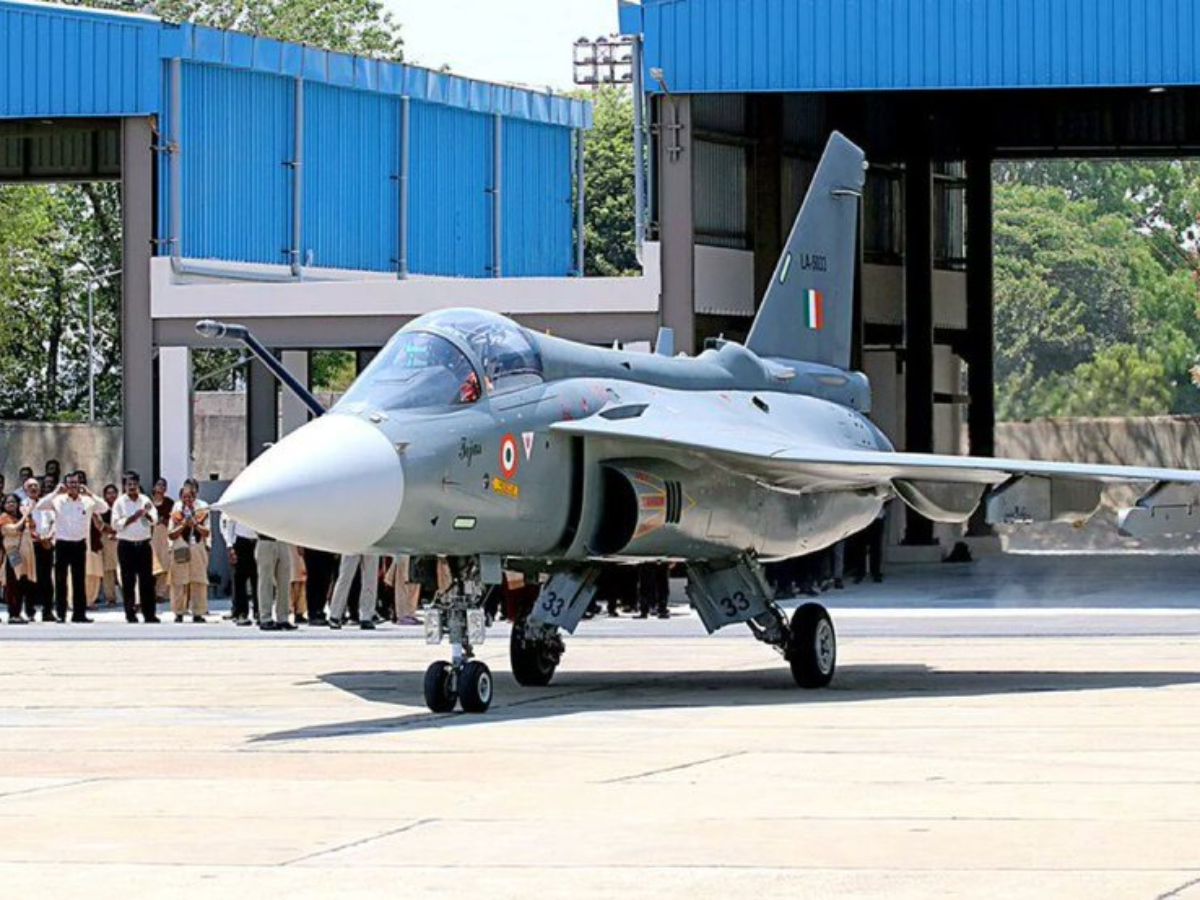

The HAL Tejas Mk1A is one of India’s most important fighter jets today. It’s a single-engine, multi-role combat aircraft built largely in India by Hindustan Aeronautics Limited (HAL) and the government. It costs far less than many foreign fighters, which is roughly Rs 315 crore (about $43 million) per jet and makes it a much cheaper option compared with jets like the Rafale or Eurofighter.
The Mk1A is an upgraded version of the earlier Tejas design. It has advanced avionics, a powerful AESA radar (which helps it find and track targets), better electronic warfare systems, and the ability to carry modern weapons such as beyond-visual-range missiles and guided bombs. Over 60 % of its parts are now made in India, which helps the country build its defence industry and move closer to self-reliance.
HAL Tejas Mk1A: Big Orders, Big Expectations
Reports say that, in September 2025, the Indian government approved a huge deal of around Rs 62,370 crore (about $7 billion) to buy 97 more Mk1A jets on top of an earlier order for 83. This brings the total Tejas Mk1A fleet to 180 aircraft, which will help plug the Indian Air Force’s (IAF) shortage of modern fighters.
However, the production and delivery of these jets has hit some unexpected delays because of software and engine issues.
According to a fresh update, HAL now expects to complete 16 Tejas Mk1A aircraft by March 2026, the end of India’s current financial year. These jets would be physically built and nearly ready to go.
HAL Tejas Mk1A: Production Delays Explained
As per reports, the company says the real hold-up isn’t the airframes. It’s the need to refine the software, especially software that links the cockpit controls, sensors, mission systems and weapons systems together. HAL officials explain that these software tweaks are important to make sure the aircraft work exactly the way the IAF wants them to in real combat conditions.
HAL is also dealing with a shortage of engines. The Tejas Mk1A uses an American General Electric F404-IN20 engine, and global supply chain delays have slowed deliveries of these engines, which in turn holds up how many jets can be fully outfitted and handed over.
Still, HAL says it is working closely with the IAF and expects to sort out these software and engine challenges. The company believes the jets can be handed to the Air Force soon once final checks are completed.




