
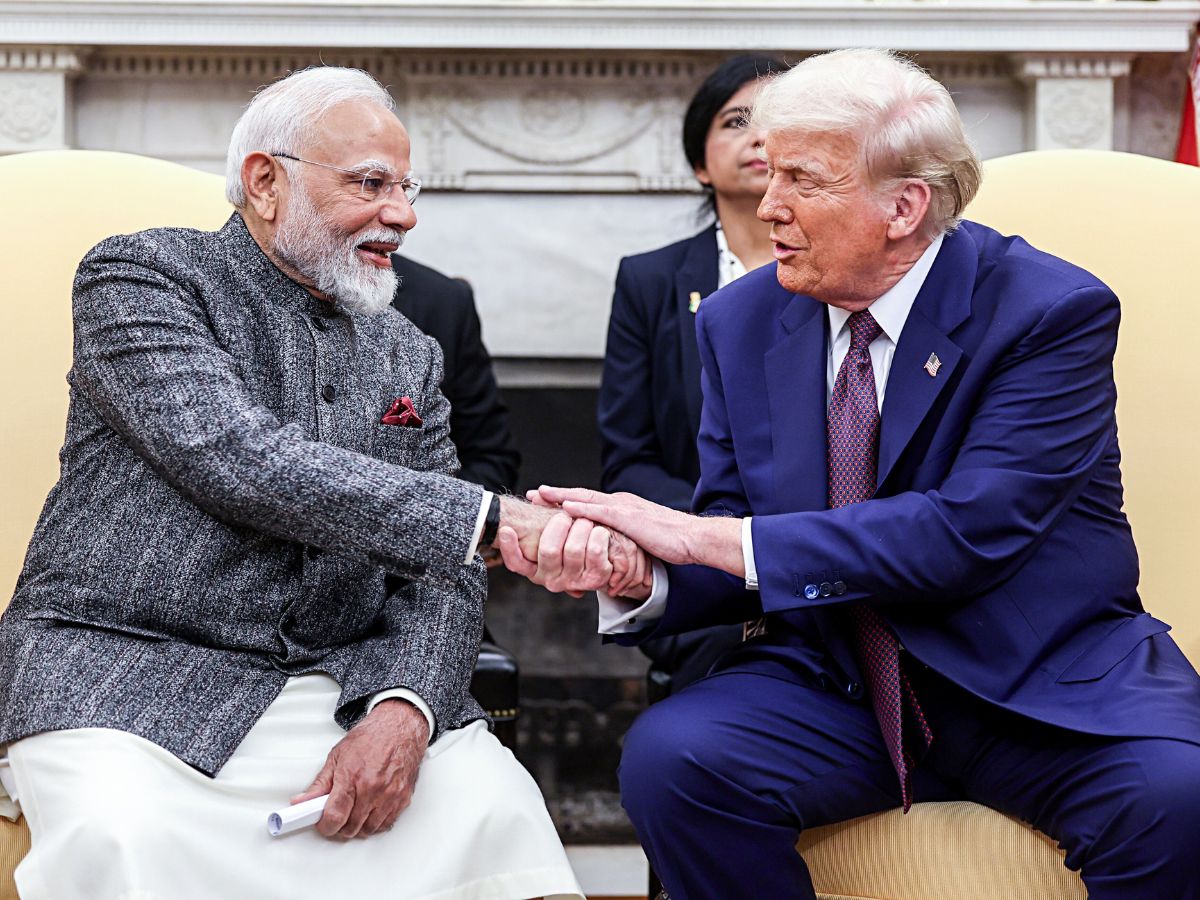

The historic India-United States trade deal, which was finally announced on February 1 last month, has been stalled until after the new tariff framework takes place in the USA, Commerce Secretary Rajesh Agrawal said on Monday during a trade data briefing.
He further said that the deal will be finalised after Washington restores the original tariff framework after the US top court struck down “Trump tariffs” last month.
Notably, earlier a ruling by the US Supreme Court last month quashed the reciprocal tariffs introduced by President Donald Trump’s administration.
However, within hours, Trump signed an executive order terminating “certain tariff actions” and issued a proclamation imposing a 10 per cent “temporary import surcharge” as ad valorem duties on imports entering the United States.
He later increased the levy to 15 per cent through a post on social media.
Speaking on the current developments, the Commerce Secretary said on Monday that the deal was supposed to be signed in March.
“IEEPA (International Emergency Economic Powers Act) tariffs don’t exist per se due to US Supreme Court rulings now. Under Article 122, tariffs of 10% exist globally now. Any deal that India signs will be signed against a tariff structure,” he said, adding, “US is trying to recreate a tariff architecture globally. Once the US creates that, it will be better to sign then. Actual signing will be done when the new architecture of tariffs globally is done by the US.”
“Whenever we are ready and the US side is ready with the new tariff architecture, that will be the opportune time to sign (the deal),” Agrawal added.
Meanwhile, the Congress party has claimed credit for the hold on the trade pact.
Congress MP Randeep Surjewala said, “It was due to the leadership of Rahul Gandhi, the guidance of Mallikarjun Kharge, and the opposition of the Congress that the trade agreement had to be stopped. Until this trade agreement is terminated, the rights of the country’s farmers will not be protected, and we are determined that we will do everything but will not tolerate any attack on the livelihood of the farmers.”




