

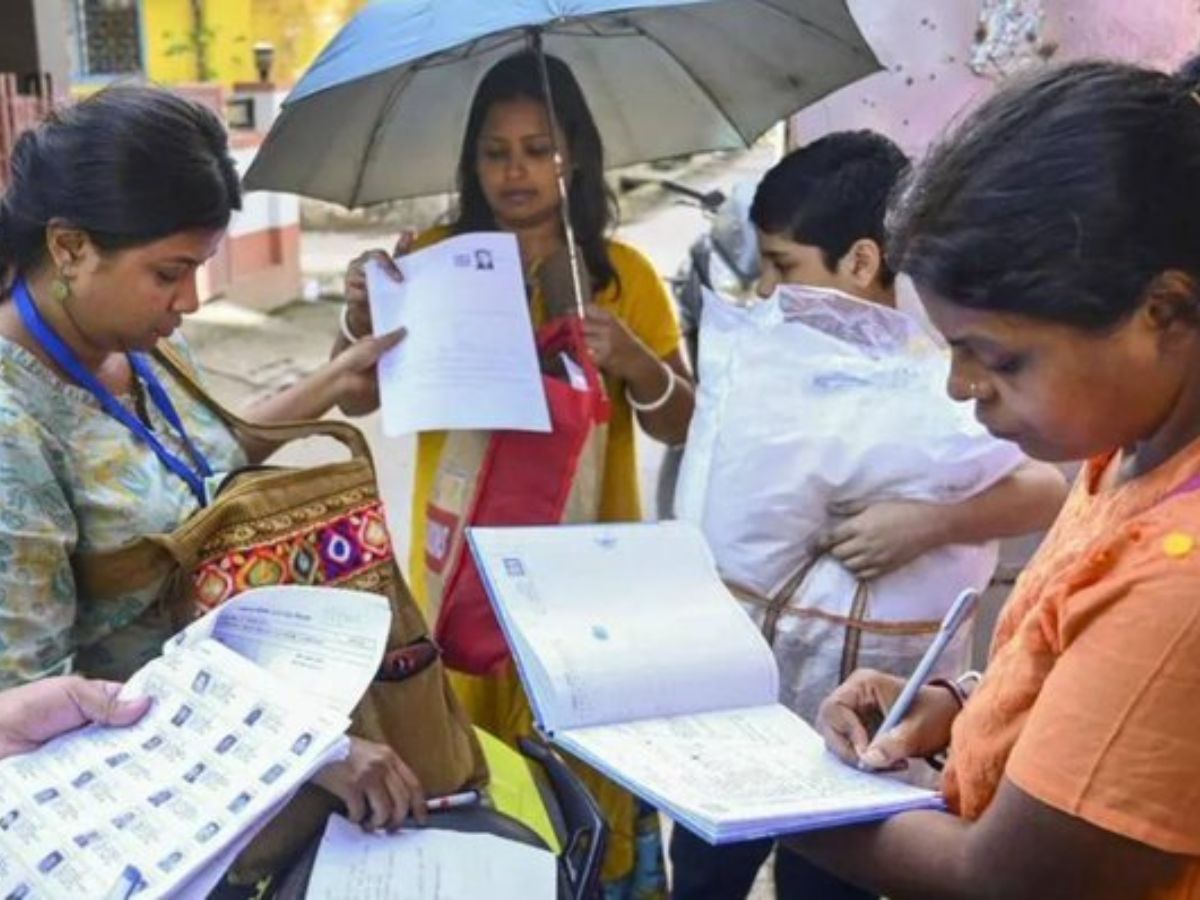
The Election Commission’s Special Intensive Revision (SIR) exercise is set to begin across Telangana on June 15, marking the state’s most comprehensive electoral roll verification drive in nearly 24 years. The large-scale exercise aims to improve the accuracy of voter records, eliminate discrepancies, and ensure that only eligible voters remain on the electoral rolls. Ahead of the revision process, election authorities have identified approximately 89 lakh anomalies during the pre-SIR voter mapping exercise conducted over the past several months. Telangana Chief Electoral Officer (CEO) C. Sudharshan Reddy confirmed that officials found 11 categories of discrepancies that will now be examined and verified during the SIR process.
What Is Special Intensive Revision (SIR)?
The Special Intensive Revision is a detailed voter verification exercise carried out by the Election Commission of India to update electoral rolls. During the process, the Election Commission cross-checks existing voter records with historical electoral data, particularly the 2002 electoral rolls, to identify errors, duplicate entries, and outdated information. The last such intensive revision in the region took place in 2002, when Telangana was part of undivided Andhra Pradesh.
What Are The 89 Lakh Anomalies?
| S. No. | Type of Anomaly Identified | Description |
|---|---|---|
| 1 | Parent-Child Age Gap Below 15 Years | Cases where the age difference between a voter and their parent is less than 15 years. |
| 2 | Parent-Child Age Gap Above 50 Years | Cases where the age difference between a voter and their parent exceeds 50 years. |
| 3 | Sibling Age Gap Below 9 Months | Records showing siblings with an age difference of less than nine months. |
| 4 | Grandparent-Grandchild Age Gap Below 40 Years | Cases where the age difference between a voter and their grandparent is less than 40 years. |
| 5 | Parent Name Mismatch | Parent names in current electoral rolls do not match details in the 2002 SIR records. |
| 6 | Change in Relative Type | Relationship categories changed between records, such as father in one record and mother or husband in another. |
| 7 | Different Father Name in Self-Mapping Cases | The same voter is linked to different father names across records. |
| 8 | Incorrect Age Difference in Historical Comparison | Significant age discrepancies between current voter data and previous SIR records. |
| 9 | Zero Documents Uploaded | No supporting documents were submitted during the mapping process. |
| 10 | Aadhaar-Only Uploads | Voters uploaded only Aadhaar without additional documents required under ECI guidelines. |
| 11 | Multiple Mappings / Other Logical Discrepancies | Cases involving duplicate linkages, multiple electors mapped to one person, or other inconsistencies requiring verification. |
How Will The Verification Process Work?
The SIR exercise will be conducted in multiple stages:
June 15 to June 24
Preparation and rollout of the electoral revision process.
June 25 to July 24
Booth Level Officers (BLOs) will conduct door-to-door verification across the state. They will distribute pre-filled enumeration forms, collect updated information, and verify voter details. Officials have indicated that BLOs may revisit locked houses multiple times to maximise coverage.
July 31
Publication of the draft electoral roll.
July 31 to August 30
Citizens can submit claims, corrections, objections, and requests for new voter registrations.
October 1
Publication of the final electoral roll after verification and hearings.
Urban Areas Show Higher Levels Of Discrepancies
Election officials have observed that rapidly urbanising constituencies, particularly in and around Hyderabad, recorded significantly higher rates of anomalies than rural districts. Factors such as migration, changing addresses, apartment living, and voter mobility have contributed to the higher number of flagged records.
Data from the pre-SIR mapping exercise showed that more than 68% of Telangana’s 3.39 crore electors had already been mapped before the launch of the full revision process.
Concerns Raised Ahead Of Verification Drive
As the exercise approaches, some political leaders have urged election authorities to simplify verification procedures and reduce the burden on voters and booth-level officers. Discussions have focused on ensuring that genuine voters do not face inconvenience while maintaining the accuracy of the electoral database.
Why This Exercise Matters
The SIR is one of the most significant electoral database verification exercises undertaken in Telangana in decades. Election authorities view it as a crucial step toward removing duplicate records, correcting legacy errors, updating voter information, and strengthening the integrity of future elections.
Telangana’s Special Intensive Revision beginning June 15 represents a major effort to clean up and update the state’s electoral rolls. With nearly 89 lakh anomalies identified during pre-SIR mapping, election officials will now undertake a statewide verification exercise to ensure that voter records are accurate, complete, and up to date before the publication of the final electoral roll on October 1.
ALSO READ: Who Is Gautami Tadimalla? Why Did Actor-Turned-Politician Quit AIADMK After Years In Active Politics
Harshita is a journalist and digital content writer specializing in breaking news, current affairs, travel, education, and trending stories. She is focused on delivering accurate, timely, and engaging content with a strong emphasis on clarity and audience relevance.





