

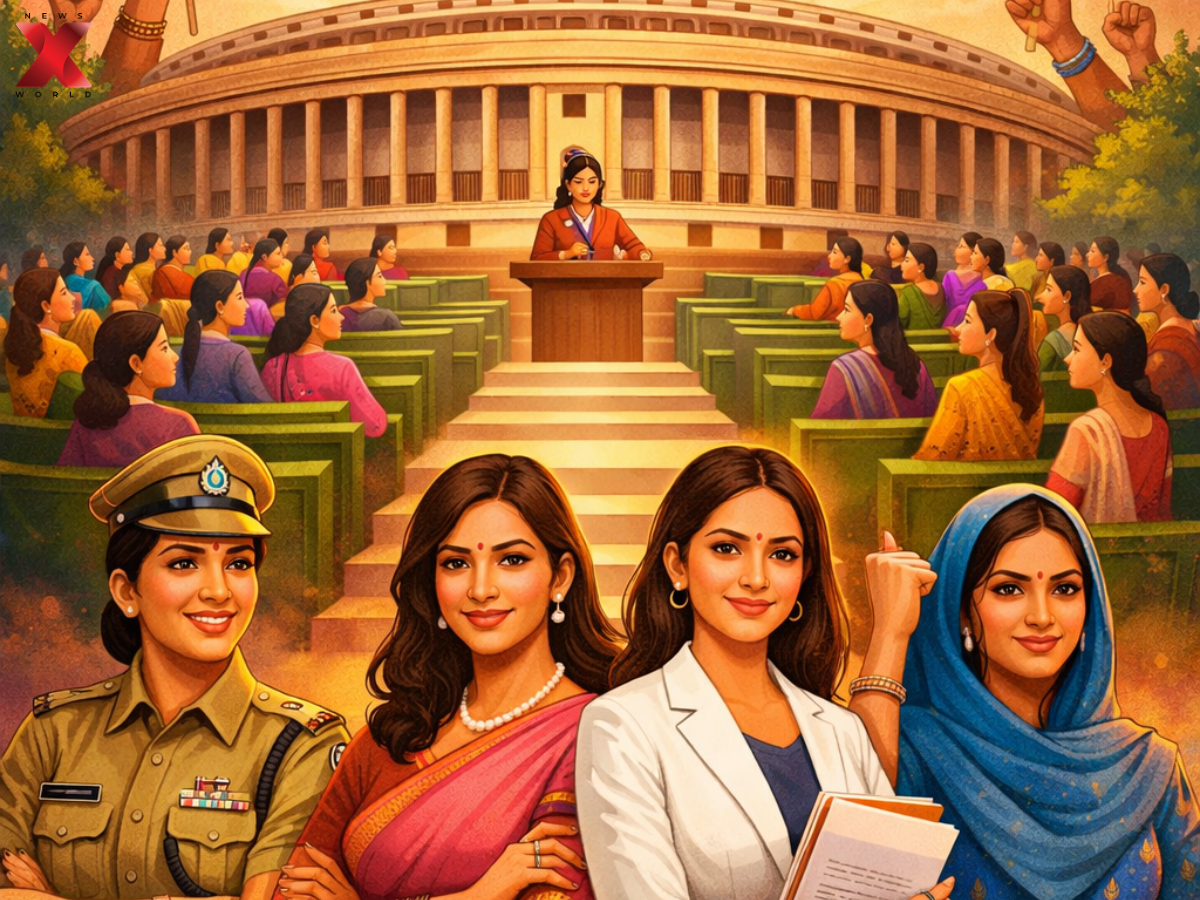
LOK SABHA NEWS: Three bills were introduced in the Lok Sabha by the Centre in a three-day special session, which started today (April 16). It is believed that these bills will lead to a clash on Parliament; they include the Constitution (One Hundred and Thirty-First Amendment) Bill, 2026, the Delimitation Bill, 2026 and the Union Territories Laws (Amendment Bill), 2026.
The opposition is protesting against the issue of delimitation, which the government has associated with the introduction of reserving one-third of seats to women in the Lok Sabha and in the Legislative Assemblies of the States and Union Territories (UTs). These bills intend to hasten in the implementation of the women’s quota prior to the 2029 general elections.
What is the Women’s Reservation Bill?
The Centre has suggested the amendments to the Nari Shakti Vandan Adhiniyam, popularly known as the Women Reservation Act, 2023. The proposed Bill is the Constitution (131st Amendment) Bill that aims at correcting this Act and speeding up the process of implementing the women reservation in the Lok Sabha and state Assemblies.
In September 2023, Parliament adopted the Nari Shakti Vandan Adhiniyam by an overwhelming majority, and reserved 33 per cent of seats in the Lok Sabha and state Assemblies to women.
Nonetheless, it was implemented in relation to the 2021 Census, which was postponed and only recently started. As the Act would have been enforced after the delimitation and the first census following the passing of the legislation, women’s reservation would have actually come into force by 2034.
The Centre has now tried to pass the Nari Shakti Vandan Adhiniyam Amendment Bill in the current special sitting of the extended Budget session. This amendment will enable the introduction of a 33 per cent quota of women in the Lok Sabha and state Assemblies as early as 2029.
How delimitation becomes key to women’s quota
Delimitation is now at the heart of the women’s reservation plan. The government has tied the process of redrawing constituency boundaries directly to putting the Women’s Reservation Act into action. By introducing three bills together, the Centre wants to jumpstart delimitation by changing the old constitutional rule that froze the process.
Usually, India would redraw its political map right after the first census that happens after 2026. But the Centre is looking to scrap that waiting period. The new bill would let them use population data from before the 2026-27 Census, which means they’ll likely work with numbers collected way back in 2011.
If this draft constitutional amendment passes, parliamentary seats will be reshuffled and the Lok Sabha could grow from 543 to 850 seats. The government says this move is essential to actually roll out the women’s reservation law before the 2029 elections, using the 2011 Census as a basis.
With 13 years on the line, Ashish Kumar Singh loves everything when it comes to movies, music, travel and pop culture. Formerly employed at ANI, Pinkvilla, India Today and HT, Ashish has interviewed some of the top celebrities of India, including Shah Rukh Khan, Aamir Khan, Ranveer Singh, Ranbir Kapoor and Hrithik Roshan, among others. Breaking news excites him and deadlines are what he chases. Interviewing comes naturally to him. Hit him up at ashish.kumar02singh@gmail.com.





