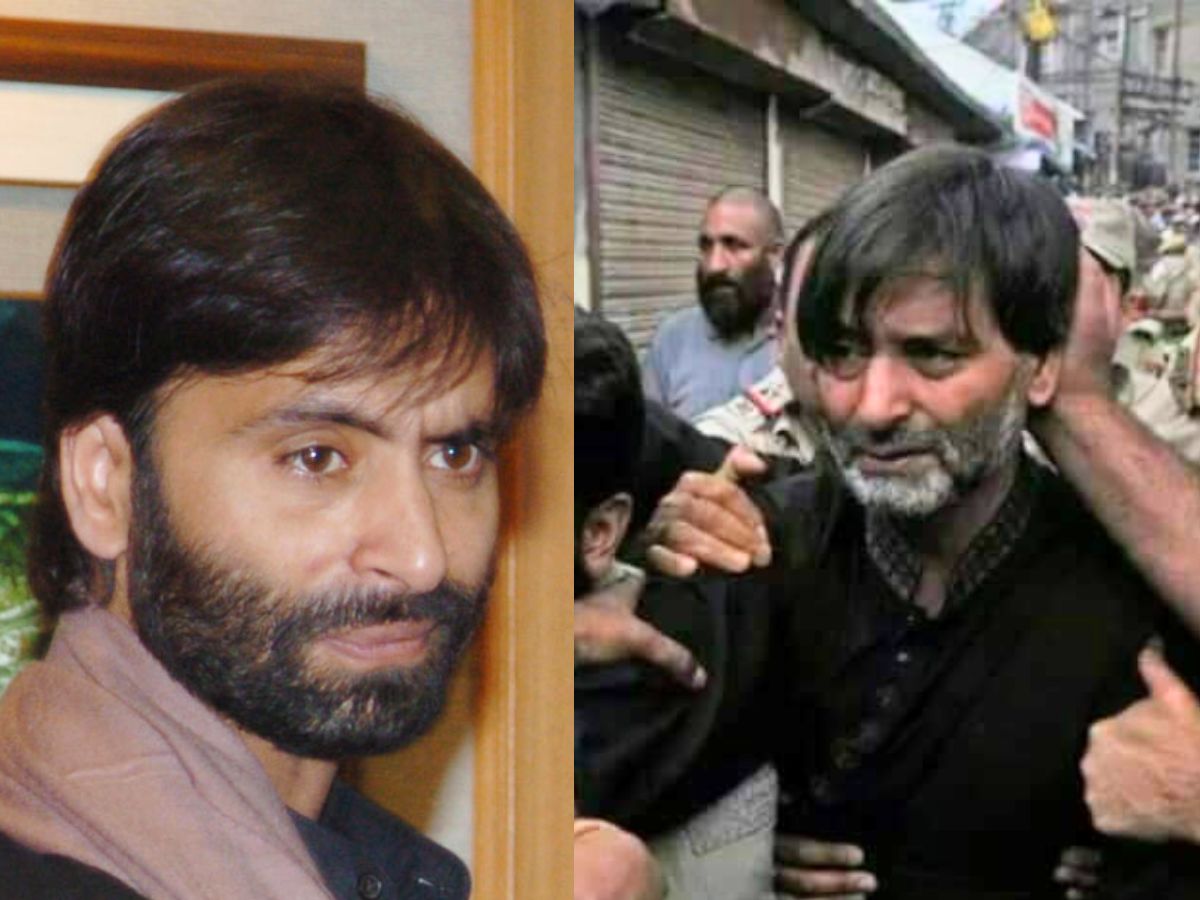

In a major breakthrough in the long-pending 1990 Jammu and Kashmir Air Force attack case, a key eyewitness identified separatist leader Yasin Malik as one of the main shooters. The testimony was recorded before a special TADA court in Jammu, where the witness, an IAF personnel who survived the attack, said he could personally recognise Malik among the accused who opened fire on the Air Force officials on January 25, 1990.
What Happened on January 25, 1990?
The attack occurred in the Rawalpora area of Srinagar when a group of Indian Air Force personnel were waiting for their bus. Militants linked to the JKLF allegedly opened indiscriminate fire, killing four officials, including Squadron Leader Ravi Khanna, and injuring 22 others. The attack was among the first and one of the bloodiest of Kashmir’s militant insurgency, fuelling widespread violence in the Valley.
Why identification matters
The case has been in judicial scrutiny for over three decades. Malik was first charge-sheeted by the CBI in 1990 and in 2020 the TADA court observed there was “sufficient grounds” to presume his involvement. The latest identification by eyewitnesses is now seen as a crucial turn in the trial and is expected to considerably strengthen the prosecution’s case.
Who is Yasin Malik?
Yasin Malik was born on April 3, 1966, in Srinagar’s Maisuma locality. For many years, he has been one of the most recognisable faces of Kashmiri separatism. He came into prominence in the early 1980s as a youth activist and later turned into a leading figure of the JKLF – a political entity that spearheaded the initial phase of militancy in Kashmir. Malik started his political life with the Tala Party, which later morphed into the Islamic Students League – a powerful student movement engaged in anti-government protests and disruption of political activity.
From Militant Leader to Self-Proclaimed Gandhian
Throughout the late 1980s and early 1990s, Malik was identified with a number of high-profile incidents, including the kidnapping of Rubaiya Sayeed. He claims to have abjured violence in 1994, projecting himself as a Gandhian committed to peaceful resistance. However, Indian agencies charge that Malik remained involved in conspiracies and terror-linked activities even after his supposed shift to non-violence.
Terror Funding Case: Life Sentence
The NIA accused Malik in 2017 of receiving money from Pakistan via United Arab Emirates-based businessman Naem Khan to cause unrest in Kashmir during the valley’s 2010 and 2016 protests. In 2022, Malik pled guilty to charges under the UAPA such as waging war against the state, criminal conspiracy, and terror funding. He was sentenced to life imprisonment and is currently lodged in Tihar Jail. His sentencing has been called politically motivated by his wife Mushaal and Pakistan’s foreign ministry, a claim India rejects.
Case Gains Momentum After Decades
The identification by the surviving witness has given a new impetus to the 1990 IAF attack case. The latest testimony could prove crucial to determine Malik’s legal fate as the trial goes ahead in one of Kashmir’s most high-profile terror cases.
ALSO READ: Tragic Loss in Nagpur: Teen Girl Ends Life After Parents Refuse Her Phone Access
Sofia Babu Chacko is a journalist with over five years of experience covering Indian politics, crime, human rights, gender issues, and stories about marginalized communities. She believes that every voice matters, and journalism has a vital role to play in amplifying those voices. Sofia is committed to creating impact and shedding light on stories that truly matter. Beyond her work in the newsroom, she is also a music enthusiast who enjoys singing.