
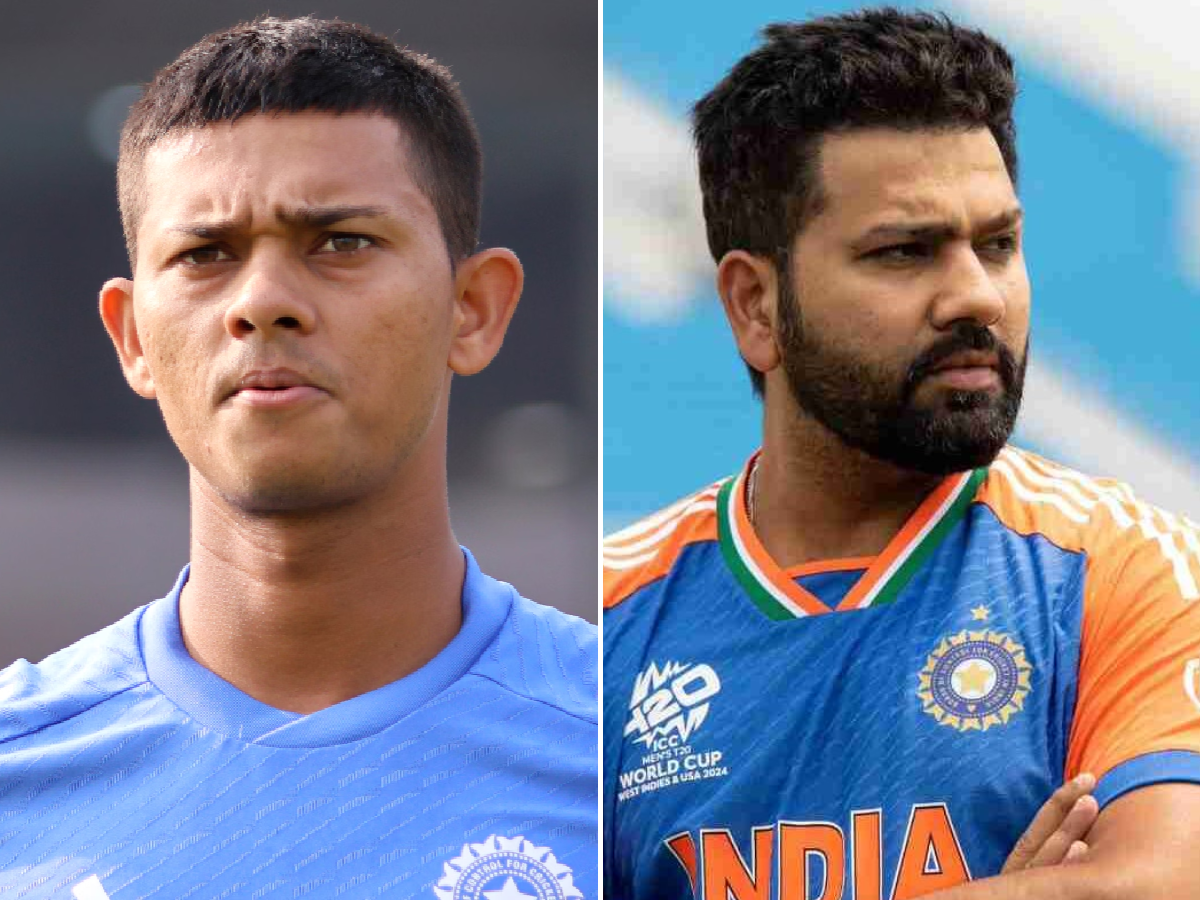

Yashasvi Jaiswal has already established himself in red-ball cricket but there is a conspicuously low number of 50-over appearances in the Indian team. He has only played one ODI in the format since he made his debut in the format in February this year against England.
The ODI side, on the other hand, has had far more matches than he has played since his debut, which implies that he has lacked chances to establish himself in the XI.
Jaiswal will have to compete with Rohit Sharma to secure a second open slot in the team, with Shubman Gill now being the skipper in the 50-over format.
Prior to the second ODI between India and Australia at Perth, however, the batting coach of India, Sitanshu Kotak, emphasised the amount of effort that Jaiswal is putting into developing his secondary qualities in order to enter the Indian team.
Rohit Sharma and Yashasvi Jaiswal were seen together during the training session at the Adelaide Oval ahead of the second ODI against Australia. It seems as if Rohit was giving Yashasvi some tips. Love their bond! #RohitSharma𓃵 #AUSvIND #TeamIndia @Cricketracker pic.twitter.com/YXayqW2ySH
— Arvind Krishnan (@ArvindKP24) October 21, 2025
What else can Yashasvi Jaiswal do with the bat?
The red-ball credentials of Jaiswal are great, several centuries, two hundred and fifty, and a manly attitude to the diverse conditions. To transform that red-ball brightness into a white-ball charging, high-speed game, however, needs a delicate adjustment: strike-rate must be increased without wastefulness, selections of shots must be modified to suit field conditions, the demands of the reduced length of the type must be met.
At the press conference at the eve of the second ODI at Perth, Batting Coach Sitanshu Kotak said, “it is good to have him in the squad and he is training. He knows that he will have his time. So he is preparing well. Only 11 can play at the end of the day, and he is aware that he will have to continue pushing.”
Why take so much time to have a regular ODI slot?
This is due to a couple of reasons. First, the hierarchy in India is relatively established and it implies that even the bright children have to wait until the position will be free.
As per NDTV, there appears to be an urge by selectors that Jaiswal should take his dominance with the red-ball game to the white-ball game in a persuasive manner.
His strike-rate of List A has been reported to be 85.97 in 33 matches. The selectors probably require consistency in the ODI situations: a better strike-rate, the capacity to adjust to the powerplays, turning strike during the middle overs, and ending well.
Yes, and that may make his case strong. Kotak emphasized that Jaiswal has been playing more and more bowling: “He has been bowling much in the nets during the test match).
Jaiswal never stops putting a leg spin. He wants to bowl more and more. He looks more consistent now. So of course he is practicing more on his bowling. It is a good omen at any rate.
Although he is yet to get wickets in the international scene, the fact he is trying to become a dual-skilled player means something in the selection fraternity and increases his likelihood of being selected on a more frequent basis.
Yashasvi Jaiswal is highly included in the squad and frame of the ODI team of India. Having already demonstrated his Test-track record as being very strong, and his T20 figures being well established, the next thing is to prove himself in the one-day model.




