
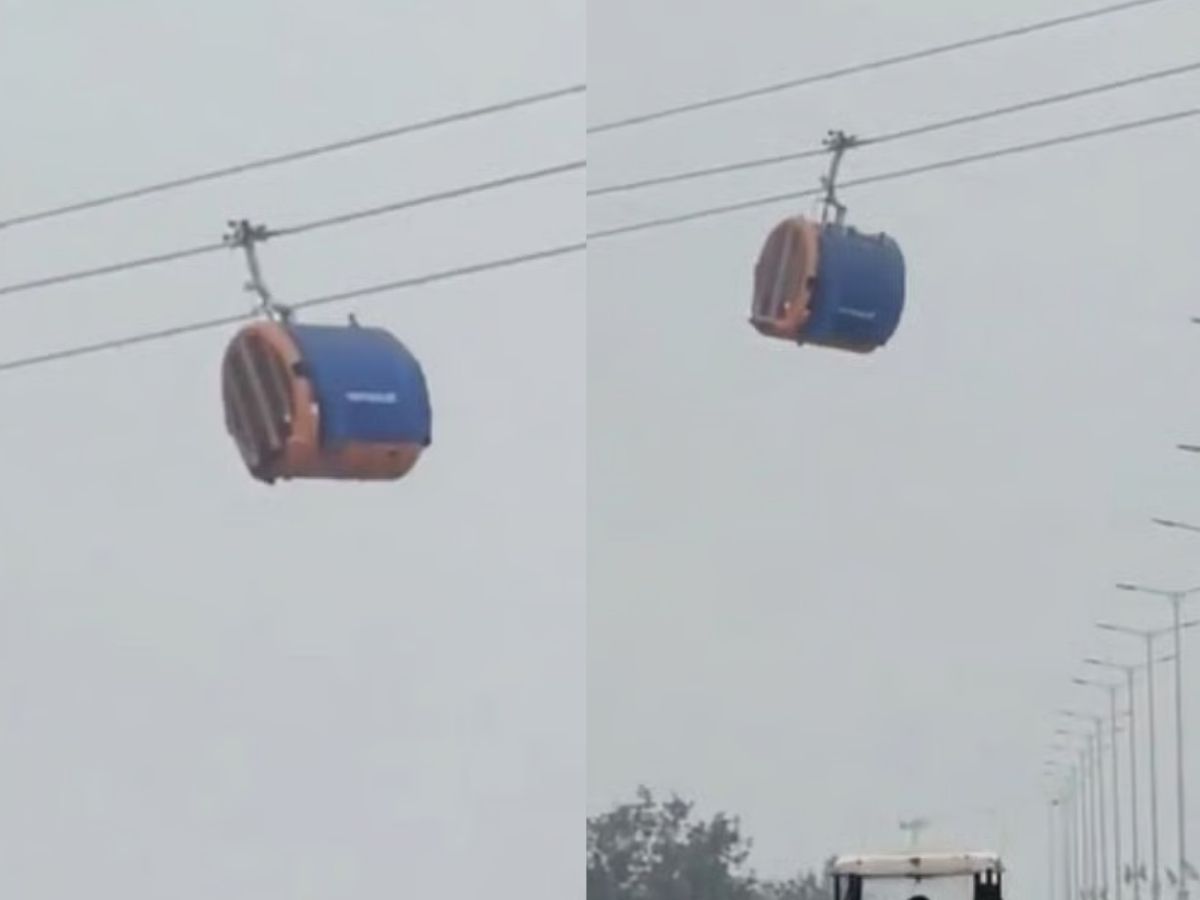

Varanasi Ropeway Video: A video showing a gondola of the under-construction Varanasi ropeway swaying mid-air has gone viral, triggering widespread criticism on social media. Netizens raised concerns over the safety of the system and the high public expenditure, questioning the project’s construction quality. The ropeway is currently in the testing phase and has not yet been inaugurated for public use.
Video Shows Gondola Swaying Amid Traffic
The viral clip, reportedly from the Varanasi Cantonment area, shows a ropeway cabin swinging noticeably like a pendulum above roads and buildings. A motorbike and passing traffic move directly beneath the gondola, amplifying public anxiety about potential accidents.
4 Km of Ropeway Service started its trial in Varanasi with total budget of ₹807 crore.
Just imagine the ride here. Live content for the Final Destination movie 🍿 pic.twitter.com/OjLy1qN1Hh
— 🚨Indian Gems (@IndianGems_) January 6, 2026
Social Media Criticism Over Costs And Safety
Many users slammed the project as a “waste of money,” “death trap,” and “scam,” pointing to its estimated cost of over ₹807 crore. Comments ranged from sarcastic critiques to outright fear of accidents:
“₹825 crore for this CRT TV box converted into a ropeway car?”
“That bike guy patiently waiting ki kab gire aur main aage jaaun.”
“This is a disaster waiting to happen.”
Some users, however, defended the ropeway, noting that swaying is a design feature of monocable detachable gondola systems. According to experts, cabins are designed to rotate and sway to absorb wind forces, reducing stress on cables and towers, whereas rigid cabins could pose greater risks in strong winds.
Project Still Under Testing, Public Launch Expected In May 2026
The Kashi Ropeway, India’s first urban ropeway, spans approximately 3.75 km and will connect Cantt Railway Station to Godowlia, reducing travel time from 45 minutes to 15 minutes. Officials clarified that videos of swaying gondolas were recorded during trial runs and the system adheres to international safety standards. Full public operations are scheduled to begin by May 2026.




