
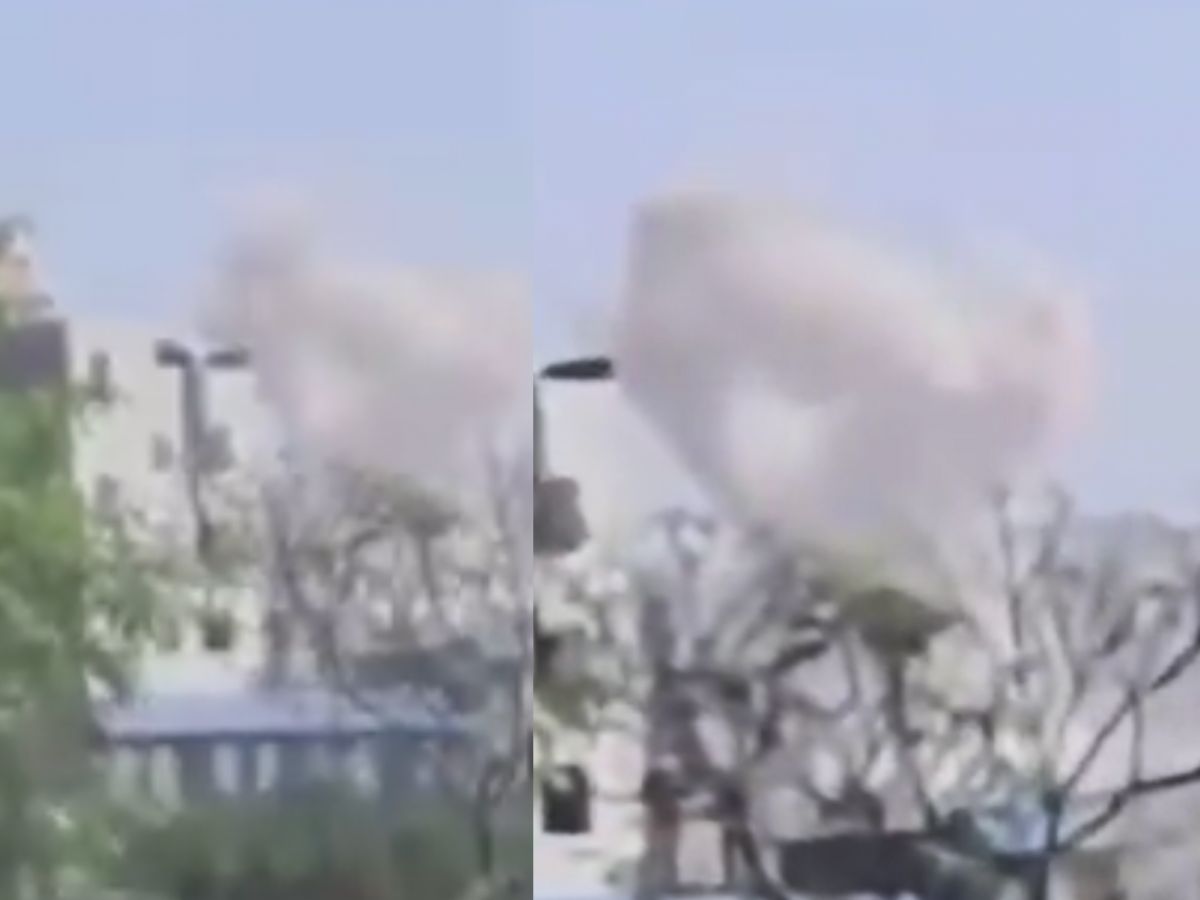

A loud explosion was reported at Iran’s sensitive Parchin nuclear and military site on Tuesday, intensifying speculation over whether the United States may have launched a strike amid escalating tensions in the Middle East.
Iran’s Islamic Revolutionary Guard Corps (IRGC) Quds Force confirmed that an explosion had occurred at the facility, though officials have not yet disclosed the cause or the extent of the damage.
Explosion at Strategic Parchin Facility Raises Alarm
Several posts on X, including one by Iran Spectator, claimed that a blast rocked the Parchin complex, a location known for housing both military and nuclear-related infrastructure. A purported video circulating online shows smoke and a loud noise emerging from the area, although the footage has not been independently verified.
⚠️ 𝐁𝐫𝐞𝐚𝐤𝐢𝐧𝐠 𝐍𝐞𝐰𝐬 ⚠️
Scenes from Iran, Parchin — Military & Nuclear Base… pic.twitter.com/mWc9g6r9eN
— Iran Spectator (@IranSpec) January 27, 2026
Iranian authorities have so far not issued a detailed statement on casualties or structural damage at the site.
Is the US Behind the Blast?
The timing of the explosion has raised questions due to recent developments involving US military activity in the region. The United States has reportedly moved major naval assets towards the Middle East, including the aircraft carrier USS Abraham Lincoln, along with several warships, submarines and support vessels.
While there is no official confirmation linking Washington to the blast, the military mobilisation has fuelled speculation about a possible American strike against Iran.
US-Iran Tensions Continue to Escalate
Relations between Washington and Tehran have remained deeply strained in recent months, particularly following Iran’s internal unrest and international criticism over its handling of protests. US President Donald Trump has repeatedly warned that Washington is closely monitoring the situation and may take action if Iranian authorities continue to use force against civilians.
Iranian officials, however, have claimed that “rioters” attacked public infrastructure and killed members of the security forces, justifying their response as a matter of national security.
Protests, Economy and Growing Instability in Iran
Iran is currently witnessing widespread protests driven by economic distress, soaring inflation, rapid depreciation of the rial, and allegations of corruption and political repression. The Iranian currency has reportedly plunged to historic lows against the US dollar, worsening public anger and deepening instability across the country.
These protests have turned into one of the most serious challenges to the Islamic Republic in recent years.
Conflicting Claims on Casualties and Crackdown
Activist groups and international organisations have released varying estimates of fatalities during Iran’s protests, though exact figures remain disputed and difficult to verify independently due to restrictions on media access and reporting within the country.
Tehran has also imposed partial or total internet shutdowns at different points, severely limiting the flow of information from inside Iran.
Internet Blackout and Information Vacuum
Before the blackout, several videos emerged showing young Iranians participating in protests, burning images of Supreme Leader Ayatollah Ali Khamenei and demanding political change. Since then, much of the information coming out of Iran has been fragmented and hard to authenticate, further intensifying global uncertainty about the situation on the ground.
What We Know So Far
The IRGC has confirmed that an explosion occurred at the Parchin nuclear and military site, but the cause remains unknown. There is currently no verified evidence that the US carried out an attack, even as American military assets have been moving closer to the region.
Strike or Strategic Coincidence?
While the blast at one of Iran’s most sensitive facilities has inevitably triggered speculation over US involvement, there is, as yet, no confirmed link between the explosion and American military action. As tensions in the Middle East continue to rise, the incident adds another volatile dimension to the already fraught US-Iran relationship.
The coming days are likely to determine whether this explosion marks a turning point or remains an unresolved and mysterious episode in a rapidly unfolding geopolitical crisis.
Sofia Babu Chacko is a journalist with over five years of experience covering Indian politics, crime, human rights, gender issues, and stories about marginalized communities. She believes that every voice matters, and journalism has a vital role to play in amplifying those voices. Sofia is committed to creating impact and shedding light on stories that truly matter. Beyond her work in the newsroom, she is also a music enthusiast who enjoys singing.




