
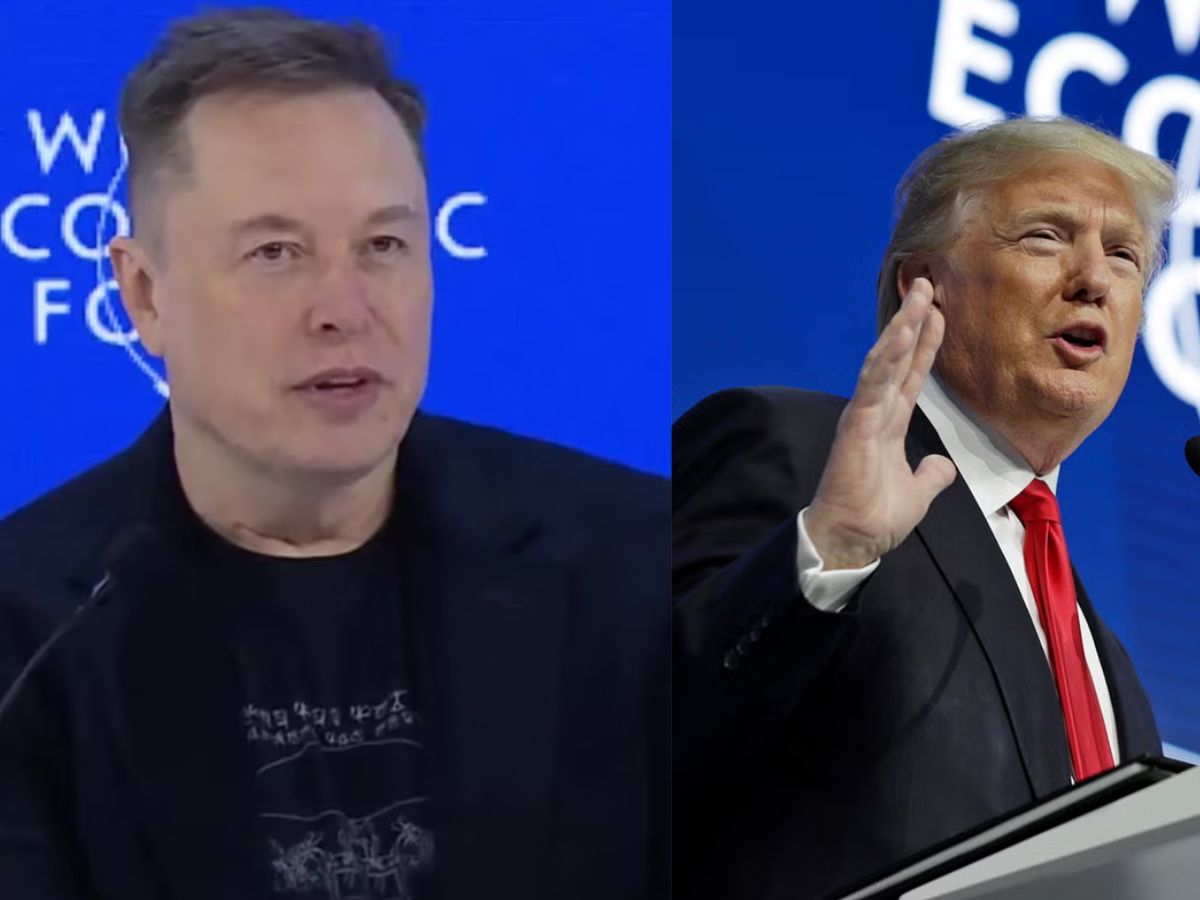

Elon Musk made a high-profile, last-minute appearance at the 2026 World Economic Forum (WEF) in Davos, where he immediately began to mock President Donald Trump, who had just introduced his “Board of Peace” initiative.
Musk created a pun during his meeting with BlackRock CEO Larry Fink when he asked if the board’s name referred to the “Piece of Greenland and Piece of Venezuela Summit.”
The jab referenced Trump’s controversial “Monroe Doctrine” and his administration’s intense focus on securing territorial interests and resources in the Western Hemisphere and the Arctic.
Trump presented the board to serve as a groundbreaking replacement for the United Nations, yet Musk, who had been criticizing the WEF’s “unelected government” atmosphere for years, saw the project as a territorial acquisition attempt rather than a diplomatic achievement.
Geopolitical Skepticism
The Board of Peace launch has created major public disagreement because the organization functions through its private charter, which designates Donald Trump as “Chairman for Life,” who possesses the power to veto any decision.
Elon Musk:
I heard about the peace summit. I was like, is that “P-I-E-C-E?”
You know, a little piece of Greenland, a little piece of Venezuela. pic.twitter.com/RrcV698H2j
— NΞMICO (@NemicoNetwork) January 22, 2026
The body lacks the UN’s inclusive structure because Trump offers nations permanent seats in exchange for a $1 billion payment. European allies stay non-committal toward the project because Argentina and Egypt signed agreements, yet European countries view the project with suspicion.
The summit presented the “New Gaza” master plan, which shows the war-damaged area as a luxury “real estate” center containing skyscrapers and resorts, yet critics say the plan gives priority to commercial development instead of establishing national stability.
Autonomous Revenue
Musk first used the Davos event to make political remarks before he introduced the essential financial milestone that Tesla needs to achieve through its Full Self-Driving (FSD) system in Europe and China.
Tesla needs these approvals, which will begin in February 2026, to complete its transition into an artificial intelligence and robotics company while vehicle sales continue to decrease worldwide.
The ability to enter these markets would permit Tesla to generate substantial revenue through its software products, which would help balance decreasing electric vehicle sales and growing competition from Chinese market players.
The introduction of “Supervised FSD” to markets beyond North America, which Tesla plans to expand, represents the most important change to Tesla’s business operations since the Model 3 introduction.
A recent media graduate, Bhumi Vashisht is currently making a significant contribution as a committed content writer. She brings new ideas to the media sector and is an expert at creating strategic content and captivating tales, having working in the field from past four months.




