
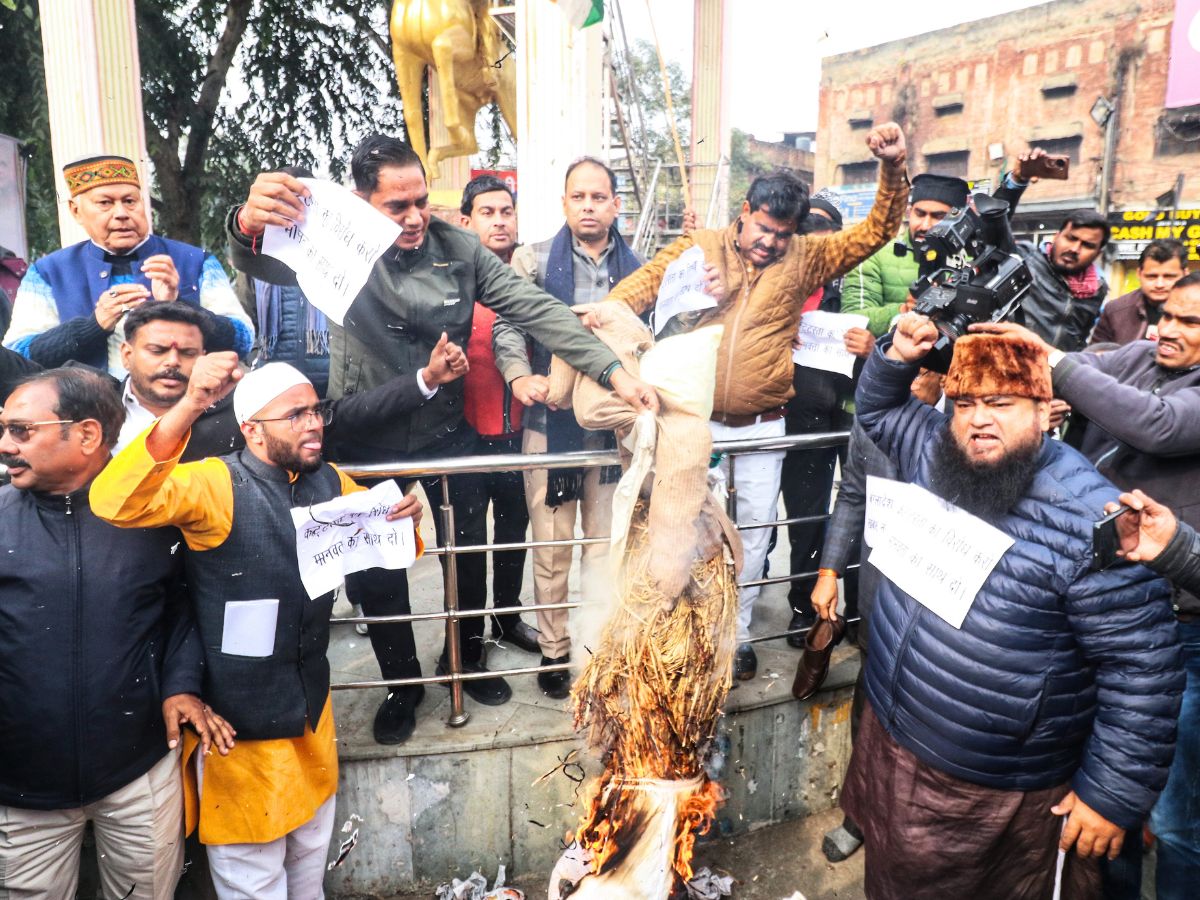

Bangladesh on Sunday strongly rejected India’s concerns regarding alleged violence against minority communities in the country, calling New Delhi’s claims “inaccurate, exaggerated, and misleading.” The Ministry of Foreign Affairs (MoFA) of Bangladesh stated that India’s remarks risk undermining the trust and spirit of good-neighbour relations between the two countries.
Bangladesh Calls India’s Narrative Misleading
In an official statement, Bangladesh’s MoFA took note of comments made by the spokesperson of India’s Ministry of External Affairs (MEA) concerning the treatment of minorities, particularly Hindus. Dhaka emphasised that India’s portrayal ignored Bangladesh’s long-standing tradition of communal harmony and coexistence.
“The Government of Bangladesh categorically rejects any inaccurate, exaggerated, or motivated narratives that misrepresent our longstanding tradition of communal harmony,” the statement read.
Isolated Incidents Misrepresented as Systemic Persecution
The MoFA accused certain quarters of deliberately projecting isolated criminal incidents as evidence of systemic persecution of Hindus. According to the statement, such narratives are being “maliciously used” to spread anti-Bangladesh sentiment in India.
“One of the individuals cited by the MEA spokesperson was a listed criminal whose unfortunate death occurred while committing extortion alongside a Muslim accomplice. To portray this criminal act as an issue of minority treatment is misleading,” the statement said.
Appeal for Responsible Reporting
Bangladesh called upon Indian media and authorities to refrain from spreading misleading narratives that could inflame public opinion and jeopardise bilateral relations. “We observe a selective and unfair bias in certain quarters, where isolated incidents are amplified, misrepresented, and propagated to incite hostility against Bangladesh,” the MoFA said.
Recent Unrest in Bangladesh
Between December 18 and 20, 2025, Bangladesh experienced a wave of riots, arson attacks, and political unrest following the assassination of Osman Hadi, spokesperson of the Inqilab Moncho. Violent mobs targeted major civic and cultural institutions, including the offices of national newspapers Prothom Alo and The Daily Star, cultural centres like Chhayanaut and Bangladesh Udichi Shilpigoshthi, as well as Indian diplomatic missions and Awami League-related sites.
During the attacks, journalists were trapped in burning offices, and several media personnel were physically assaulted. The Newspaper Owners’ Association of Bangladesh (NOAB) and the Editors’ Council protested the violence, describing the incidents as deliberate attacks on press freedom.
Dhaka Emphasises Communal Harmony
Amid the unrest, Bangladesh reiterated its commitment to communal harmony and warned against narratives that politicise isolated criminal incidents to tarnish the country’s image internationally.
“Bangladesh remains committed to protecting minority communities and urges all parties to respect facts rather than promote distorted narratives,” the MoFA concluded.
Sofia Babu Chacko is a journalist with over five years of experience covering Indian politics, crime, human rights, gender issues, and stories about marginalized communities. She believes that every voice matters, and journalism has a vital role to play in amplifying those voices. Sofia is committed to creating impact and shedding light on stories that truly matter. Beyond her work in the newsroom, she is also a music enthusiast who enjoys singing.




