
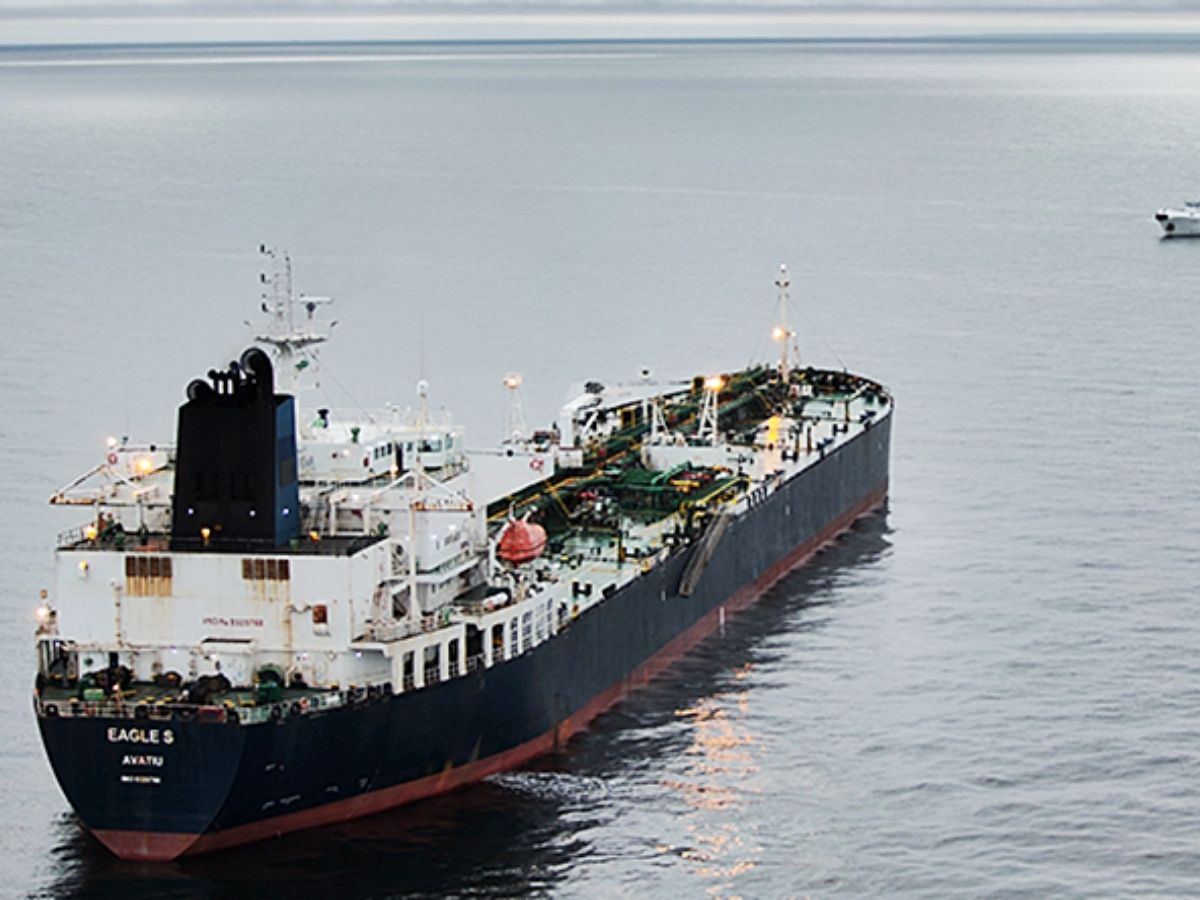

Finnish authorities announced Monday that criminal charges have been filed against the captain and two senior officers of the oil tanker Eagle S, for allegedly causing serious damage to undersea cables connecting Finland and Estonia, according to a report published by The Associated Press. The charges reportedly include aggravated criminal mischief and aggravated interference with communications, though the officers’ names were not disclosed. They have denied the allegations, the report stated, citing deputy prosecutor general’s statement.
What Happened on December 25
Investigators have alleged that on December 25, the Eagle S dragged its anchor across the seabed, severing the Estlink-2 power cable and associated communication lines. Specifically, the anchor reportedly struck and damaged five submarine cables over a 90 kilometers stretch in the Gulf of Finland. The ship had departed Russia’s Ust‑Luga port carrying oil products, the statement read, per AP.
The incident has been linked to a mysterious “shadow fleet” of aging, lightly regulated ships linked to Russia identified by Finnish customs and the European Commission, and believed by many to be intentionally evading sanctions amid the Ukraine war.
Damage & Impacts
The cable owners are reportedly facing an estimated €60 million ($69.7 million) in repair costs. While alternate routes kept electricity and telecom services functioning, officials warned that the damage posed a serious risk to both systems. The Estlink-2 cable, crucially, can supply about half of Estonia’s winter electricity needs and stretches 145 kilometers, descending up to 295 feet (90 meters) at its deepest point.
Although service remained uninterrupted, energy prices in the Baltic region surged following the hit to this critical infrastructure, as reported by AP.
Jurisdiction Debated
The defendants contended that Finnish courts lack jurisdiction, arguing that the damage occurred outside of Finnish territorial waters — a claim the prosecutors have noted in explicit terms.
This incident is being seen as part of a pattern of suspected sabotage across Europe believed to be targetting key undersea infrastructure amid growing tensions from the Russia–Ukraine conflict. Such infrastructure acts as the backbone for trade, energy security, and communications across the Nordic, Baltic, and Central European regions, which in turn, serve as key corridors that reduce reliance on Russian energy.
ALSO READ: Ukraine Peace Talks Must Include Kyiv, Say Western Leaders As They Warn Against Rewarding Russia




