
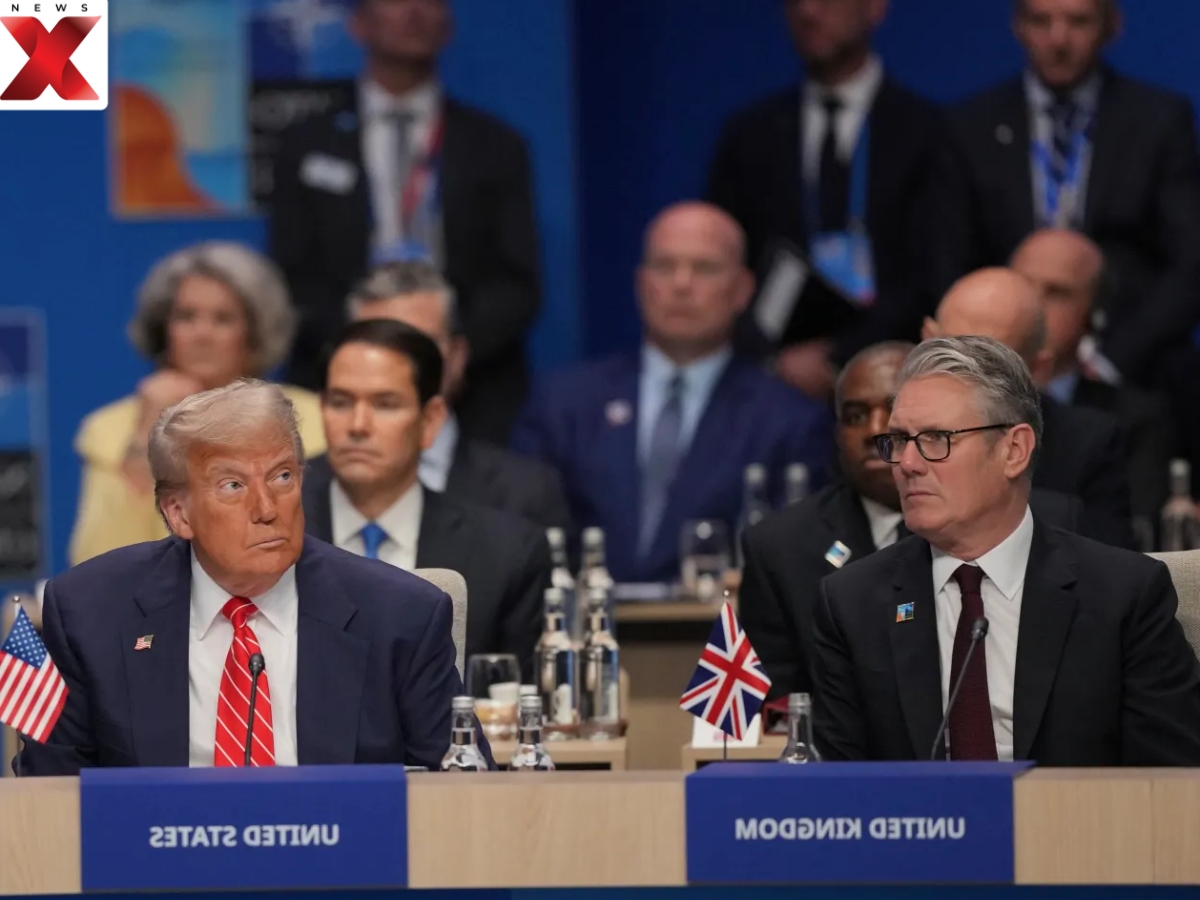

Donald Trump has warned that the future of the North Atlantic Treaty Organization (NATO) could be in jeopardy if European allies refuse to support Washington’s military efforts against Iran. The remarks were reported by the Financial Times on Sunday.
The warning came a day after Trump appealed to several global powers, including China, France, Japan, South Korea, and the United Kingdom, to participate in a joint effort to reopen the strategically crucial Strait of Hormuz, a shipping corridor that carries roughly 20 percent of the world’s oil supply.
Trump On NATO Stability
In a telephonic interview with the FT, Trump directly linked allied support to the long-term stability of NATO.
“If there’s no response or if it’s a negative response I think it will be very bad for the future of NATO. We have a thing called NATO…We’ve been very sweet. We didn’t have to help them with Ukraine. Ukraine is thousands of miles away from us . . . But we helped them. Now we’ll see if they help us. Because I’ve long said that we’ll be there for them but they won’t be there for us. And I’m not sure that they’d be there.”
Trump also suggested he wanted direct military participation from allies.
“People who are going to knock out some bad actors that are along the [Iranian] shore.”
According to the report, the US president implied that European commando units or other military forces could be deployed to target Iranian operatives allegedly creating disruptions in the Gulf region through drones and naval mines.
“We’re hitting them very hard. They’ve got nothing left but to make a little trouble in the Strait but these people are beneficiaries and they ought to help us police it. We’ll help them. But they should also be there. You sort of need a lot of people to watch over a few.”
NATO Partners Defy Trump On Iran
Despite a series of pressure campaigns, including posts on Truth Social and direct calls from the White House, Trump’s request for global powers to deploy warships to the Strait of Hormuz has reportedly been met with widespread diplomatic resistance.
UK Signals Reluctance to Escalate
During a tense weekend call with Trump, British Prime Minister Keir Starmer reportedly informed the US president that the United Kingdom was not prepared to send Royal Navy destroyers to the contested waterway.
While the United States has been conducting heavy military operations along the Iranian shoreline, London has expressed concern about being drawn into a broader regional conflict.
Instead of deploying warships, the British government is offering mine-hunting drones.
Australia Declines Naval Deployment
The reluctance to participate has not been limited to Europe. In Australia, Transport Minister Catherine King confirmed that Canberra has no plans to deploy naval vessels to the region
Speaking to ABC Radio, King said, “I’m informed that we’re not intending to send ships to the Strait of Hormuz. We’re well-prepared here to weather the economic crisis… but we’re not planning to send a ship.”
Japan Also Rejects Request
Japan, which depends on the Strait of Hormuz for nearly 70 percent of its oil imports, also declined Washington’s request for military deployment.
Takayuki Kobayashi, a senior policy figure in Japan’s ruling Liberal Democratic Party, told NHK that constitutional and legal restrictions make such a deployment highly unlikely.
Zubair Amin is a Senior Journalist at NewsX with over seven years of experience in reporting and editorial work. He has written for leading national and international publications, including Foreign Policy Magazine, Al Jazeera, The Economic Times, The Indian Express, The Wire, Article 14, Mongabay, News9, among others. His primary focus is on international affairs, with a strong interest in US politics and policy. He also writes on West Asia, Indian polity, and constitutional issues. Zubair tweets at zubaiyr.amin




