
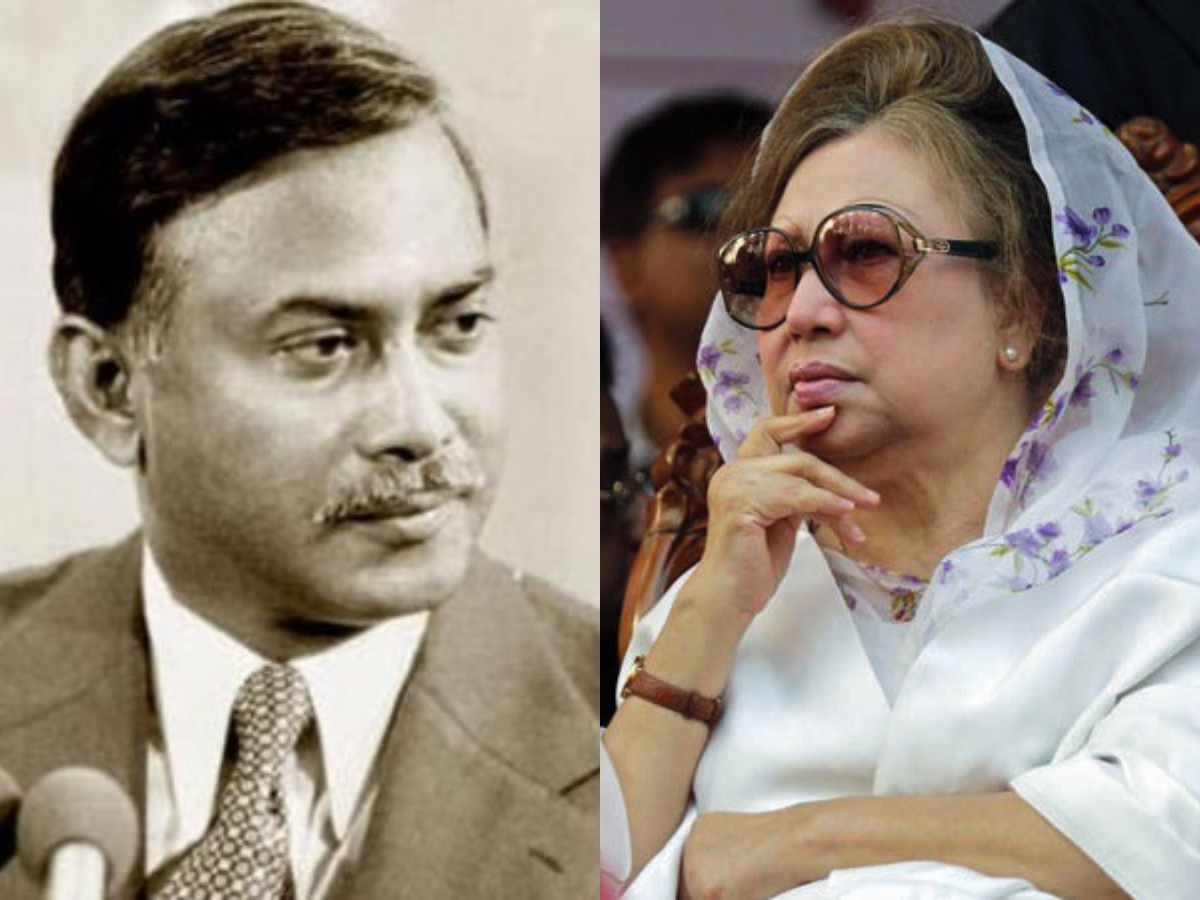

Khaleda Zia, Bangladesh’s first female prime minister and a towering figure in the nation’s politics, died on Tuesday, December 30, 2025, after battling a prolonged illness. She was 80. The Bangladesh Nationalist Party (BNP), her political party, announced her death on social media, stating that she passed away at around 6 a.m., shortly after Fajr prayers.
“We pray for the forgiveness of her soul and request everyone to offer prayers for her departed soul,” the BNP posted on its Facebook page.
Zia is survived by her elder son, Tarique Rahman, his wife Zubaida Rahman, and their daughter Zaima Rahman.
All About Khaleda Zia
Khaleda Zia made history in 1991 when she became Bangladesh’s first woman prime minister, assuming office after the restoration of parliamentary democracy. She served a second term from 2001 to 2006. During her tenure, she upheld the political and ideological legacy of her late husband, Ziaur Rahman, advocating the role of Islam in governance, promoting private enterprise, and pursuing neoliberal development policies.
In 1984, Khaleda officially took over leadership of the BNP, revitalizing the party after years of internal disarray. Like Sheikh Hasina with the Awami League, Khaleda played a key role in galvanizing public and political support for her party.
The Zia Family Legacy: All About Khaleda Zia’s Husband Ziaur Rahman
The Zia family has played a central role in shaping Bangladesh’s post-Liberation history. Khaleda’s late husband, Ziaur Rahman, was a key military and political figure. Born in 1936 in Bogra, northern Bangladesh, Ziaur Rahman’s family moved to Karachi after Partition, where his father worked as a chemist.
At the age of 17, Zia joined the Pakistani Army, training at the Pakistan Military Academy in Abbottabad. During the 1965 India-Pakistan War, Zia received a battlefield promotion to Major and became the only Bengali Company Commander in the Pakistani Army.
The turning point came on March 26, 1971, as the Pakistani Army launched a brutal crackdown in East Pakistan. Stationed in Chittagong, Zia mutinied against his commanding officer, Lt Col Abdul Rashid Janjua, and assumed leadership of a group of Bengali officers. He announced Bangladesh’s independence on March 27, 1971, initially claiming it on his own behalf before clarifying it was on Sheikh Mujibur Rahman’s behalf.
Over the following months, Zia commanded the Mukti Bahini’s Z-Force, leading successful operations against Pakistani troops.
The Feud Between The Sheikh And The Zia Family
After Bangladesh’s Liberation, Ziaur Rahman was dissatisfied with his treatment, feeling his contributions were overlooked. In 1972, Sheikh Mujibur Rahman passed him over for the post of Army Chief, fueling friction within the nascent Bangladeshi military.
Despite accusations that he manipulated army officers and criticized Mujib to enhance his political stature, Zia’s ambitions soon bore fruit following the assassination of Sheikh Mujibur Rahman on August 15, 1975.
Following Mujibur Rahman’s assassination, Ziaur Rahman was appointed Army Chief. His rule ended abruptly on March 30, 1981, when he was assassinated by disgruntled officers at the Chittagong Circuit House.
Lt Gen Hussain Muhammad Ershad, Zia’s appointed Army Chief, took over as martial law administrator (1982–86) and later became President (1986–90) through a controversial election.
Khaleda Zia’s leadership ensured that the Zia political legacy continued, with her focus on governance, party consolidation, and development policies.
Zubair Amin is a Senior Journalist at NewsX with over seven years of experience in reporting and editorial work. He has written for leading national and international publications, including Foreign Policy Magazine, Al Jazeera, The Economic Times, The Indian Express, The Wire, Article 14, Mongabay, News9, among others. His primary focus is on international affairs, with a strong interest in US politics and policy. He also writes on West Asia, Indian polity, and constitutional issues. Zubair tweets at zubaiyr.amin




