
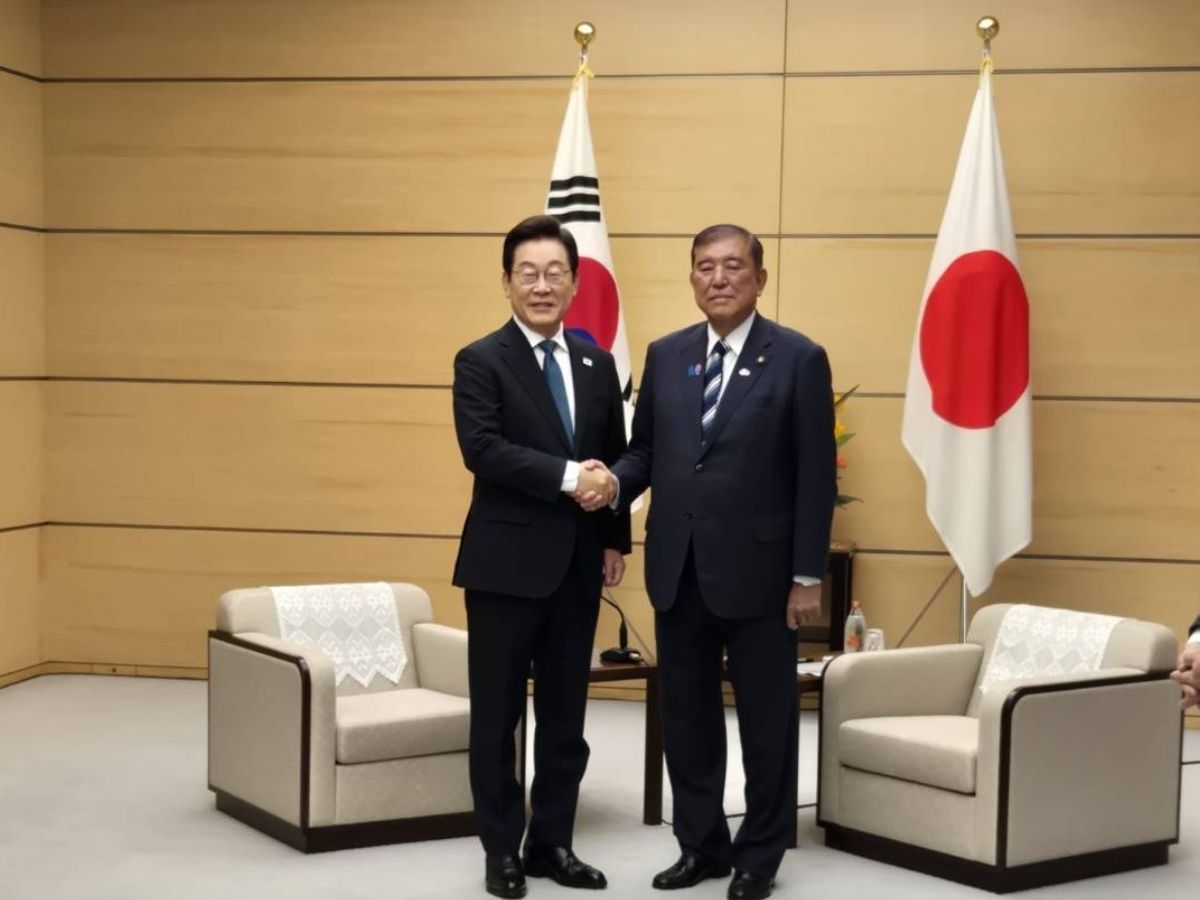

South Korea President Lee Jae‑Myung embarked on his first full visit to Japan since taking office, selecting Tokyo as the first stop before heading to Washington for a high-stakes meeting with US President Donald Trump, according to a report published by The Associated Press on Friday.
Jae‑Myung’s meeting with Japan Prime Minister Shigeru Ishiba centered on enhancing bilateral and trilateral security ties with a shared focus on defense, economics and diplomacy, the report said.
大韓民国 李在明大統領をお迎えしました。就任後初の二国間訪問先に日本を選んでいただき、6月のカナダ以来の面会となります。新たな時代のニーズに沿った日韓関係を築いていきたいと思います。 pic.twitter.com/DVFAgKVJgA
— 石破茂 (@shigeruishiba) August 23, 2025
Reaffirming Cooperation and Regional Security
Stressing on the importance of a trilateral alliance, Ishiba, while speaking at a received summit in Tokyo, reportedly said, “Stable relations benefit both our countries and our region,” and added that it is “also crucial that we strengthen our trilateral alliance with the US.”
Lee backed Ishiba’s stance, calling their relationship “inseparable” and underscoring shared defense priorities amid growing regional uncertainties, The Japan Times reported.
A Reset After Historical Strains
According to the AAP report, their meeting also served as a symbolic gesture toward reconciliation. On August 15, Lee spoke of overcoming wounds rooted in Japan’s colonial rule, urging Tokyo to face unresolved issues with sincerity.
In a string of interviews, Lee reaffirmed his commitment to past agreements on wartime compensation for forced labor and “comfort women”, despite emotional sensitivities in Korea, per a Reuters report published recently.
Tangible Steps Ahead
Meanwhile, the leaders also explored practical cooperation, with talks reportedly including possible fast-track visas and working holiday programs, aimed at boosting cultural and youth exchanges.
Security concerns were also on the table, particularly North Korea’s nuclear ambitions and China’s seemingly assertive posture in the region.
Trade measures were also discussed, with both countries agreeing on a 15% tariff on US imports to avoid heavier duties proposed by Washington, as reported by Reuters.




