
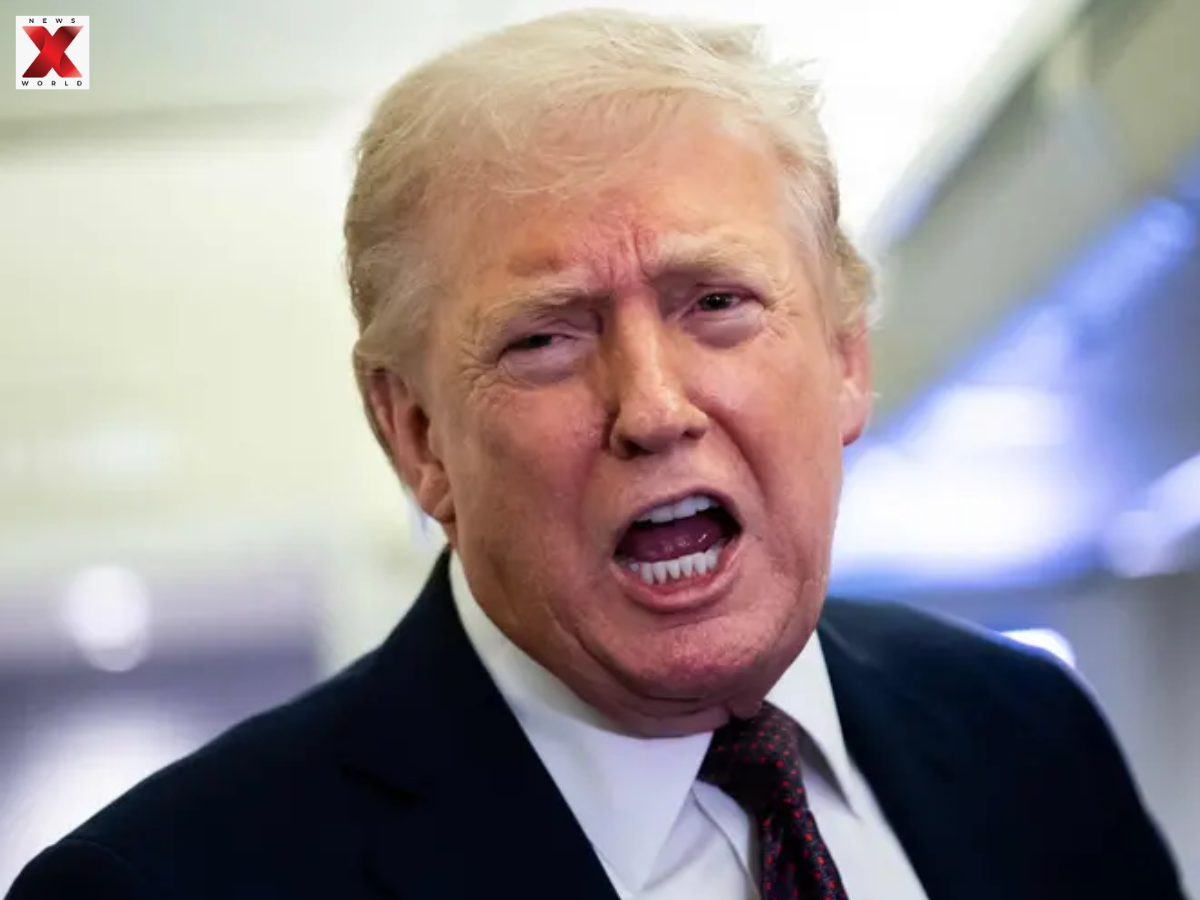

President Trump made an unexpected statement about the Middle East conflict when he announced that the United States will not conduct negotiations with Iran because there is currently “nobody to talk to” for diplomatic discussions.
The president explained from the Oval Office that Iranian military strikes, together with domestic unrest, have destroyed the governmental system that runs the country. “Their leaders are all gone,” Trump remarked, pointing to a perceived disintegration of the clerical and political hierarchy that has governed the Islamic Republic for decades.
The United States and Israel conduct “Operation Epic Fury,” which attacks senior military bases and leads to the deaths of important regime officials, including the former Supreme Leader.
Regional Instability and Decapitation Strikes
The present geopolitical situation exists because Iranian political leaders have been dethroned at an unprecedented speed. After Ayatollah Ali Khamenei died earlier this month, the Iranian state’s essential institutions, which include the Revolutionary Guard and Assembly of Experts, have failed to demonstrate unity.
The United States does not acknowledge the new “remnant” government as legitimate because Mojtaba Khamenei seeks to strengthen his position as successor according to President Trump.
The air campaign has successfully neutralized all members of the Supreme National Security Council, which led to a complete diplomatic breakdown between nations that had maintained even limited relations.
The “decapitation” strategy has resulted in a fragmented situation where local military leaders and hardline groups operate independently without any command structure, which prevents conventional international diplomatic talks from occurring.
Future Governance and Diplomatic Impasse
The president has shifted his attention from warfare to concentrate on what he describes as the “rebuilding” phase of his work, while he states that the United States will not execute a decade-long transition period.
Washington maintains an unbreakable deadlock because it requires an Iranian national who fulfills its description of a “good leader” to appear but claims that radical groups lack sufficient power for any constructive negotiations.
Critics argue that by declaring the leadership “gone,” the administration is effectively closing the door on de-escalation, as there is no recognized entity to sign a ceasefire or discuss the reopening of the Strait of Hormuz.
The current leadership vacuum situation functions as a double-edged weapon because it has weakened the regime’s capacity to conduct major military operations while it prevents the world from finding an energy crisis solution and humanitarian aid for the 2026 war.
A recent media graduate, Bhumi Vashisht is currently making a significant contribution as a committed content writer. She brings new ideas to the media sector and is an expert at creating strategic content and captivating tales, having working in the field from past four months.




