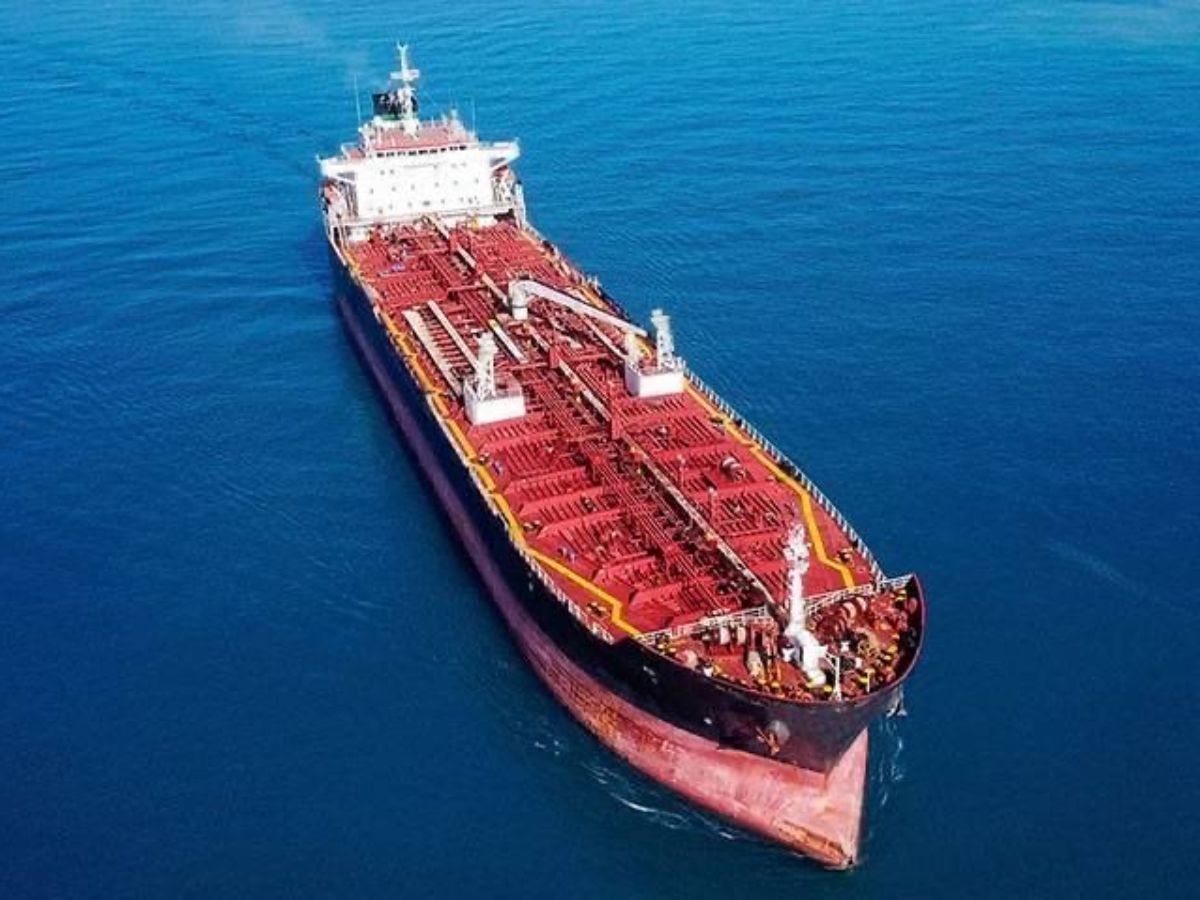

On Sunday two supertankers made a sudden and significant decision around one of the most important oil shipping lanes in the world when they aborted their approach to enter the Persian Gulf via the Strait of Hormuz within minutes of both of them making U-turns at a major waypoint just as negotiations between the US and Iran broke down in Islamabad. This development has amplified concerns regarding the possible disruption of global oil supplies and the resulting adverse impacts on maritime safety caused by another round of heightened tensions in the West Asian region.
In a report citing both ship-tracking and Bloomberg, the report indicates that one Pakistani flagged and one other country’s flag vessel were making their way toward the Persian Gulf using the Strait of Hormuz to gain access to the Arabian Sea and to load crude oil with the intention of sailing back to the United States when they both simultaneously made U-turns and departed from the immediate vicinity of the two of them about the same time that the negotiations ended between Washington and Tehran in Islamabad.
Supertankers: What they are and why these supertankers matter
Supertankers (otherwise known as VLCCs) are the world’s largest ships. They are built to transport large quantities of crude oil over long distances. Each VLCC can transport almost 2 million barrels of oil in a single trip, making them extremely important components of the worldwide energy supply chain.
Supertankers are the main component of the global oil trading network as they have the volume and size to transport the raw oil from places such as Iraq, Saudi Arabia and the UAE to large consuming markets such as Europe, India and China. Any disturbance along their route, especially at choke points like the Strait of Hormuz, will quickly have an impact on both oil prices and world markets.
Supertankers and the Hormuz Chokepoint
The Strait of Hormuz is one of the busiest shipping lanes in the world and approximately 20% of all oil and gas shipments to countries around the globe will pass through this narrow waterway, which makes the strait crucial to the energy trading.
The movements of supertankers within this region are carefully monitored and any type of a change in that movement, such as delays, diversions, or U-turns, could be an indicator of increasing risk. The Strait of Hormuz has been particularly volatile over the past few weeks because of conflict, military activities and mine fears causing many ships to wait, reroute or avoid the area completely.
Supertankers take a U-turn as talks collapse
The most recent event illustrates the volatility of the setting. The two giant oil tankers that were heading to the strait from the Gulf of Oman passed close to Larak Island in Iran. Larak Island is a critical waypoint for vessels on their way into the gulf.
The two ships were both heading in opposite directions for a reason. One was a Pakistan-flagged Shalamar ship heading to the UAE, and the Agios Fanourios I was headed for Iraq.
The U-turn of the two ships happened at the same time as US-Iran negotiations ended without any agreement. The result could affect how the US deals with Iran going forward, and it could change significantly.
Khalid Qasid is a media enthusiast with a strong interest in documentary filmmaking. He holds a Master’s degree in Convergent Journalism from AJK MCRC. He has also written extensively on esports at Sportsdunia. Currently, he covers world and general news at NewsX Digital.