

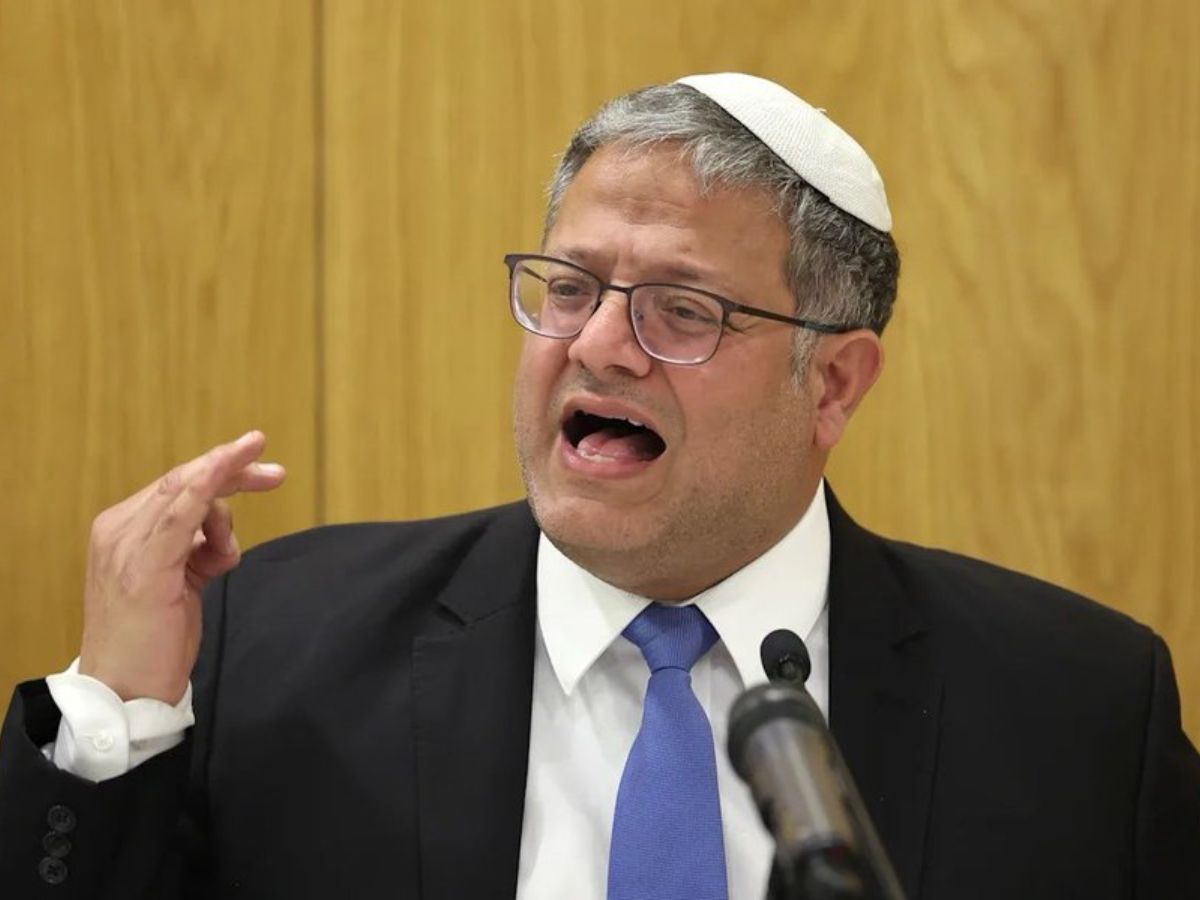
Israel’s first public response to the newly announced US-Iran agreement has cast fresh doubt over whether the diplomatic breakthrough will actually bring calm to Lebanon. Israeli National Security Minister Itamar Ben-Gvir made it clear that Israel does not consider itself bound by the understanding reached between Washington and Tehran, raising questions about whether military operations against Hezbollah and other Iran-backed groups will continue despite the emerging Iran Deal. His remarks came after the United States and Iran reached an initial understanding aimed at reopening the Strait of Hormuz, extending a fragile ceasefire and creating space for broader negotiations on Tehran’s nuclear programme. As per reports, the Iran Deal, expected to be formally signed in Switzerland on June 19, seeks to stop military operations across several fronts and launch talks on unresolved issues. However, Israel’s reaction suggests that major obstacles remain before any lasting regional stability can be achieved.
Israel’s Minister of National Security, Itamar Ben-Gvir, tweets, “Trump’s agreement does not bind us. Israel is not subject to the United States, and we are an independent and sovereign nation… Every time we succumbed to international pressure at the expense of Israel’s… pic.twitter.com/u13MhRQLyZ
— ANI (@ANI) June 15, 2026
Ben-Gvir rejects restrictions on Israel’s military freedom
In a lengthy post on X, Ben-Gvir stressed that the Iran Deal would not dictate Israel’s security decisions. “Trump’s agreement does not bind us. Israel is not subject to the United States, and we are an independent and sovereign nation!” he wrote.
While thanking Washington and US President Donald Trump, he insisted Israel must retain complete freedom to act against Hezbollah. “We emphasize: We love the USA and are grateful to President Trump. And yet, the State of Israel is not a banana republic,” he mentioned. Ben-Gvir argued that previous diplomatic compromises had come at a heavy cost for Israel. “Every time we succumbed to international pressure at the expense of Israel’s security, we paid a blood price with interest,” he said, pointing to the Oslo Accords, the 2006 Lebanon agreement and periods of restraint in Gaza.
Lebanon remains biggest sticking point despite diplomatic breakthrough
Questions over the Iran Deal have intensified because details remain limited. As per reports, Pakistan, which helped mediate the process, said both sides had agreed to the “immediate and permanent termination of military operations on all fronts, including in Lebanon.” However, it remains unclear whether Israel has accepted such conditions.
Reports say that Ben-Gvir openly rejected any arrangement that could limit Israeli operations. “My position is clear: We are not partners to this agreement that does not ensure our security, and it does not bind us in any way,” he wrote. He added that Israel “must not compromise on anything less than the dismantling of Hezbollah” and argued that troops should not leave territory captured during military operations.
The minister also warned against allowing militants to operate near northern Israeli communities. “We must make it clear: Every launch of a drone, UAV, or missile toward Israel from Lebanon will lead to an Israeli strike in Dahiya,” he said. “That was the deterrence balance just a few months ago, and we must not give it up in any way.”
Key provisions still await formal signing
The Iran deal has yet to be formally signed on Friday. As stated by AP, Iranian Deputy Foreign Minister Kazem Gharibabadi announced that the deal had been reached but that it would be executed after the signing ceremony. The Iran deal will restore the access to the Strait of Hormuz, lift the American naval blockade imposed in the time of war and provide 60 days period for talks about Iran’s enriched uranium stockpile.
However, despite the successful diplomatic efforts, there are still some serious disagreements between both countries. According to AP, Iran is determined to keep its stockpile of enriched uranium, whereas the US insists that it must be disposed of as part of the compromise package. Since Israel is now distancing itself from the Iran deal, it is unlikely that it will stop the conflict in Lebanon.
Khalid Qasid is a media enthusiast with a strong interest in documentary filmmaking. He holds a Master’s degree in Convergent Journalism from AJK MCRC. He has also written extensively on esports at Sportsdunia. Currently, he covers world and general news at NewsX Digital.





