
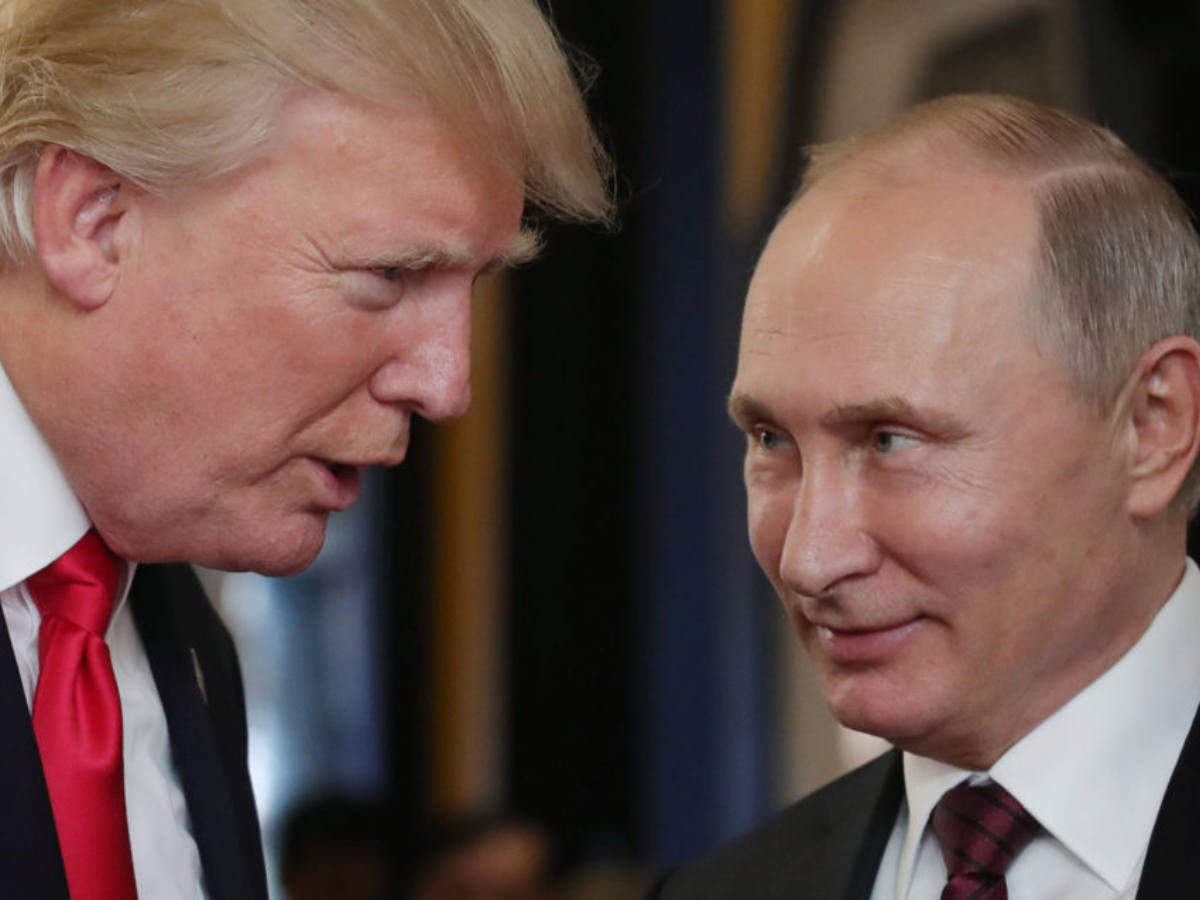

As Donald Trump continues to impose sanctions and threaten additional tariffs to reinforce U.S. global dominance, Russia has strongly criticized these actions. Moscow describes the U.S. measures as part of a “neocolonial agenda,” aimed at applying politically motivated economic pressure on countries that choose not to align with American policies. Russia’s Foreign Ministry Spokeswoman, Maria Zakharova, responded sharply to the tariff threats, noting that the U.S. is struggling to accept its waning influence on the global stage. She asserts that Washington is attempting to maintain control by intimidating nations pursuing an independent foreign policy. How do you view this growing geopolitical tension? Is this a necessary assertion of power or an overreach threatening global stability? As trade conflicts escalate and alliances shift, the question remains—what will be the impact on the global economy and international relations moving forward?
Russia’s Foreign Ministry Spokeswoman Maria Zakharova said, “pursue a neocolonial agenda, employing politically motivated economic pressure against those who choose an independent course on the international stage.”
US-Russia Relations in 2025: A Complex and Volatile Dynamic
- Ukraine Conflict:
- Ongoing war in Ukraine remains a major tension point.
- US supports Ukraine; condemns Russia’s actions.
- Russia sees NATO’s eastward expansion as a security threat.
- Nuclear Arms and Treaties:
- Both nations hold most of the world’s nuclear weapons.
- Strategic stability and arms control are critical but challenging.
- Russia withdrew from the 1996 Comprehensive Nuclear-Test-Ban Treaty in November 2023.
- Cyberattacks and Disinformation:
- US accuses Russia of cyberattacks and disinformation to influence elections and destabilize countries.
- Regional Influence and Geopolitics:
- Russia aims to exert influence over former Soviet states (“sphere of influence”).
- Clashes with US vision of liberal international order and support for democratic norms.
- Human Rights and Domestic Policies:
- US criticizes Russia’s human rights record.
- Concerns over treatment of opposition leaders like Alexei Navalny.
- Trade and Tariffs:
- Donald Trump’s sanctions and tariff threats to reinforce US global dominance.
- Russia condemns these moves as a “neocolonial agenda.”
- Moscow sees it as politically motivated economic pressure on independent nations.
- Russian Response:
- Foreign Ministry Spokeswoman Maria Zakharova states the US struggles with declining global influence.
- Washington is accused of intimidating nations pursuing independent foreign policies.
Recent Tiff Between Both The Countries
Recently, Trump announced sweeping new tariffs on dozens of countries, including Russia’s partners. Zakharova called these measures a “direct attack” on national sovereignty and an attempt to interfere in other nations’ internal affairs.
Zakharova said that Russia enjoys strong support from BRICS countries and other allies in the Global South, and that such “unlawful unilateral sanctions” would not succeed. She also warned that US policies could slow global economic growth, damage supply chains, and fragment the world economy.
Aishwarya is a journalism graduate with over three years of experience thriving in the buzzing corporate media world. She’s got a knack for decoding business news, tracking the twists and turns of the stock market, covering the masala of the entertainment world, and sometimes her stories come with just the right sprinkle of political commentary. She has worked with several organizations, interned at ZEE and gained professional skills at TV9 and News24, And now is learning and writing at NewsX, she’s no stranger to the newsroom hustle. Her storytelling style is fast-paced, creative, and perfectly tailored to connect with both the platform and its audience. Moto: Approaching every story from the reader’s point of view, backing up her insights with solid facts.
Always bold with her opinions, she also never misses the chance to weave in expert voices, keeping things balanced and insightful. In short, Aishwarya brings a fresh, sharp, and fact-driven voice to every story she touches.




