
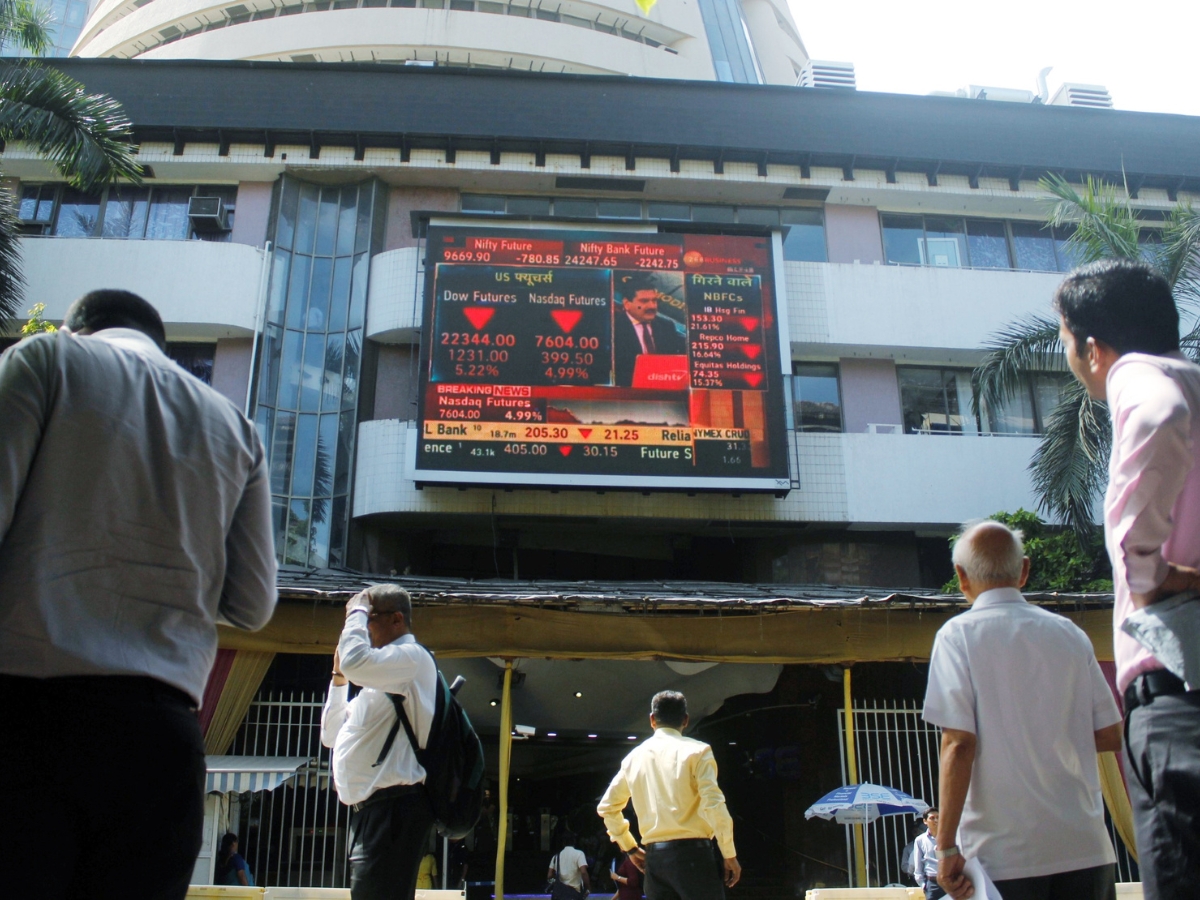

Stock market decline: The mood on Dalal Street turned negative on Tuesday, with benchmark indices – Sensex and Nifty – extending losses in early trade. The decline was largely driven by a sharp sell-off in information technology stocks following renewed global concerns about artificial intelligence-led disruption, alongside rising crude oil prices and weak international cues.
In the early hours of trading, the Sensex slipped below the 82,500 level, falling about 800 points or 0.9%. The Nifty also hovered near the 25,500 mark, down roughly 200 points or 0.92%.
At around 11:22 am, the Sensex was down by 710.65 (0.85%) at 82,584.01. The broader Nifty declined at the same time by 200.90 (0.78%) points to 25,512.10.
Why Is Stock Market Falling Today? Key Reasons Behind Sensex, Nifty Decline
1) IT Sell-Off on AI Disruption Concerns
Technology stocks bore the brunt of the sell-off after fresh global concerns emerged regarding artificial intelligence disrupting traditional software models. The pressure intensified following claims by Anthropic that its Claude Code tools could significantly reduce the cost and complexity of modernising legacy software systems. The Nifty IT index dropped more than 3%.
2) Rupee Weakens Against Dollar
The rupee declined by 7 paise to 90.96 against the US dollar in early trade, pressured by higher global crude prices and a stronger dollar. A weak start in domestic equities further weighed on the currency, though foreign institutional investor inflows helped limit losses, according to forex traders.
At the interbank foreign exchange market, the rupee opened at 90.91 and slipped to 90.96 against the dollar.
3) Weak Global Cues and Trade Uncertainty
Asian markets remained largely muted, while US equities ended nearly 2% lower overnight. The decline followed remarks by US President Donald Trump, who warned countries against abandoning newly negotiated trade agreements after the Supreme Court of the United States struck down emergency tariffs, indicating that higher duties could still be imposed under alternative trade laws.
4) Weekly Derivatives Expiry Adds Volatility
Tuesday’s weekly expiry of Nifty derivatives contracts also contributed to heightened volatility. On expiry days, traders typically square off or roll over positions in the futures and options segment, often leading to sharp intraday swings.
5) Rising Crude Oil Prices
Brent crude, the global oil benchmark, rose 1% to USD 72.13 per barrel. Higher oil prices remain a concern for India, as they can widen the trade deficit and fuel inflationary pressures, thereby dampening investor sentiment.
6) Sharp Fall in US Markets Overnight
US stocks witnessed a steep decline on Monday as concerns over artificial intelligence disrupting traditional business models resurfaced, compounding investor anxiety triggered by Trump’s tariff measures.
The Dow Jones Industrial Average dropped 821.91 points, or 1.66%, to close at 48,804.06. The Nasdaq Composite fell 1.13% to 22,627.27, while the S&P 500 declined 1.04% to 6,837.75, pushing the benchmark back into negative territory for the year.
A significant sell-off in IBM weighed heavily on the Dow, with the stock plunging 13% after Anthropic announced new capabilities for its AI tools, raising concerns about potential threats to legacy programming systems historically associated with IBM.
Software shares also remained under pressure as AI disruption fears intensified. Microsoft fell 3%, while CrowdStrike dropped nearly 10%, extending the sector’s recent weakness.
Zubair Amin is a Senior Journalist at NewsX with over seven years of experience in reporting and editorial work. He has written for leading national and international publications, including Foreign Policy Magazine, Al Jazeera, The Economic Times, The Indian Express, The Wire, Article 14, Mongabay, News9, among others. His primary focus is on international affairs, with a strong interest in US politics and policy. He also writes on West Asia, Indian polity, and constitutional issues. Zubair tweets at zubaiyr.amin




