

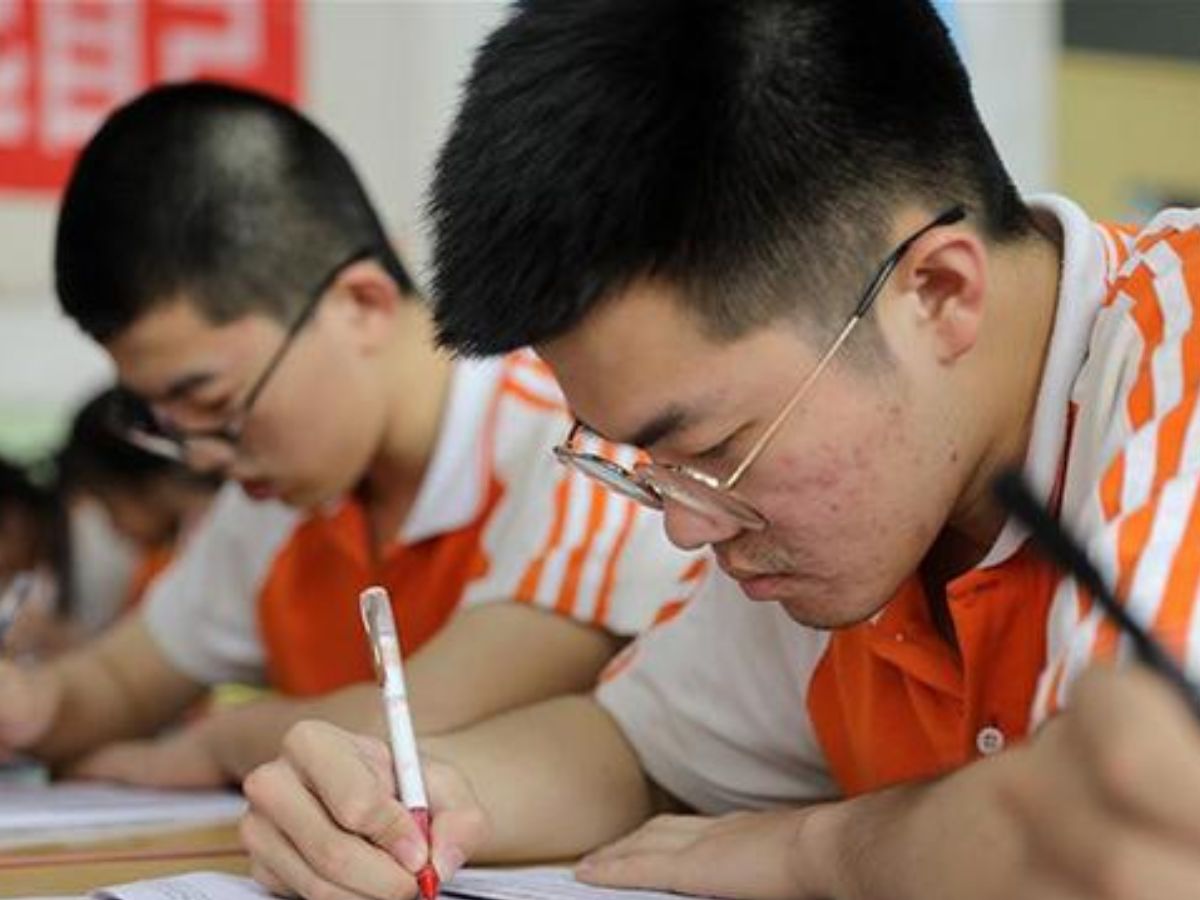
As India talks up examination security amid recent paper leak scandals, China reasserts the strongly surveilled, technology-charged nature of its university entrance test, the Gaokao. Famously known as the toughest exam in the world, Gaokao is the “rite of passage” for hundreds of thousands of students across China every year. Chinese officials recently praised the 2026 Gaokao’s seamless rollout and highlighted the meticulous features of what at its core is a security-focused examination. The recent update comes at a time when the Indian government is keen to conduct large-scale entrance exams without leaks and irregularities.
What is the Gaokao exam
The National Higher Education Entrance Examination, popularly known as Gaokao, is the national standardised university entrance examination in China. It is an annual test and is the sole test for admission to colleges and universities across the country.
It is normally taken by students in their final year of high school, with the subject being closely watched because admission into top institutions is largely decided on the grades students receive.
The exam takes two to four days, depending on the province where it is taken and the particular subjects selected. In addition to the Chinese language, mathematics and a foreign language, it also contains other subjects, which are chosen according to the recommended academic stream.
Why is it considered so important
The Gaokao has helped many Chinese students change their lives. Attending a prestigious university in China is often a self-fulfilling drive towards better future jobs, social mobility, and financial prospects.
Where some countries use a variety of metrics to determine admissions to universities, most colleges in China still consider the Gaokao score the ultimate deciding factor. The exam has thus become fiercely competitive, even emotionally fraught.
Every year millions of students train for years, attending after-work coaching and undertaking strict learning schedules.
How does China keep papers from getting leaked and cheating
China has a large security infrastructure to safeguard Gaokao. Papers are transported in a heavily guarded situation and stored in highly secure locations.
Biometric authentication, metal detectors, facial recognition systems, surveillance cameras and signal-jamming are the security measures used in examination centres. In many exam centres, artificial intelligence detects suspicious activity during the exam.
The government enforces stringent penalties for cheating, including criminal charges for serious offences. Online outlets are heavily monitored to curtail the spread of leaked questions or other misinformation about the test.
Why’s Gaokao being compared to India’s exam system
The comparison came to the fore after paper leak allegations and exam-related controversies sparked a frenzy of debate in India. Exam security, fairness and transparency have all come under scrutiny which has prompted experts to call for stricter safeguards in high-stakes examinations.
China’s smooth administration of Gaokao is being cited by some quarters as a demonstration of how technology and rigorous enforcement can curb kinks in large-scale examinations.
But experts stress that fundamental differences in how educated people are governed, taught and administered mean it is hard to draw direct comparisons.
Can India learn from the Gaokao experience
A number of education experts argue that some aspects of China’s examination regime can provide some insights. Strict controls on administration and logistics, secure transport of exam papers, harsher punishments for cheating and heightened digital surveillance are frequently cited examples. But experts also point out that the examination reforms will need to be adapted to India’s conditions rather than replicated wholesale. They stress the need to build public trust, transparency and accountability. As millions of students in both countries compete for scarce spots in higher education institutions, the question of examination security is likely to remain a policy focus for years to come.
Radhika is a journalist with two years of experience covering education, competitive exams, and student-focused developments. She reports on exam notifications, results, admissions, scholarships, and academic policies, helping students stay updated with important information.
Known for her clear and reader-friendly writing, she simplifies complex education updates into accessible stories that guide aspirants, students, and parents. She is also interested in highlighting inspiring student journeys and grassroots education initiatives.
For queries or story tips, you can reach out to her on X (formerly Twitter): https://x.com/Hitkariradz





