
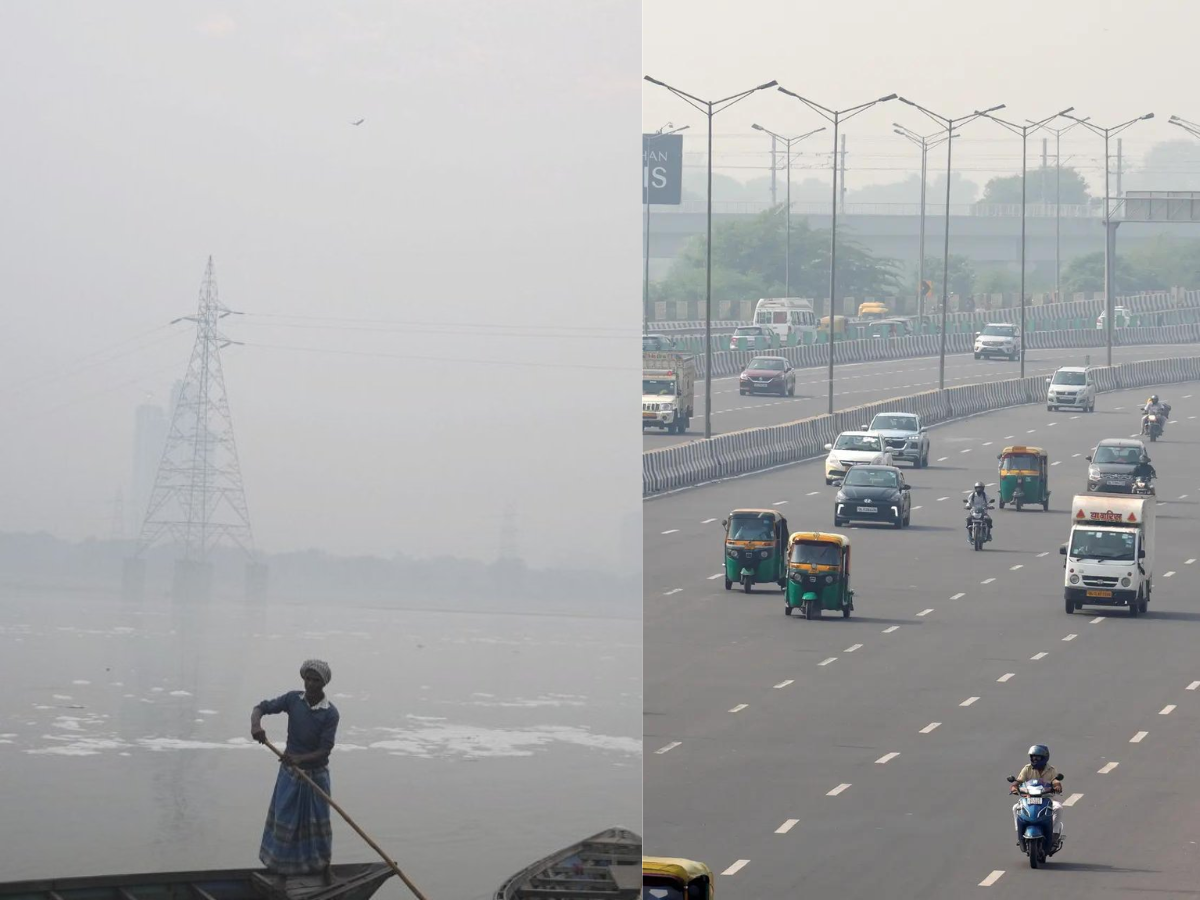

As temperatures dip across northern India, a thick layer of smog has once again engulfed several cities. On Thursday morning, 40 Indian cities ranked among the world’s most polluted, with air quality plummeting to dangerous levels.
While Delhi did not feature in the global top 10, it remained in the ‘severe’ category with an Air Quality Index of 433.
Rajasthan And Haryana Lead Pollution Charts
According to the sources, citing data from aqi.in, Sri Ganganagar in Rajasthan, recorded the world’s worst air quality on Thursday with an AQI of 840, topping the global pollution list. Siwani in Haryana followed with an AQI of 644. Other cities in the top 10 included Abohar (634), Hisar (477), Churu (456), Charkhi Dadri (448), Rohtak (444), Nangli Bahrampur in Uttar Pradesh (438), Bhiwani (437), and Sasroli (433).
Despite faring slightly better than some northern cities, Delhi ranked 13th globally, a stark reminder that the capital continues to battle toxic air.
Top 10 Most Polluted Cities (Thursday Morning):
- Sri Ganganagar, Rajasthan – AQI: 840
- Siwani, Haryana – AQI: 644
- Abohar, Punjab – AQI: 634
- Hisar, Haryana – AQI: 477
- Churu, Rajasthan – AQI: 456
- Charkhi Dadri, Haryana – AQI: 448
- Rohtak, Haryana – AQI: 444
- Nangli Bahrampur, Uttar Pradesh – AQI: 438
- Bhiwani, Haryana – AQI: 437
- Sasroli, Haryana – AQI: 433
Artificial Rain Brings Little Relief
Two days after the Delhi government’s artificial rain trial, air quality in the capital showed little improvement, remaining well above the 400 mark. The experiment, conducted with IIT-Kanpur, aimed to test cloud-seeding technology as a pollution-control measure.
Environmental experts, however, remain sceptical, calling it a “short-term measure” that may briefly settle dust but fails to address key sources like vehicular emissions, stubble burning, and construction dust.
‘Severe’ Category And Health Risks
The Air Quality Index classifies air quality as:
- Good (0–50)
- Satisfactory (51–100)
- Moderately Polluted (101–200)
- Poor (201–300)
- Very Poor (301–400)
- Severe (401–500)
Anything above 400 is considered hazardous, posing serious health risks, especially to children, the elderly, and those with respiratory issues. Doctors have urged residents to minimize outdoor activities and wear protective masks.
Even as authorities try experimental solutions like artificial rain, experts emphasise that a long-term strategy, focusing on cleaner energy, stricter emission norms, and sustainable transport, is the only way to breathe easy.
Currently, the onset of winter has once again turned North India’s skyline grey, signalling another difficult pollution season ahead.




