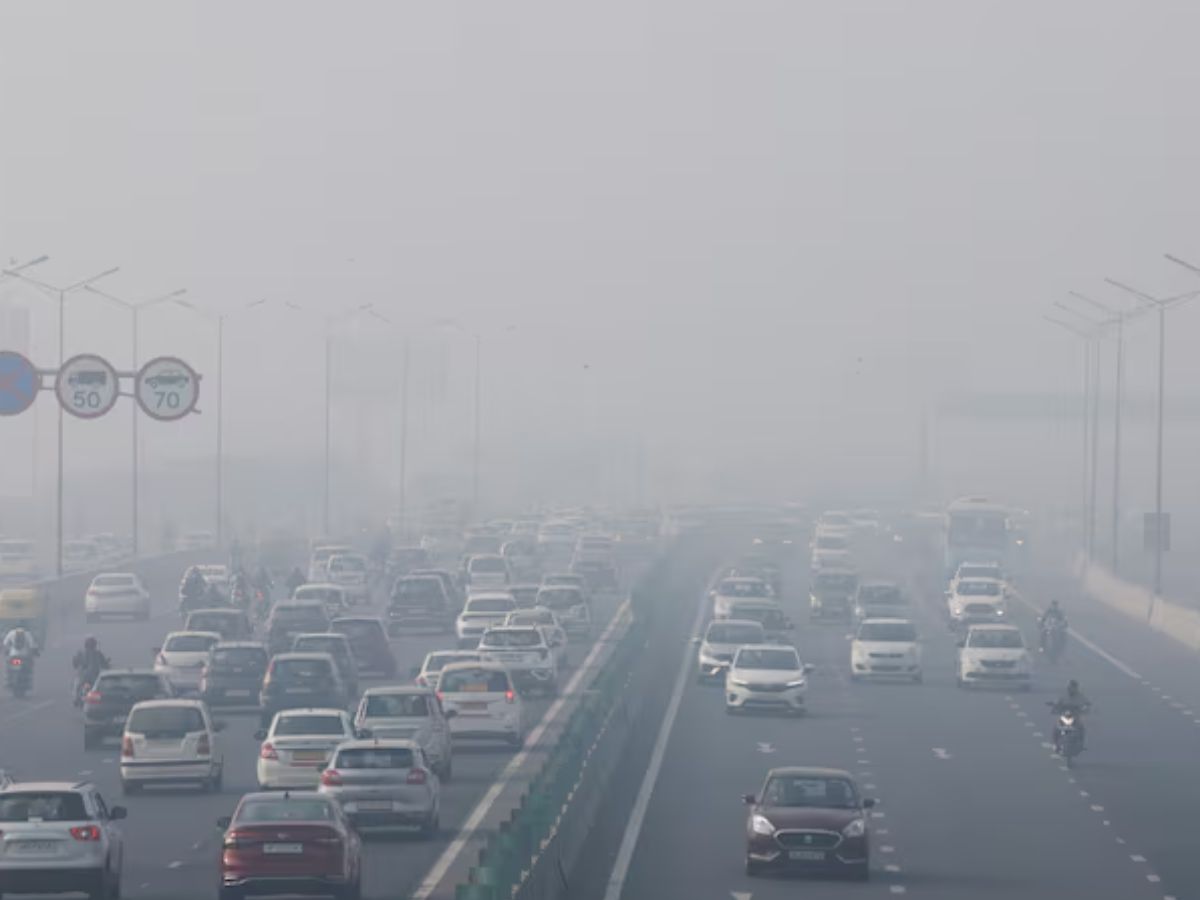

The National Capital Territory of Delhi is, at present, going through its worst air quality spell in the last five years. During the three days leading till now , the average Air Quality Index (AQI) of the city remained in the “severe” category throughout, measuring at or above 400.
The AQI of Monday dropped a little, from 440, the highest on Sunday, to 410, but the real situation is worse, as the local data shows, with certain places like Anand being very close to the maximum at 497.
This long exposure equals the poisonous effect that was only seen in January 2021 and has thus forced the authorities to activate the GRAP Stage-IV emergency measures.
These measures have included very restricted movement of vehicles and reduced construction, but still the city is experiencing thick fog, which is dangerous to health, due to poor dispersion and atmospheric stagnation.
Persistent Pollution Hazards
The present environmental emergency in the atmosphere has particularly vertical mixing as its major defining feature, and that has the result of keeping the particulate matter in close proximity to the surface area.
Official measurements show more than 60% of the air quality measure stations in Delhi are active and among them are Wazirpur (473) and Vivek Vihar (472), which show unhealthily high levels.
These always-present hazards of pollution are particularly serious due to very poor on-ground enforcement; local investigations indicate that there was almost no mechanical sweeping and dust suppression in some areas of NCR, where it was supposed to be done. The “severe” air quality continues to be a major and direct health risk until such enforcement gaps are bridged.
Forecast Relief Parameters
Meteorological data implies that the weather patterns are going to change and that this toxic balance might be disrupted. According to the relief forecast parameters, there will be a gradual shift in the situation.
Starting from Tuesday, the AQI (Air Quality Index) is expected to go down and meet the “very poor” category at last. Around January 23 a major event is expected; a Western Disturbance is going to introduce little rains to the area.
The rains, along with a small temperature increase now between a maximum of 26.7°C and a minimum of 7.7°C, might finally do the atmospheric washing that has been long overdue to get rid of the pollutants.
A recent media graduate, Bhumi Vashisht is currently making a significant contribution as a committed content writer. She brings new ideas to the media sector and is an expert at creating strategic content and captivating tales, having working in the field from past four months.