
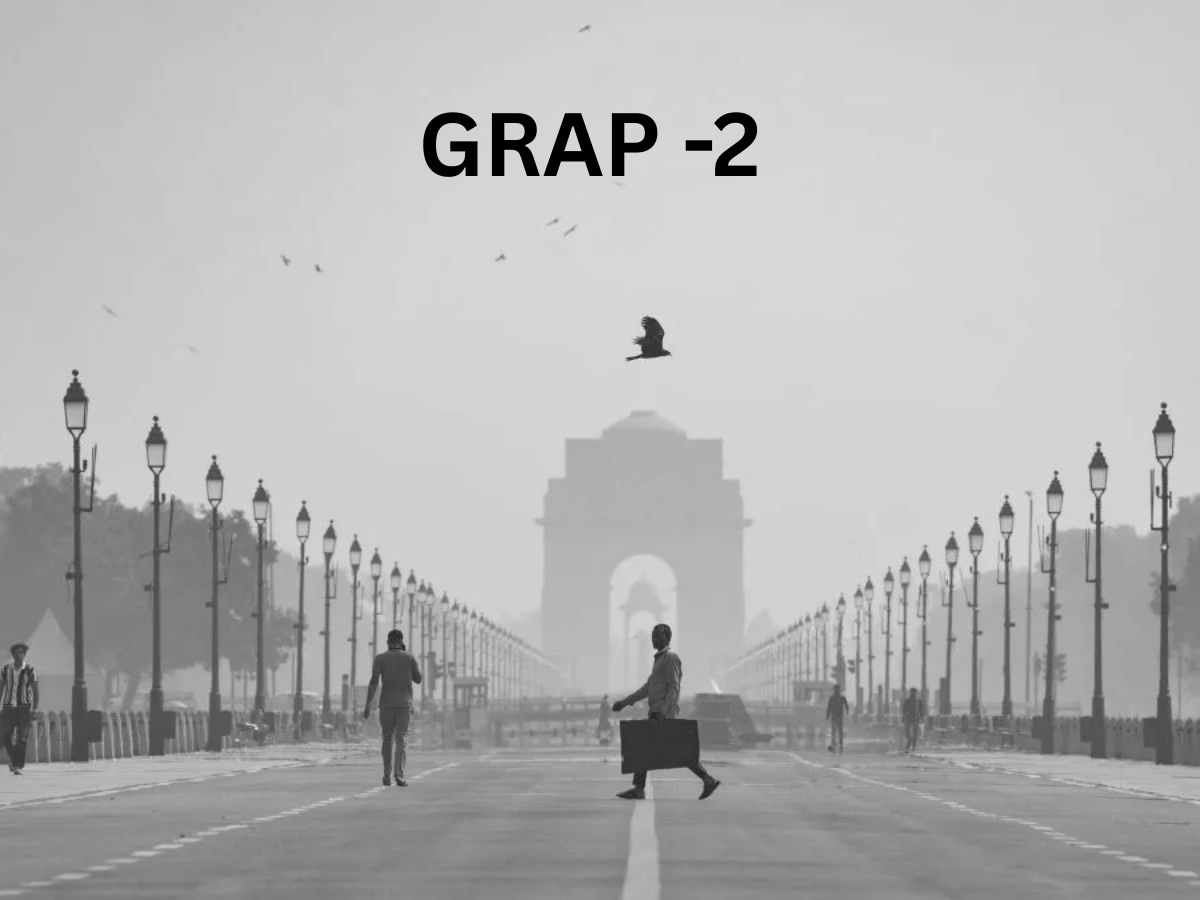

Authorities have enforced anti-pollution measures under GRAP-2 ( Graded Response Action Plan) in Delhi and nearby regions as the Air Quality Index (AQI) continued to decline ahead of Diwali. Earlier this week, the Centre’s anti-pollution panel had activated GRAP-1 for the first time this season.
On Sunday, the Commission for Air Quality Management (CAQM) stated that Delhi’s AQI showed a sharp rise, recording 296 at 4:00 PM and 302 at 7:00 PM.
The India Meteorological Department (IMD) and IITM forecasts also indicated a further dip in air quality in the coming days.
Restrictions Under GRAP-2 Across Delhi-NCR
Under GRAP-2, the government has imposed restrictions on the use of coal, firewood, and diesel generator sets in Delhi and the National Capital Region (NCR). Authorities have directed regular mechanical sweeping and water sprinkling on roads to reduce dust emissions.
Traffic police have been instructed to take measures to ease road congestion. These restrictions aim to minimize pollution levels and control the deteriorating air quality before the festive season intensifies emissions further.
The newly imposed restrictions will continue along with GRAP-1 measures, which include a ban on construction activities without dust control systems, mandatory water sprinkling at project sites, increased inspections of industrial units, and stricter checks for CNG compliance in public transport.
The Delhi government has also urged citizens to limit private vehicle use and opt for public transport to reduce emissions in the city.
Environmental experts have cautioned that the AQI may deteriorate further after Diwali due to firecracker use and stagnant weather conditions that trap pollutants.
The AQI scale classifies air quality between 0–50 as “good,” 51–100 as “satisfactory,” 101–200 as “moderate,” 201–300 as “poor,” 301–400 as “very poor,” and 401–500 as “severe.” Last year, Delhi-NCR experienced over 50 “severe” air quality days during the winter season, raising health concerns for residents.
Swastika Sruti is a Senior Sub Editor at NewsX Digital with 5 years of experience shaping stories that matter. She loves tracking politics- national and global trends, and never misses a chance to dig deeper into policies and developments. Passionate about what’s happening around us, she brings sharp insight and clarity to every piece she works on. When not curating news, she’s busy exploring what’s next in the world of public interest. You can reach her at [swastika.newsx@gmail.com]




