
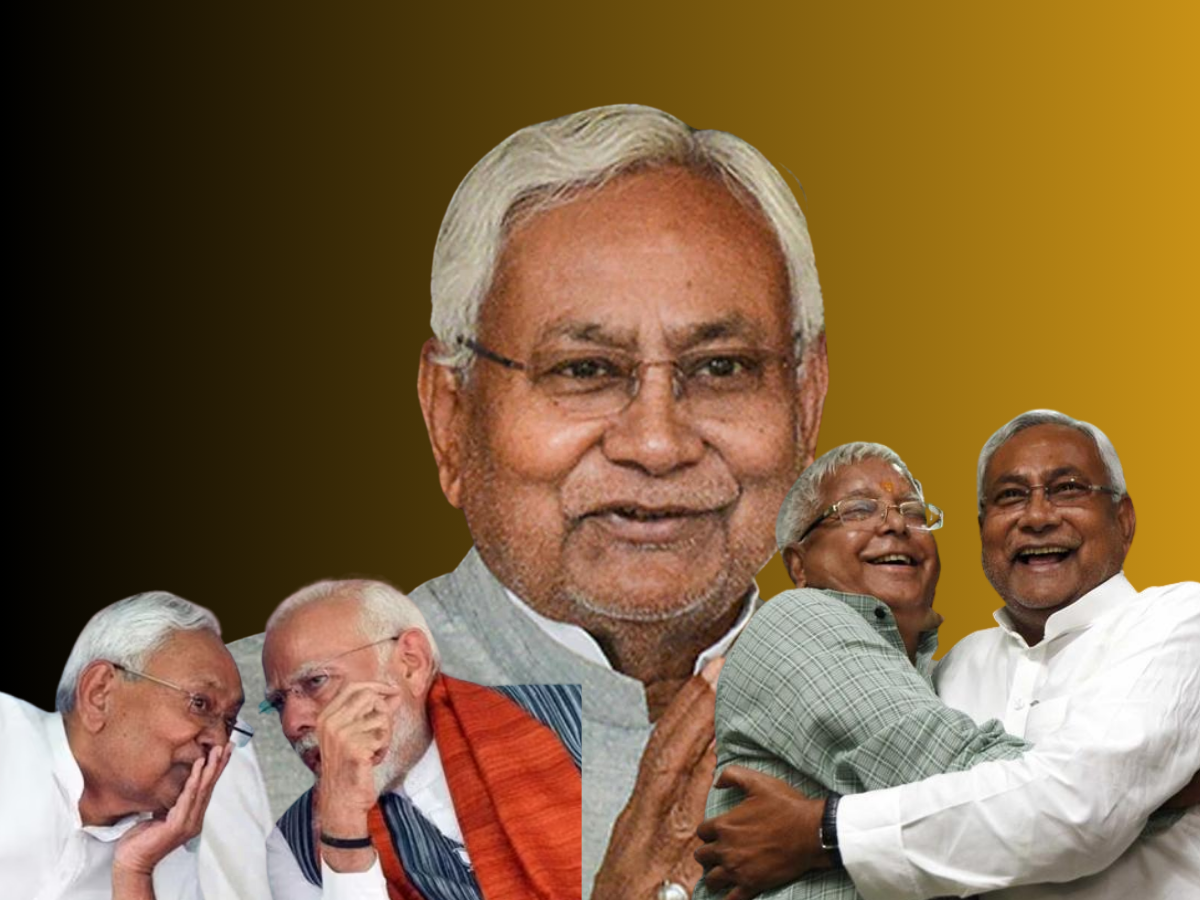

The Bihar Election 2025 results placed Nitish Kumar once again at the centre of state politics. The NDA secured a strong majority, winning more than three-fourths of the total seats. JD(U) and BJP both improved their individual tallies, while the RJD-led alliance faced major losses across several districts.
As Nitish Kumar is all set to take oath as the 10th CM Of Bihar tomorrow (November 20) at 11:30 am in Gandhi Maidan, Patna. This milestone makes him the longest-serving Chief Minister in India. His repeated returns to power have raised questions about how he managed to retain the post despite being known for his frequent alliance shifts.
Nitish Kumar has changed political partners several times, yet he has consistently secured the Chief Minister’s chair. His political moves, timing, and ability to negotiate alliances have truly helped him stay relevant in state politics for more than two decades.
The Timeline Of Nitish Kumar’s Flip- Flop Strategy
Nitish Kumar entered public life in the mid-1970s during the anti-Emergency movement. He made his electoral debut in 1985 and entered the Bihar Assembly as a Janata Dal MLA. His first major political switch came in 1994, when he left the Janata Dal and joined hands with George Fernandes to form the Samata Party. This move marked the beginning of a long series of shifts that shaped his political journey over the next several decades, particularly his relationship with the Bharatiya Janata Party.
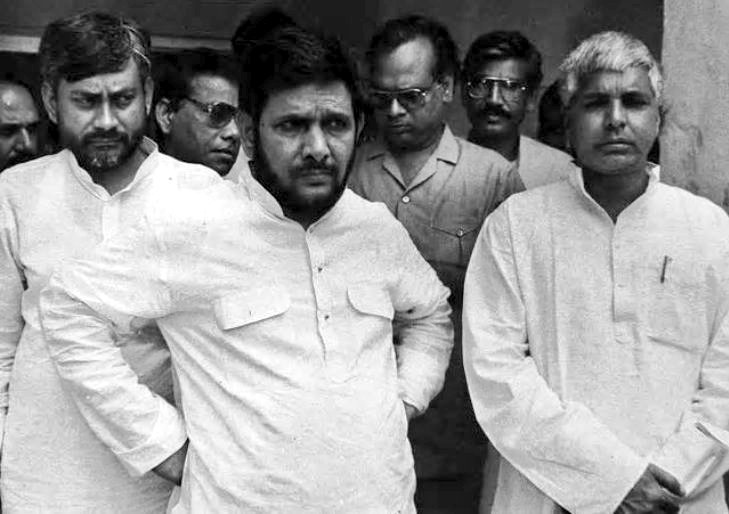
1996–2000
Nitish Kumar won the Lok Sabha elections in 1996 on a Samata Party ticket and soon emerged as a key BJP ally nationally. Between 1998 and 2004, he handled several major Union ministries, including railways and transport, in the Atal Bihari Vajpayee-led NDA government.
He became Chief Minister of Bihar for the first time in 2000 with BJP’s support. However, his government lasted only a few days as he failed to prove his majority in the Assembly, forcing him to resign.
Two-Term Rule with BJP (2003–2013)
In 2003, the Samata Party merged with the Janata Dal faction led by Sharad Yadav to form the Janata Dal (United). The JD(U)-BJP alliance ended RJD’s 15-year rule by winning the 2005 Assembly elections, making Nitish Kumar the CM for the second time.
The alliance retained power in the 2010 elections. In 2013, cracks appeared when the BJP projected Narendra Modi as its prime ministerial candidate. Nitish, citing his secular stand, ended the 17-year-old alliance with the BJP, triggering a new phase of political reorganisation.
Grand Alliance Victory and Return to BJP (2014–2017)
After JD(U)’s poor performance in the 2014 Lok Sabha elections, Nitish joined hands with the RJD and Congress to form the Mahagathbandhan for the 2015 Assembly polls. The alliance secured a big victory, and Nitish continued as CM.
The issue escalated when Deputy Chief Minister Tejashwi Yadav was named in a CBI FIR, creating major tension inside the coalition. Nitish quit and later joined the NDA within hours of submitting his resignation. He returned as Chief Minister with support from the BJP. He contested the 2020 Assembly elections as part of the NDA alliance, continuing his tenure despite changing political equations.
Opposition Called Him ‘Chameleon, Paltu – Ram’
Opposition parties, including Congress, have often criticised Nitish Kumar for switching sides. Congress has compared him to a “chameleon” and accused him of betrayal. His political record shows several major alliance shifts. Before 2024, his last break with the BJP was in August 2022, after which he aligned with RJD and made Tejashwi Yadav his deputy.
Exit From NDA in 2022 and Another Oath in 2024
In 2022, Nitish Kumar walked out of the NDA, citing issues with the alliance and internal disagreements. He rejoined the RJD-Congress Grand Alliance and took oath once again as Chief Minister. His move reshaped the political situation in Bihar ahead of the next election cycle. His last oath ceremony before the current one took place in January 2024, adding another chapter to his long career. His repeated shifts between alliances and consistent returns to power have played a major role in his continued influence in Bihar politics.
Early Rise in Bihar Politics
Nitish Kumar was born in Bakhtiarpur in Patna district, while his ancestral village lies in Nalanda. He has not contested an Assembly election for nearly three decades but has continued to lead Bihar. He first became Chief Minister in 2000, although that government lasted only eight days. He returned to power in 2005 and then remained in office until 2014 before resigning and coming back again. His unmatched ability to lead without contesting elections has made him one of the longest-serving Chief Ministers in India.
Nitish Kumar entered state politics strongly in 1990 when he supported Lalu Prasad Yadav in becoming Chief Minister. He won his first Assembly election in 1985 from Nalanda’s Harnaut seat. In 1989, he entered the Lok Sabha from Barh on a Janata Dal ticket and won again in 1991. In 1994, he rebelled against Lalu Yadav’s leadership and formed the Samata Party with George Fernandes. In 2003, the Samata Party merged with Janata Dal (United), setting the foundation for his long-term leadership within the party.
Nitish Kumar Strong Hold In Ground Zero
Nitish Kumar’s political base stands on a strong mix of Kurmi-Koeri communities (7%), Hindu Extremely Backward Classes (26%), Mahadalits, and women voters. These groups have largely stayed loyal to him through many political shifts. They support him because of his clean image and focus on development. His model of governance mainly centres on welfare, with a special focus on women’s empowerment and weaker sections. Key schemes like Jeevika Didi, free bicycles for schoolgirls, and the prohibition policy continue to shape his political identity.
In the NDA:
Nitish Kumar was unanimously chosen as the head of the NDA legislature party after the alliance’s sweeping win in the November 2025 Assembly polls, clearing the way for his tenth term as Chief Minister. The NDA campaigned with a unified strategy, with top leaders – including Prime Minister Narendra Modi- publicly supporting Kumar as their CM face and stressing development work and welfare schemes.
In the RJD-led Alliance:
The RJD-led Mahagathbandhan firmly backs Tejashwi Yadav as its Chief Ministerial nominee. Although Kumar partnered with the RJD in earlier periods – such as 2015–2017 and 2022–2024- those alliances collapsed over political disagreements and corruption accusations. The RJD now acts as the main opposition force in the state.
Confusion remains as because Nitish Kumar has been a dominant figure in Bihar politics for nearly twenty years and has switched sides when required to form stable governments. His appeal among key voter groups, including women and EBCs, makes him a crucial figure for any alliance aiming for power.
Swastika Sruti is a Senior Sub Editor at NewsX Digital with 5 years of experience shaping stories that matter. She loves tracking politics- national and global trends, and never misses a chance to dig deeper into policies and developments. Passionate about what’s happening around us, she brings sharp insight and clarity to every piece she works on. When not curating news, she’s busy exploring what’s next in the world of public interest. You can reach her at [swastika.newsx@gmail.com]




