
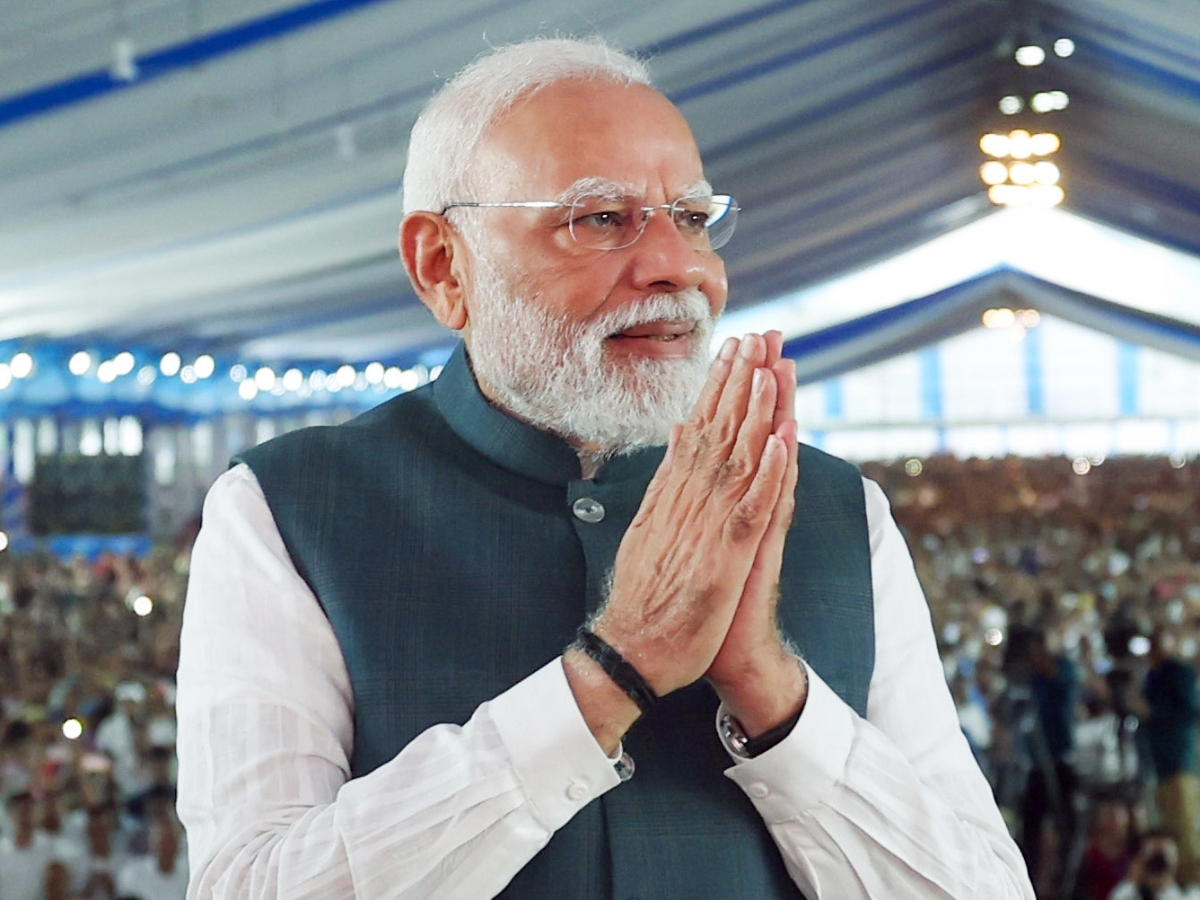

After serving as Gujarat’s Chief Minister for years, Narendra Modi was first elected as Prime Minister of India on May 26, 2014, following the Bharatiya Janata Party-led National Democratic Alliance’s landslide victory in the Lok Sabha elections. Last year, he was elected Prime Minister for a third term, as the people of the country continued to reposed faith in his leadership.
During these years – now over a decade – the central government under Modi’s leadership has rolled out several schemes, reforms, policies, and initiatives that have reshaped the country. The governance has become more effective, the economy has grown to new heights, becoming the fourth largest in the world, and India’s global standing has only increased.
Here are 10 big legacies of PM Modi’s tenure:
Abrogation of Article 370
In 2019, the PM Modi-led government made one of the most consequential decisions. Article 370, which granted special status to Jammu and Kashmir, was abrogated on August 5, 2019. The decision reorganized the state into two Union Territories—Jammu and Kashmir, and Ladakh. For the first time in the history of the country, central laws started to apply in the region. The decision also led to success in the near elimination of terrorism from the erstwhile state while paving the way for large-scale investments.
Ram Mandir in Ayodhya
The construction of Ram Mandir in Ayodhya was one of the promises the BJP had made before coming to power, like the promise of removing Article 370 from the Indian Constitution. The Supreme Court gave a landmark decision on November 9, 2019, settling the dispute over the site, where the Babri Masjid once stood. SC ruled in favor of temple construction while also directing the government to provide land for a mosque.
After this ruling, the government set in motion the construction of the temple. In August 2020, Prime Minister Modi laid the foundation stone at the groundbreaking ceremony, marking the start of the temple’s construction. On January 22, 2024, the idol of Ram Lala was placed in the temple during the Pran Pratishtha ceremony in the presence of PM Modi.
Responding to Terror Attacks
Under PM Modi, India took a hard line against terrorism as it deserved. Modi shunned the policy of peace talks after India faced terror attacks from Pakistan and gave a military response every time.
Surgical Strike
After the Uri attack on the LoC in J&K, Indian special forces carried out a surgical strike on the terrorist launch pads in PoK. This strike delivered the message of zero tolerance against terrorism under PM Modi.
Balakot Air Strike
In February 2019, after Pakistan sponsored a suicide terror attack that killed over 40 CRPF jawans in Pulwama, J&K, the Indian Air Force hit terror training camps of Jaish-e-Mohammed in Balakot, Pakistan-occupied Kashmir. Indian jets crossed the LoC and carried out pre-emptive, precision strikes.
Operation Sindoor
In April 2025, Pakistan-backed terrorists killed 26 civilians, mostly Hindus, in Pahalgam, J&K. The attack, which received the nod from Pakistan army chief Asim Munir, was carried out to incite communal violence in India. In response, India launched a decisive military action under Operation Sindoor, hitting terror bases in PoK and mainland Pakistan.
UPI
Unified Payments Interface (UPI) was launched in 2016 by PM Modi. The digital service has revolutionized the payment system in India and has received praise across the world. Today, over 18 billion monthly UPI transactions happen in India. In June 2025, ₹24.03 lakh crore in payments across 18.39 billion transactions took place through UPI. This is a 32 percent increase over the last year.
The New Parliament
Hailing India’s democratic journey, PM Modi inaugurated the new parliament building in May 2023. This was a symbolic move as the old building was built under British colonial rule.
PM Modi called the inauguration of the new building a “moment that links past with future.” He said the new building was constructed “through the sweat, hard work, and money of Indians.”
Goods and Services Tax (GST)
Goods and Services Tax (GST) was conceived by the previous governments, but was delayed for 17 years. PM Modi, in his first term, in July 2017, implemented the GST and replaced the archaic multiple indirect tax regime.
The GST regime was reformed recently by the GST Council. Next-Gen reforms, which reduce the number of tax bands to two, will ease compliance. PM hailed the reform, saying it will improve the “Ease of Doing Business” while fostering cooperative federalism.
“GST has also served as a powerful engine for economic growth,” he wrote on X.
Housing for All
When PM Modi got elected as PM of the country, providing housing for all was among the first flagship decisions he undertook. In 2015, he launched the Pradhan Mantri Awas Yojana (PMAY). The scheme was launched in 2015 for urban areas and in 2016 for rural areas.
The journey to provide safe shelter to the last person in the country continues with additional funds being allocated for the scheme every year. In August 2025, the government approved an additional 1.47 lakh houses under PMAY-Urban 2.0, raising the total sanctioned to 8.56 lakh.
So far, more than 120 lakh houses have been sanctioned, with 93.81 lakh already delivered.
PMAY-Rural has adopted transparent beneficiary selection through SECC 2011, Gram Sabha approvals, and geo-tagged monitoring, which ensures effective implementation of the scheme.
National Education Policy (NEP) 2020
NEP 2020 was introduced by PM Modi to reform the education system and align Indian education with global standards.
Under the new policy, new IITs, IIMs, AIIMS, and institutions like Gati Shakti Vishwavidyalaya were opened. India in 2025 has 70,018 higher education institutions.
After the implementation of NEP, initiatives like NIPUN Bharat Mission for foundational literacy, the PM SHRI scheme to strengthen 14,500 schools, and the National Credit Framework came into force.
This has led to an increase in the global rankings of Indian institutes. Heritage centers like Nalanda University have been revived under this policy.
Solar Revolution
The PM Surya Ghar: Muft Bijli Yojana was launched in February 2024. Over 10 lakh homes have now received power with rooftop solar panels by March 2025. This scheme is delivering affordable, renewable energy to the hinterlands of the country. This scheme targets 1 crore households by 2026–27.
Chandigarh and Daman & Diu have already achieved 100 percent government rooftop solar targets. States like Rajasthan, Maharashtra, Gujarat, and Tamil Nadu are making strong progress.
India on the Moon
India achieved a rare feat on August 23, 2023, as it became the fourth country to achieve a soft landing on the Moon with Chandrayaan-3.
Only US, China, and Russia had previously touched down near the lunar south pole.
“This success belongs to all of humanity,” said Modi, stressing that India’s space journey reflects the philosophy of “Vasudhaiva Kutumbakam.”
Also Read: From 2014 To 2025: Here’s How PM Modi Celebrated His Birthday, Check What’s Special This Year
Zubair Amin is a Senior Journalist at NewsX with over seven years of experience in reporting and editorial work. He has written for leading national and international publications, including Foreign Policy Magazine, Al Jazeera, The Economic Times, The Indian Express, The Wire, Article 14, Mongabay, News9, among others. His primary focus is on international affairs, with a strong interest in US politics and policy. He also writes on West Asia, Indian polity, and constitutional issues. Zubair tweets at zubaiyr.amin




