
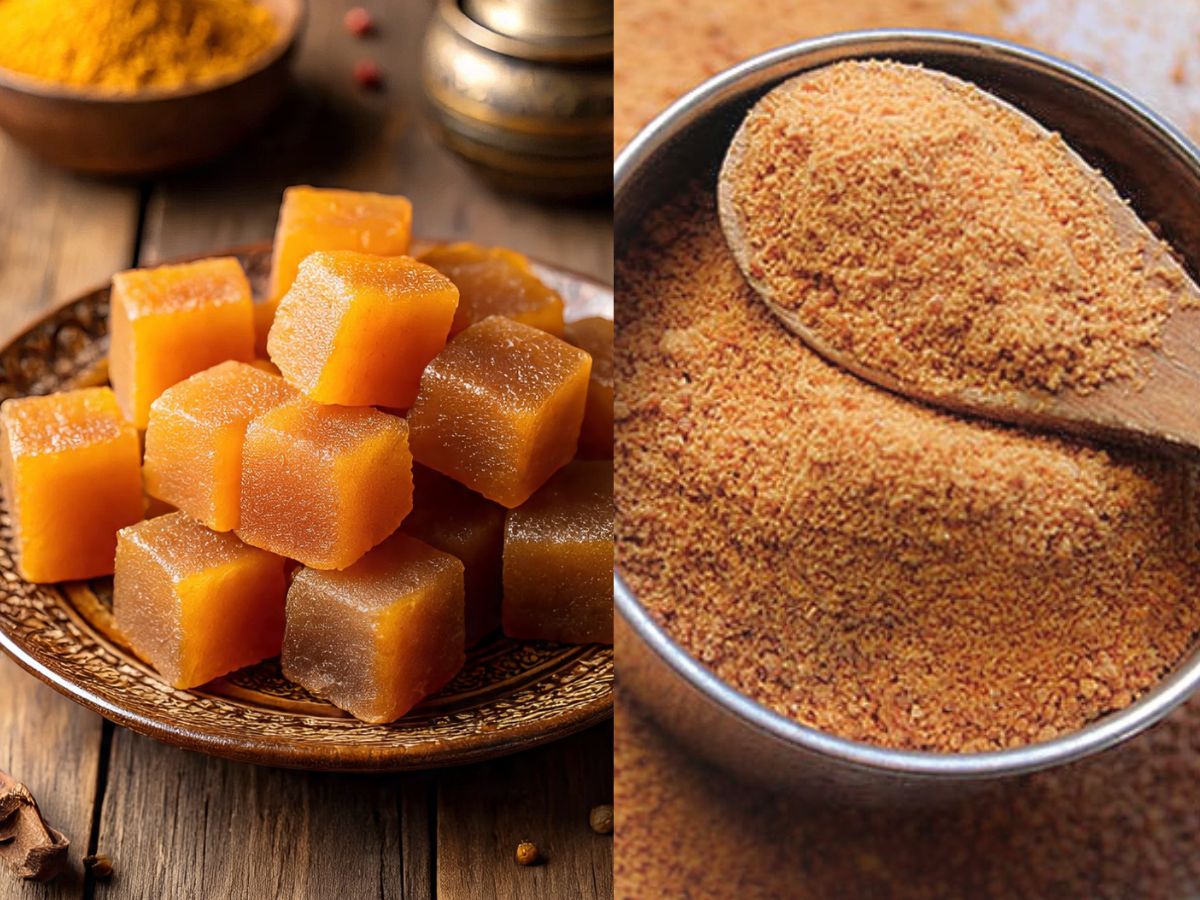

Jaggery Vs Desi Khand: As more people try to cut out processed sugar for weight loss, fitness, or better blood-sugar control, traditional sweeteners like gud (jaggery) and desi khand (unprocessed sugar) have surged in popularity. And with winter setting in, these desi sweeteners draw even more attention especially ‘gud’, which is widely enjoyed in cold weather for the warmth and energy it provides.
But are these alternatives truly healthier and which one offers better benefits? Here’s a closer look.
What Is Gud?
Gud, or jaggery, is one of the oldest natural sweeteners used in India. Made by boiling sugarcane juice or palm sap, it undergoes minimal processing, allowing it to retain iron, potassium, magnesium, calcium, B vitamins, and antioxidants. Its rich molasses content gives it a caramel-like taste and coarse texture.
With a moderate glycemic index (around 65), gud raises blood sugar at a moderately fast pace. While it supports digestion, boosts energy, and strengthens immunity due to its high mineral and antioxidant profile, it can still trigger quicker glucose spikes compared to desi khand. This raises the question: is desi khand the better choice?
What Is Desi Khand?
Desi khand, also known as Khandsari, is another traditional sweetener making a modern comeback. Derived from sugarcane juice with some molasses intact, it has a mild earthy flavor, lighter texture, and is considered less processed than white sugar.
Notably, desi khand has a lower glycemic index (55–60), which means it breaks down more slowly, leading to gradual insulin release and better blood-sugar stability. It contains calcium, iron, and magnesium, similar to gud, but with slower glucose impact, making it favoured in Ayurvedic remedies as a cooling, calming sweetener.
Jaggery Vs Desi Khand: Nutritional Comparison
Both gud and desi khand are healthier than refined sugar but the best choice often depends on individual needs.
Gud offers more antioxidants and a higher mineral profile, particularly iron, making it beneficial for improving haemoglobin and supporting immunity and digestion.
Desi khand provides essential minerals with a gentler effect on blood sugar, aiding better insulin management and making it more suitable for those monitoring glucose levels.
In Ayurveda, gud is energizing and cleansing, while desi khand is considered “sattvic,” known for its soothing and cooling properties that sustain energy without overstimulating digestion.
What Studies Say
A study published on ResearchGate comparing cane sugar with coconut jaggery in type-2 diabetes patients found that jaggery produced a lower glycemic response than regular sugar. However, jaggery’s glycemic index can still range between 70 and 90, making it unsuitable for diabetics if consumed in excess.
The study concluded that although jaggery contains beneficial minerals and antioxidants, it can still cause sharp blood-sugar spikes, and diabetics must consume it sparingly.
Usage In Daily Cooking
Gud: Strong caramel notes; best suited for traditional sweets, beverages, and home remedies.
Desi Khand: Subtle earthy sweetness; ideal for tea, desserts, everyday cooking, and baking without overpowering other flavours.
Because desi khand digests slowly, many people with sensitive blood sugar prefer it over gud.
Jaggery Vs Desi Khand: Which Is Better?
While both are healthier alternatives to refined sugar, desi khand emerges as the more balanced option due to its lower glycemic index, slower absorption rate, and steady impact on blood sugar. Gud remains nutritious and mineral-rich, but its higher GI makes it less suitable for those with glucose regulation issues.
If you want a gentler, more stable sweetener- desi khand is the better pick. For mineral-rich, traditional flavour with digestive benefits, gud still holds its charm, but moderation is essential.
ALSO READ: How To Remove Lint From Woolen Clothes In 6 Easy Steps




