
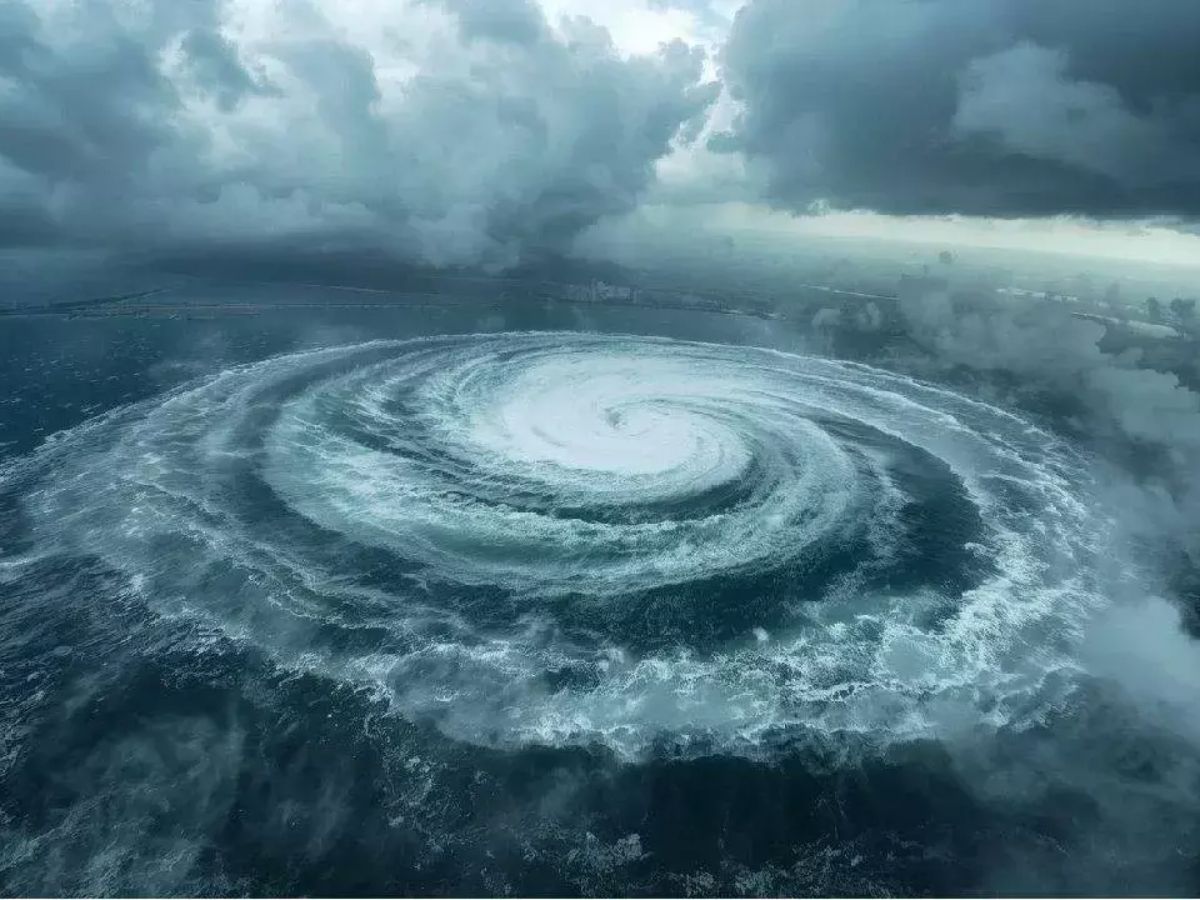

When cyclones are reported as developing over oceans, it feels at first that they have the option to and will be moving toward land, which causes concern for coastal populations. But have you ever wondered why most cyclones track this way, in fact…the answer is part of nature’s design as a result of winds, temperature and rotation of the planet! Here is a simple breakdown of it all.
How Cyclones are Born
- Cyclones occur over warm ocean waters and at a surface temperature above 26 degrees Celsius.
- The warm water above the ocean heats the air above it, and air rises, producing clouds.
- As the air rises, it creates a low pressure area at the surface, and more air moves in; the air spins because of the rotation of the planet (the Coriolis effect).
- This peace of weather / air moves larger and larger as a cyclone system.
Reasons Cyclones Drift To Land
Steering Winds:
Cyclones are “pushed” by the prevailing winds in the atmosphere. The winds in the Indian Ocean and Bay of Bengal tend to blow from east to west, thus steering the cyclone towards the coast.
Pressure Differences:
Cyclones move from higher pressure to lower pressure areas. During cyclone season land areas often have lower pressure than the open sea which helps attract the system toward the coast.
Earth’s Rotation:
The Coriolis force (caused by Earth’s rotation) is slightly bending the cyclone’s path to the right in the Northern Hemisphere and to the left in the Southern Hemisphere which adds to the movement of the cyclone toward land.
What Happens When Cyclones Hit Land
- As a cyclone moves over land, it quickly weakens due to the loss of warm ocean water to feed on.
- The strong winds continue to cause heavy rain, flooding, and storm surges in coastal areas.
- It turns into a depression, and further dies out.
The Importance of Being Alert in Coastal Areas
Cyclones can still cause damage, flooding and power outages, after they have “made landfall.” The reason meteorological departments issue advance warnings is if you know a cyclone is heading into your area, you can evacuate and/or prepare for the worst.
Cyclones, like many other systems, will move towards land primarily due to the wind direction, pressure differences and the Earth’s rotation. While we can’t control the movement of a cyclone (or any wind system) at any location, we can plan, prepare for, and respond to cyclones in a way that greatly reduces damage and saves lives.
Disclaimer: This article simplifies scientific concepts for general understanding. For detailed and updated cyclone forecasts, always refer to the India Meteorological Department (IMD) or official weather agencies.
Also Read: Cyclone Montha – Latest on Timing, Path & Storm Intensity
Vani Verma is a content writer with over 2 years of experience in lifestyle, entertainment, health and digital media. She has a knack for creating engaging and research-driven content that resonates with readers, blending creativity with clarity. Passionate about media trends, culture, and storytelling, she strives to craft content that informs, inspires, and connects.




