
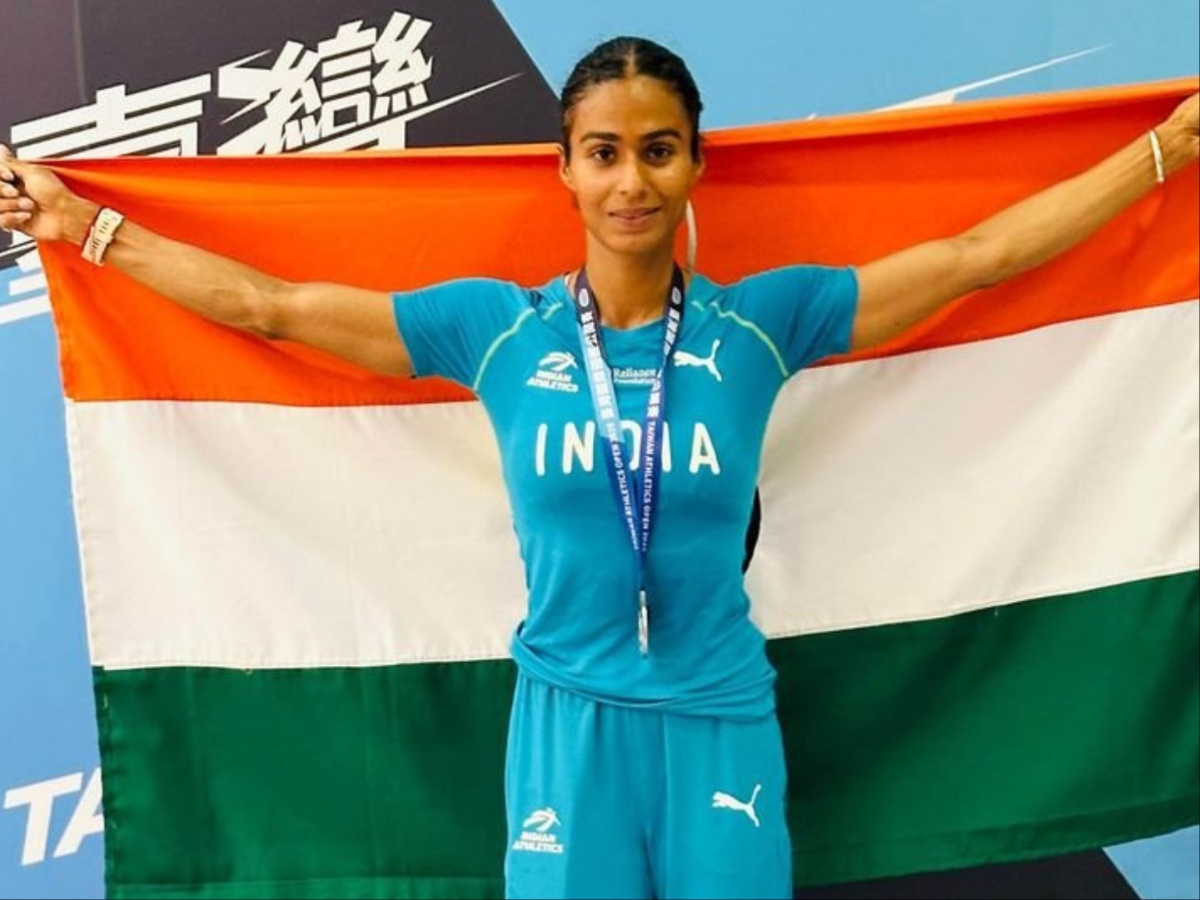

In a significant blow to Indian athletics, the Athletics Integrity Unit (AIU) has officially imposed a four-year ban on middle-distance runner Twinkle Chaudhary. The disciplinary tribunal reached this decision after the 30-year-old athlete failed to provide sufficient evidence to explain a positive drug test or prove that her sample had been compromised.
Chaudhary, a gold medalist in the women’s 4x400m relay at the National Games in Uttarakhand, saw her career come to a halt following a sample collection on May 30 last year. The test took place during the 26th Asian Athletics Championships in Gumi, South Korea, where she had secured a fourth-place finish in the 800m event.
The Verdict and Timeline
The sample, analyzed by a World Anti-Doping Agency (WADA)-accredited laboratory in Seoul, tested positive for Methyltestosterone, a prohibited anabolic steroid. Following a series of hearings and a period of provisional suspension, the tribunal delivered its final word:
“A period of ineligibility of four years is imposed upon the Athlete, commencing on the date of this decision. The period of Provisional Suspension imposed on the Athlete from 24 June 2025 until the date of this decision is credited against the total period of Ineligibility. The period of Ineligibility will therefore end on 23 June 2029.”
The Fight Over Evidence
Chaudhary’s defense rested on the claim that the sample was either not hers or had been subject to external interference. She even requested a DNA test—offering to pay for it herself—to prove the urine did not belong to her. However, the AIU and the tribunal dismissed this request, citing a lack of “strong justification” for such an invasive and costly procedure.
The tribunal noted:
“In response to the Notice of Allegation, dated 24 June 2025, the Athlete in her explanation on 2 September 2025 indicated that she denied committing the asserted ADRVs (Anti-doping Rule Violations) on the basis that the Sample may not have belonged to her or that it may have been tampered with or contaminated during collection.”
The athlete also tested her own supplements, but none revealed the presence of the banned steroid. Consequently, the panel ruled:
“Athlete’s request for a DNA test is dismissed and we do not consider that the Athlete has discharged the burden on her to satisfy us that the doping was not ‘intentional’, and we are accordingly obliged to impose a four-year suspension.”
The Khelo India Controversy
While the doping charge was upheld, Chaudhary did manage to clear her name regarding a secondary allegation. The AIU had accused her of breaching her provisional suspension by appearing at the Khelo India University Games in Rajasthan. Chaudhary testified that while she did travel to the venue, it was for social reasons rather than competitive ones.
The panel accepted her explanation, stating:
“…the Panel heard oral evidence from Ms Chaudhary. She said that it was true she travelled a long distance from her home to attend this Event. However, she said she did so to meet a number of college friends who were attending the Event and not to compete.”
With the four-year ban now in effect, the veteran runner will be ineligible to return to professional competition until June 2029.




