
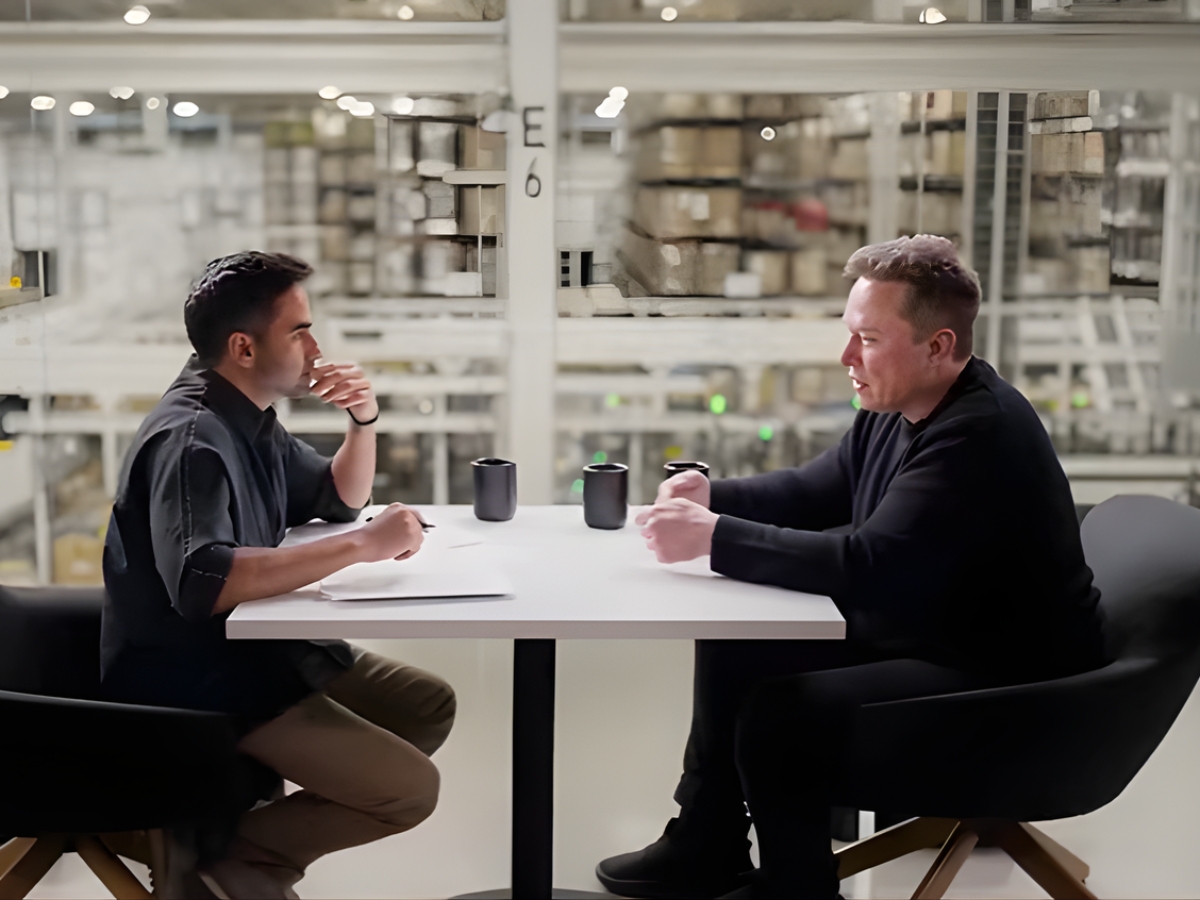

Elon Musk is making some bold predictions. In a recent podcast with Indian entrepreneur Nikhil Kamath, Tesla and SpaceX CEO predicted that work will become optional in the future. He made this big prediction, saying that AI and robotics will bring this change. Musk even shared the timeline of this change, saying that it will likely take less than 20 years, depending upon the evolution of technology.
“My prediction is that in less than 20 years, working will be optional, like a hobby, pretty much,” Musk said, adding that the timeline could be even shorter, potentially 10 to 15 years, depending on the pace of technological progress.
What Elon Musk Said About Work, AI, Robotics And Future
“The advancements in AI and robotics will bring us to the point where working is optional in the same way that you can grow your own vegetables in your garden, or you could go to the store and buy vegetables,” Musk explained.
Musk further predicted that AI could eventually reach a point where it exceeds the requirements for human satisfaction.
Just heard @elonmusk on @nikhilkamathcio ’s podcast., calling out how the US “benefitted immensely from talented Indians,” predicting a future where work becomes optional thanks to AI. The way he talked about opportunity, talent and innovation gives hope for everyone aiming to… pic.twitter.com/ci7KxYmh92
— Aman Yadav (@moreaboutaaman) December 1, 2025
“At a certain point, AI will actually saturate on anything humans can think of and then at that point, it becomes a situation where AI is doing things for AI and robotics because they have run out of things to do to make the humans happy, because there’s a limit,” he said.
Elon Musk’s Past Comments About Work And AI
A few weeks ago, during the US-Saudi Investment Forum on November 19, Elon Musk spoke about the potential of AI and robotics and the future of work. He said that in the future, money will become irrelevant.
“There will still be constraints on power, electricity and mass. The fundamental physics elements will still be constraints. But I think at some point, currency becomes irrelevant,” Musk said.
Why Elon Musk Believes AI and Robotics Will Replace Jobs
The question that is striking everyone is why Musk believes AI and robotics will replace jobs in the future. The prediction stems from the belief that at some point in time, AI and robotics will outperform humans across virtually every domain, from manufacturing and transportation to problem-solving and creative work.
Musk cited Tesla’s Optimus humanoid robots and xAI’s Grok AI system as examples. He highlighted the features of these technologies, which are capable of performing physical, intellectual, and even emotional tasks. He envisions a future where these systems can autonomously produce everything necessary for human well-being.
“AI will run out of things to do to make humans happy,” Musk said. “There is a limit to the tasks humans need completed. Beyond that, AI would begin doing things primarily for its own systems and robotics networks because human needs would already be fully satisfied.”
What is Musk’s ‘Universal High Income’ Concept That Is Connected With The No-Work Future Prediction
Behind Musk’s prediction, observers say there is also a concept he outlined in 2023 during a discussion with then UK Prime Minister Rishi Sunak. At that time, he rejected Universal Basic Income and proposed a “universal high income.” He suggests that in a future of technological abundance:
“We won’t have a universal basic income. We’ll have a universal high income. Everyone will have access to this magic genie… There will be no shortage of goods and services. It will be an age of abundance.”
Musk argues, if such a scenario arises, the money could lose its role as a database for labor allocation. He says that well-being and prosperity will come directly from technological production.
But The Big Question – Is Elon Musk’s Optional-Work Vision Feasible?
Economists have cautioned against Musk’s prediction. The key question they ask is whether automation technologies will be accessible and affordable within the next 10–20 years.
“We’ve been at it making machines forever, since the industrial revolution, at scale. We know from economics that… you often run into decreasing returns, as it gets harder to make progress in a line of technology that you’ve been at for a couple of centuries,” Ioana Marinescu, economist and associate professor at the University of Pennsylvania, says.
Zubair Amin is a Senior Journalist at NewsX with over seven years of experience in reporting and editorial work. He has written for leading national and international publications, including Foreign Policy Magazine, Al Jazeera, The Economic Times, The Indian Express, The Wire, Article 14, Mongabay, News9, among others. His primary focus is on international affairs, with a strong interest in US politics and policy. He also writes on West Asia, Indian polity, and constitutional issues. Zubair tweets at zubaiyr.amin




